
- Lead. Russia launched 174 attack drones, two ballistic missiles and two air-launched missiles overnight on September 2, striking Kyiv for the seventh consecutive day, Odesa and Dnipro — killing at least one person and wounding more than a dozen.
- Fact. Putin accused Zelenskyy of “state terrorism” and explicitly declined to rule out strikes on British military facilities if the UK continues supplying weapons to Ukraine, marking the most direct Russian threat against a NATO country in recent months.
- Stake. With US-brokered peace talks stalled and the front lines largely deadlocked, both sides are escalating drone campaigns at scale, raising the risk of a miscalculation that pulls a third NATO state directly into the conflict.
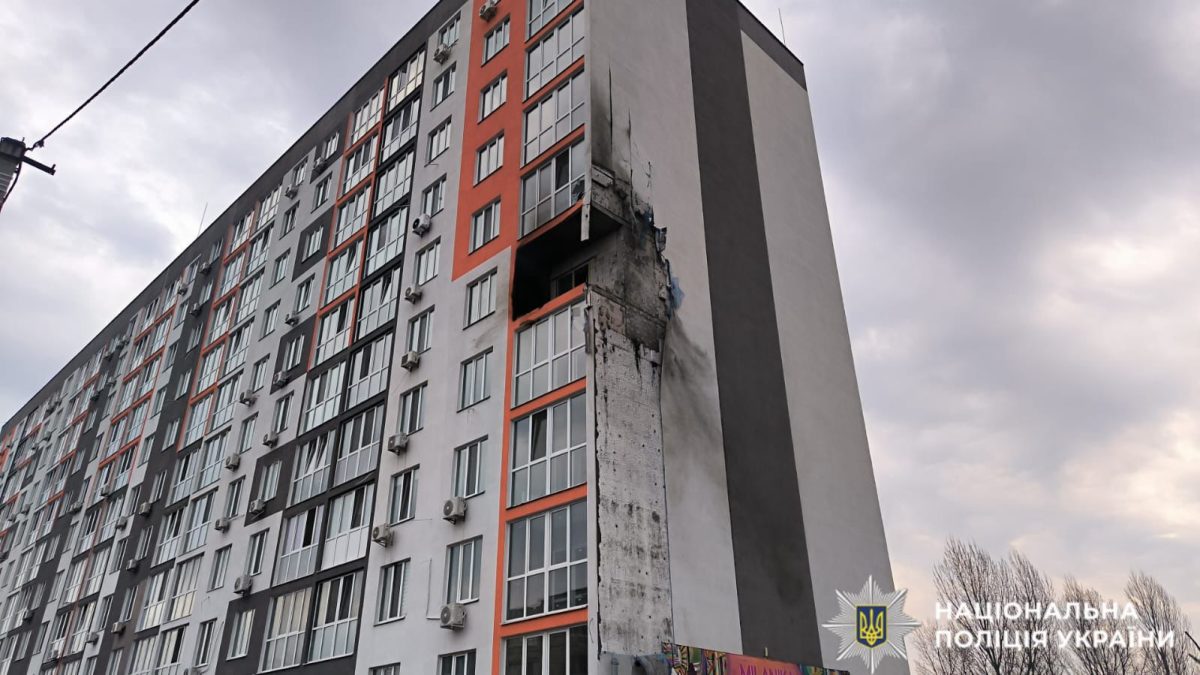
Overnight on September 2, 2026, Russian forces launched 174 Shahed-type attack drones alongside two ballistic missiles and two plane-launched cruise missiles in one of the war’s denser single-night barrages, according to Ukrainian air force figures. At least one man was killed in Dnipro when a building collapsed under the assault; across Kyiv, Odesa and Dnipro, more than a dozen civilians were wounded. In Odesa, a 24-storey residential tower was damaged and eight people were injured, including a child. Kyiv reported a warehouse fire and damage to an educational facility and a medical practice. Al Jazeera reported that Ukrainian air defences destroyed 130 of the drones over 11 Russian regions, Crimea and the Black Sea, reflecting the attrition dynamics that have come to define the air war.
Putin’s State Terrorism Charge
Russian President Vladimir Putin, speaking hours after the attacks, accused Volodymyr Zelenskyy of “state terrorism” and declared that Russia “does not negotiate with terrorists.” The statement is significant less as a legal categorisation than as a signal that Moscow considers diplomatic engagement off the table for now. More consequentially, Putin did not rule out striking British military facilities if London continues supplying weapons to Ukraine — a threat that puts UK basing arrangements on the list of potential Russian targets for the first time in this conflict. UK Defence Secretary Burnham visited Kyiv in late August and unlocked classified SCALP missile targeting data for Ukrainian forces, a step that Moscow had already said crossed a red line.
Zelenskyy Raises the Pressure
President Zelenskyy responded by warning foreign airlines that “Russian airspace will effectively be closing” as Ukraine intensifies drone campaigns aimed at pressuring Moscow toward negotiations. Ukrainian domestically developed long-range drones struck targets across Belgorod, where two Russian civilians were killed and sixteen wounded, and hit oil infrastructure and commercial warehouses inside Russian territory. The mutual escalation pattern — Russian mass barrages answered by Ukrainian deep strikes — has settled into a rhythm that is costing both sides significant materiel without changing territorial control. Russian forces made a net gain of approximately 40 square miles in Ukraine between August 4 and September 1, according to Institute for the Study of War data, a pace of advance that has remained largely stable for months.
The Diplomatic Vacuum
US-brokered peace talks have produced no agreed framework, and the conflict is now in its fifth year. The September 2 barrage is the largest single-night Russian air operation in several weeks, and Putin’s explicit threat against British infrastructure — even if framed as conditional — marks a new threshold in escalatory rhetoric directed at NATO members. Whether London adjusts its weapons-supply calculus in response or presses ahead will be watched closely in Brussels and Washington, where alliance cohesion around the Ukraine commitment remains an active political question heading into autumn.