
- Lead. UBTECH Robotics began production at China’s first purpose-built humanoid robot mass-manufacturing plant on September 13 in Liuzhou, Guangxi, completing one industrial humanoid every ten minutes at full capacity.
- Fact. The 14,000-square-metre facility, developed with Siemens Digital Industries Software, is designed to produce 10,000 Walker S and Cruzr Series robots per year — and deploys its own robots on the assembly line to palletize, load, and transport components.
- Stake. Chinese humanoid-robot shipments exceeded 40,000 units in the first six months of 2026, representing 97% of the global total, with full-year output on track to surpass 100,000 units — a scale that the rest of the world’s robotics industry has not approached.
The Factory
The Liuzhou facility marks the clearest signal yet that China’s humanoid-robot sector is exiting the prototype phase. UBTECH’s plant uses automated warehousing that covers 65 square metres and stores up to 112 robots at a time, with collaborative robots, autonomous logistics vehicles, and rotating assembly worktables handling material flows. The self-referential loop — robots that build robots — echoes the vertical integration strategy that allowed China to dominate electric-vehicle supply chains, where controlling both the product and the manufacturing process compresses costs and accelerates iteration.
UBTECH shares rose more than 3% in early trading on September 14 following the Xinhua announcement. The company reported sales of 921 full-size humanoid robots in the first half of 2026, compared with 45 in the same period of 2025 — a 20-fold increase in unit volume within a single year.
A Sector Reaching Scale
The 40,000-unit first-half figure for China’s humanoid sector understates the speed of the transition. For comparison, the global humanoid-robot market produced only a few thousand units annually as recently as 2024. Chinese government policy has played a direct role: state guidance issued earlier this year explicitly called for scaling AI-adjacent hardware industries, including humanoid robotics, as part of a 2026–2030 industrial plan. That policy backdrop gave manufacturers like UBTECH access to subsidised land, preferential financing, and procurement commitments from state-linked industrial customers.
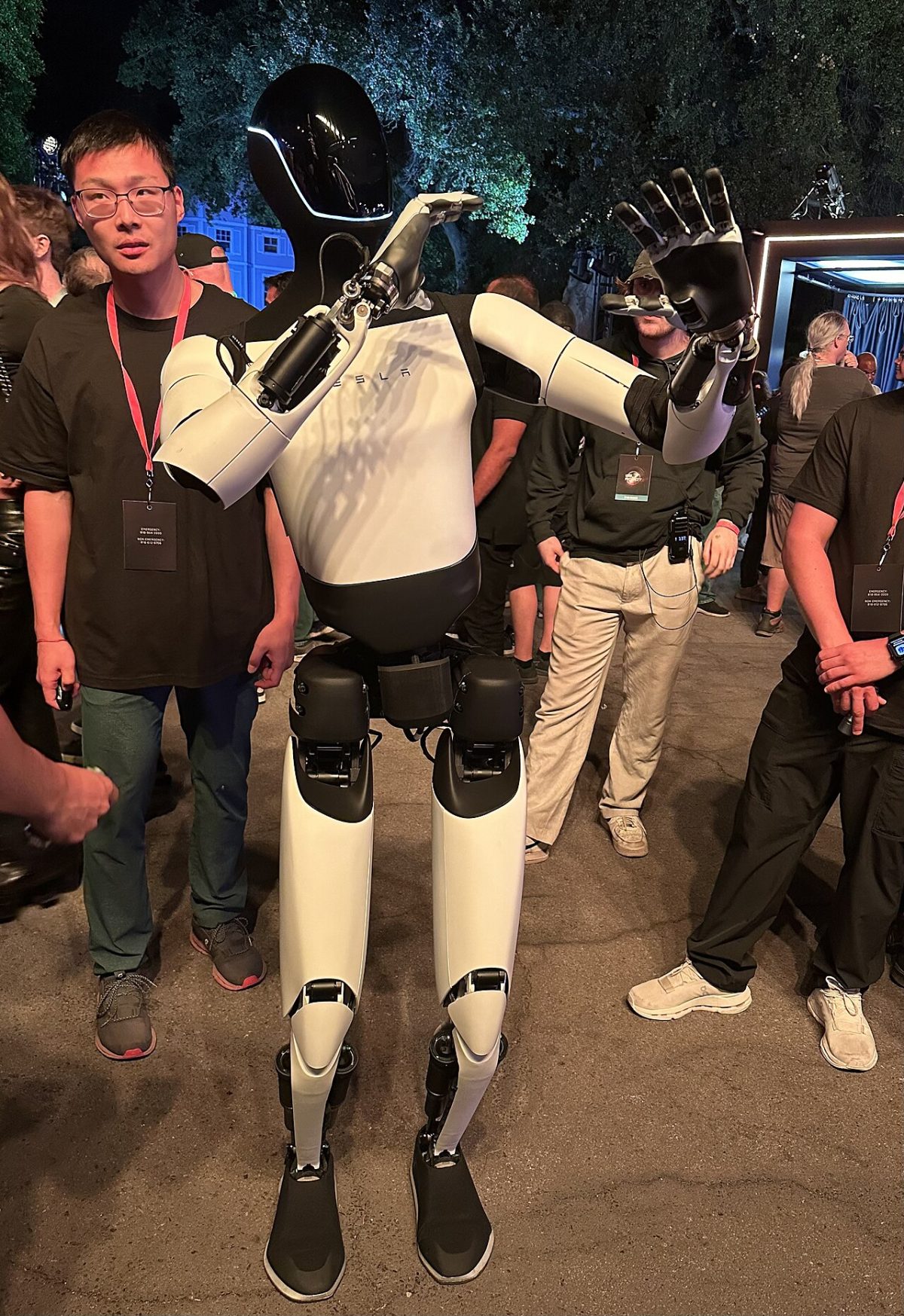
Western competitors — including Boston Dynamics, Agility Robotics, and Tesla’s Optimus programme — remain in lower-volume production phases, constrained by higher labour costs, smaller government incentives, and supply chains that are still being assembled. The 97% global market share figure reflects a structural gap that will take years to close rather than quarters.
What It Means for Labour and Industry
UBTECH’s Walker S robots are designed primarily for industrial logistics and light assembly tasks — replacing roles that have already experienced pressure from conventional automation. The step-change in production volume means that deployment costs, currently in the range of tens of thousands of dollars per unit, are expected to fall significantly as manufacturing scales. Analysts covering the sector have drawn parallels to the cost curve of industrial robotic arms, whose average unit price dropped more than 80% between 2000 and 2020 as Chinese manufacturers entered the market at scale. If humanoid costs follow a similar trajectory, the addressable market expands well beyond niche factory environments into warehousing, elder care, and public-sector applications.