
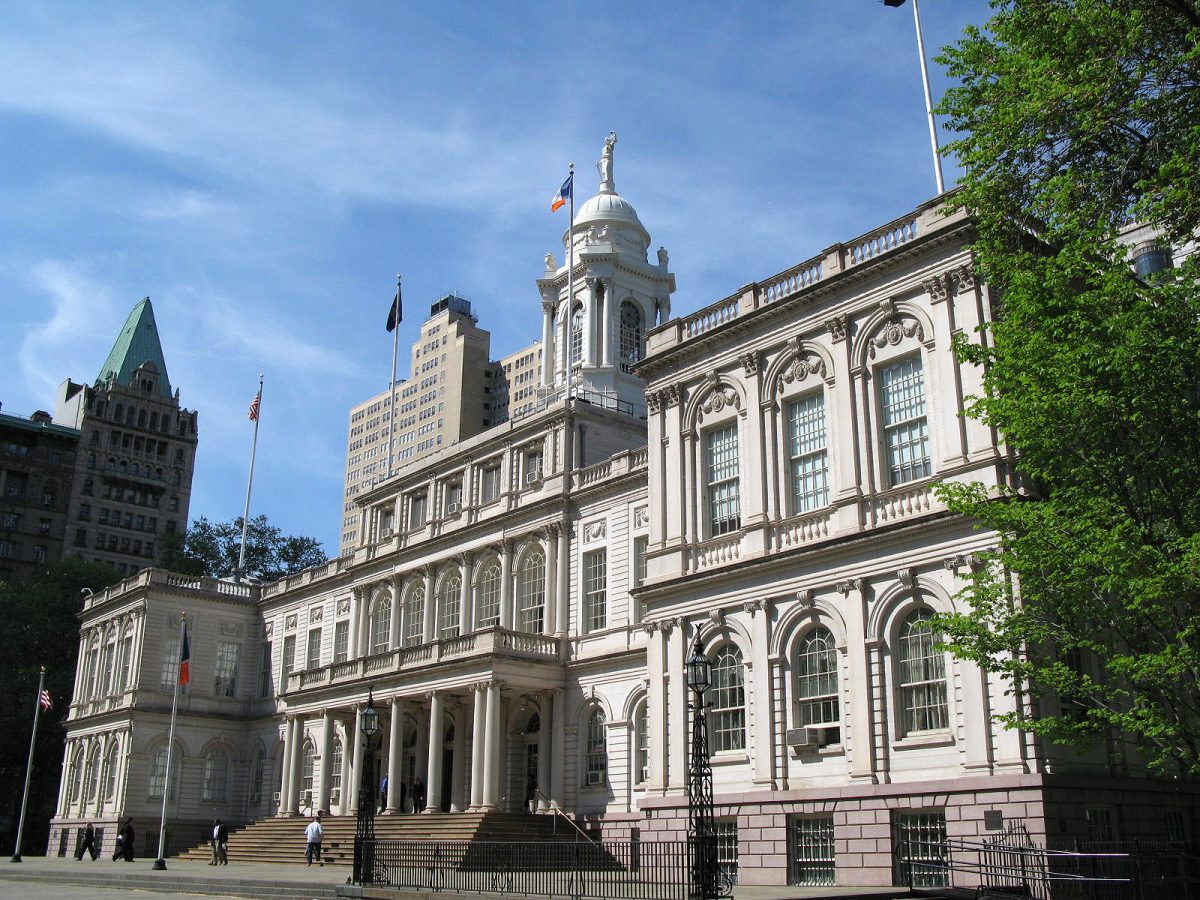
- Ten bills. New York City Council Speaker Julie Menin unveiled a package of AI legislation on September 25 that would require kill switches on AI systems sold in the city, give whistleblowers a share of recovered fines, and allow New Yorkers to sue AI companies for harm.
- National vacuum. Washington has not passed a federal AI safety law; New York City — where OpenAI, Anthropic, Google and Meta have each expanded operations — is writing its own framework, following California’s third-party audit mandate signed earlier this month.
- Hearing date. All 51 City Council members will convene on October 5; Sam Altman and Dario Amodei have been summoned to testify, though neither is expected to appear.
City Council Speaker Julie Menin announced the package at a press conference on Friday, framing the legislation not as a restraint on AI growth but as the infrastructure New York needs to remain “the AI capital of the world.” The bills were formally introduced on September 25 and cover six distinct areas of AI governance, from pre-sale validation to chatbot privacy.
The Kill Switch Bill
The lead measure would require any AI system sold or deployed in New York City to clear independent third-party validation before going to market. Validators would assess data quality, bias, privacy exposure and security vulnerabilities. Crucially, every system would also require a human override mechanism — a “kill switch” in Menin’s framing — that allows operators or regulators to interrupt the AI without technical barrier. Violations would carry fines of $25,000 per instance; because many AI deployments involve multiple simultaneous agents, the per-instance structure is designed to scale penalties with the scope of non-compliance.
Whistleblowers and Liability
A companion bill would allow whistleblowers — employees, contractors, or members of the public — to receive a share of any fines or penalties the city recovers from AI companies that violate applicable laws. Menin described it as the first measure of its kind in the United States. A separate liability bill would let New Yorkers sue AI developers when harm results from third parties exploiting foreseeable vulnerabilities the developer failed to address with reasonable safeguards. Additional measures in the package would require city government contractors to report AI safety incidents within 24 hours, bar false or misleading safety claims, impose privacy rules on conversational AI systems, and require the city to map out its preparedness for AI-driven attacks on municipal infrastructure.
The Regulatory Geography
New York’s move follows California’s landmark bill mandating third-party audits of AI systems, which Governor Gavin Newsom is expected to sign before September 30. New York’s package is broader in scope — it covers not just audits but liability, whistleblowing, incident reporting and procurement — and targets the city level rather than the state. That distinction matters: New York City’s economy is larger than most countries, and the concentration of AI investment, talent and deployment infrastructure there gives the Council unusual de facto leverage over companies that have no imminent plan to leave. The October 5 Committee of the Whole hearing, with all 51 members attending, is expected to be the largest public legislative scrutiny of AI companies that any US jurisdiction has held.