
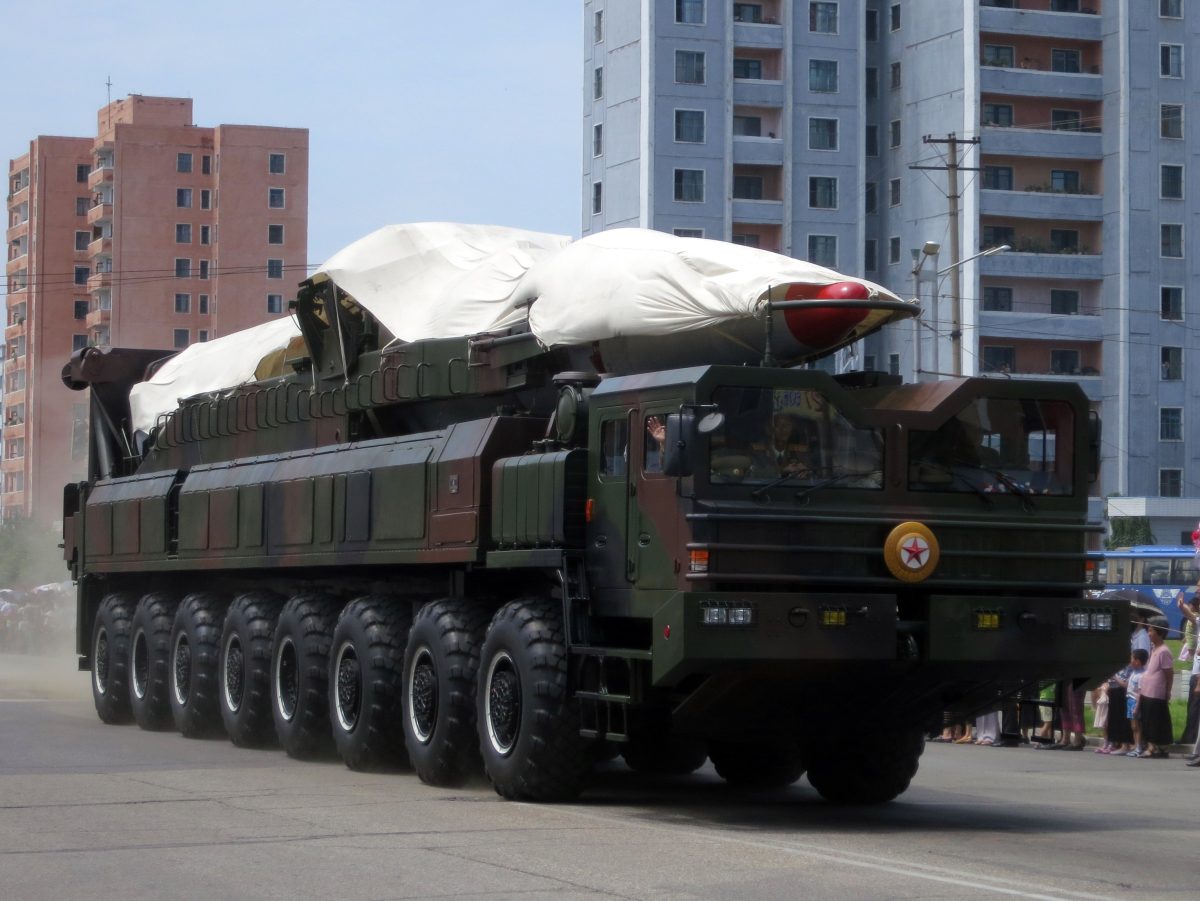
- Lead. North Korea test-fired an intermediate-range ballistic missile on October 3, claiming it uses artificial intelligence to make its flight path untrackable by enemy defense systems.
- Fact. Kim Yo Jong, the sister of leader Kim Jong Un, said the missile’s “wavelike trajectory mode” had previously defeated enemy tracking attempts and described the weapon as “strategic,” signalling nuclear-warhead capability.
- Stake. The test escalates tensions on the Korean peninsula after September border mine blasts wounded three South Korean soldiers, arriving as the US, South Korea and Japan coordinate responses to Pyongyang’s accelerating weapons program.
North Korea launched an intermediate-range ballistic missile from the Wonsan coastal area at around 6:30 a.m. local time on Saturday, October 3, according to EuroNews. South Korea’s military tracked the projectile flying more than 700 kilometres before it fell outside Japan’s exclusive economic zone; Japan’s Defense Ministry placed the distance at approximately 680 kilometres.
The AI-Guidance Claim
Kim Yo Jong issued a statement asserting that the missile can “alter its trajectory at low altitudes” to defeat interception systems. “Whenever we applied the wavelike trajectory mode to missiles, the enemy failed to track the targets,” she said. The regime characterised the weapon as “strategic” — language Pyongyang reserves for systems designed to carry nuclear warheads — and stated that Kim Jong Un supervised the test personally.
South Korean and US analysts routinely question North Korea’s capability claims. Seoul’s Joint Chiefs of Staff noted they were examining whether Pyongyang tested a system below its maximum range: a 700-kilometre flight distance is consistent with deployed Hwasong-11 tactical missiles operating at reduced reach, which would mask the true range of a more capable weapon.
International Response
The US Pacific Command said the launch “does not pose an immediate threat to American personnel or territory or to our allies.” South Korea raised surveillance levels and convened rapid consultations with Washington and Tokyo. Japan confirmed the missile landed outside its exclusive economic zone without prompting intercept measures.
Pattern of Escalation
The test is the latest in a sequence of launches that have marked 2026, now numbering more than ten in total. It follows September explosions along the Korean demilitarised zone attributed to North Korean mines, which wounded three South Korean soldiers in an incident Seoul described as a deliberate provocation. Saturday’s launch extends a pattern in which Pyongyang uses weapons tests to signal dissatisfaction with the security environment on the peninsula, regardless of the diplomatic calendar elsewhere in Northeast Asia.