
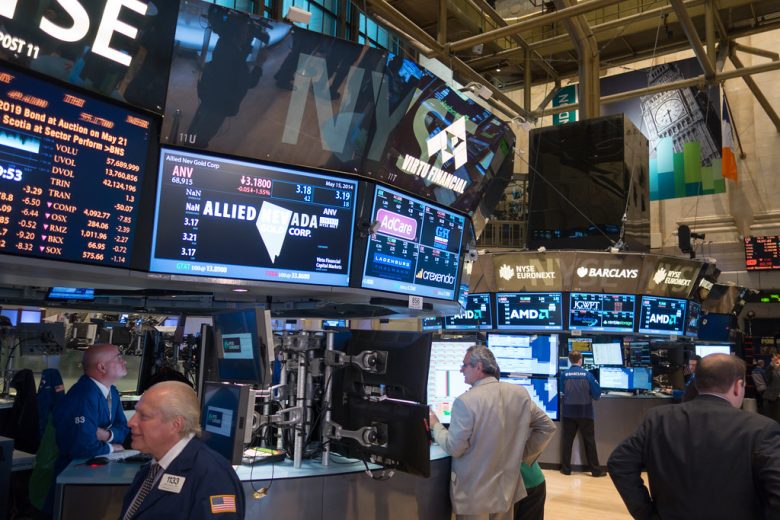
- Turnaround. The Philadelphia Semiconductor Index rose 1.6% on Monday, ending an eight-session losing streak that was the longest since October 2008.
- Fact. The Nasdaq 100 gained 1.2% — its strongest single-session advance in two weeks — while the S&P 500 added 0.4% to close at 7,690.
- Stake. The rebound comes ahead of a packed earnings week for mega-cap tech firms, and traders are watching whether the sector can sustain gains or whether the prior losing streak reflects a deeper reassessment of AI-driven valuations.
Wall Street started the week on firmer footing on Monday, with technology and semiconductor shares recovering ground after what had been the most sustained chip-stock selloff in nearly two decades. The Philadelphia Semiconductor Index added 1.6%, snapping eight consecutive losing sessions — the longest run since October 2008, according to market data compiled by KuCoin. The Nasdaq 100 rose 1.2%, its biggest one-day gain in two weeks, while the broader S&P 500 gained 0.4%, closing at 7,690.
What Broke the Streak
The prior eight-session slide in chip stocks reflected a confluence of concerns: rising bond yields above 5%, Federal Reserve hawkishness, and renewed questions about the return on the enormous capital expenditures flowing into AI infrastructure. Chip stocks had led Wall Street lower last week as the AI sector appeared to lose momentum, dragging the index to its longest losing run since the depths of the global financial crisis.
Monday’s bounce did not coincide with any single catalyst, but analysts pointed to technically oversold conditions and positioning into earnings season as the most plausible drivers. Several large semiconductor firms are due to report quarterly results this week, and traders appeared willing to bet that results would at least partially validate the heavy AI-related capital spending of recent quarters.
Crypto Remains Under Pressure
Bitcoin edged toward $83,000 during the session but failed to break through that level and retreated, trading near $81,500 as of late Monday. KuCoin’s market report placed near-term support at $81,300–$81,500 and identified $82,000–$82,200 as the first significant resistance zone. BTC needs to reclaim $82,000, according to the report, to ease downside pressure. Ether was marginally softer at $2,408. The crypto Fear and Greed Index slipped to 55 from 59 a day earlier, indicating a slight cooling of bullish sentiment.
Bitcoin has surged roughly 44% over the past 90 days, according to Yahoo Finance market data, but remains about 34% below its all-time high and is still negative for 2026, reflecting the volatility that has accompanied elevated inflation and the oil-driven macro backdrop.
The Fed Decision Looms
Markets are positioning ahead of the Federal Reserve’s next rate decision, expected at the October 27–28 meeting. Policymakers raised the target range by 25 basis points to 3.75%–4.00% in September, and with September CPI coming in at 3.7% year-on-year — fuel costs the dominant driver — the question is whether at least some Fed officials will push for a further hike before year-end. Bond yields above 5% have already acted as a de-facto tightening force on equity valuations, particularly for growth names that trade on distant earnings.