
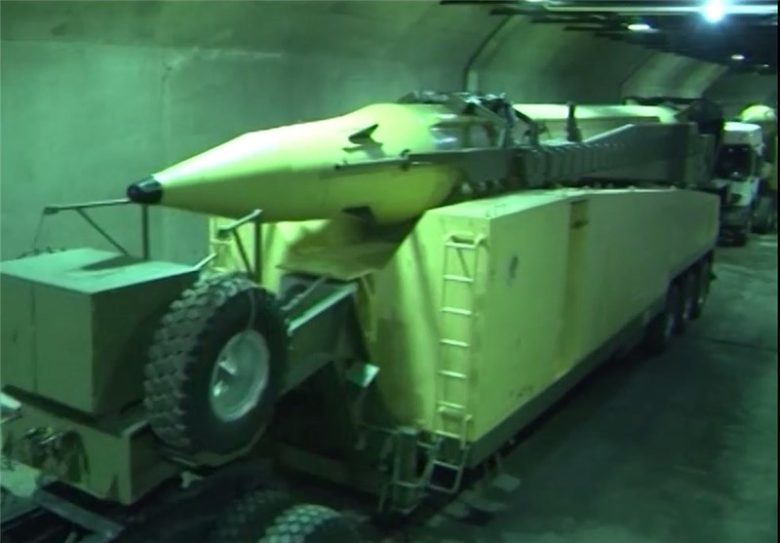
- Lead. Iran’s Revolutionary Guard has formally lifted a years-old self-imposed ceiling on its ballistic missile range, removing a constraint that had capped its missiles at 2,000 kilometres — just short of Southern Europe.
- Fact. IRGC spokesman Gen. Hossein Mohebbi announced the change at a Tehran press conference, saying “that restriction has been lifted for us,” without specifying a new target range.
- Stake. The move widens the theoretical threat perimeter at a moment when the US maintains a maritime blockade of Iranian ports and Abu Dhabi peace talks are producing no visible progress.
Iran’s Islamic Revolutionary Guard Corps announced Monday that it has ended its self-imposed 2,000-kilometre cap on ballistic missile range, a constraint that dated to 2017. The announcement follows a warning from Supreme Leader Ayatollah Mojtaba Khamenei that any threat from the US or Israel would be met with a response without geographical limits, and an order to commanders to update their target lists.
What Changed and Why
The original 2,000-km ceiling was set by Iran’s late Supreme Leader Ali Khamenei and revealed publicly in 2017. That range covers targets across the Arabian Peninsula, the Levant, most of Egypt and parts of Southeast Europe. Iranian officials described the limit as a voluntary restraint rather than a technical ceiling.
Gen. Mohebbi said Iran would “demonstrate these capabilities in practice” rather than through public declarations. He did not confirm whether Iran currently possesses missiles that exceed the old limit. US officials have previously assessed that Iran’s space launch programme could be adapted to build intercontinental ballistic missiles, though no such system has been tested.
Context: The Ongoing Conflict
The United States and Israel launched joint military operations against Iran on February 28, 2026. Since then, the US has maintained Task Force Iron Gate, a maritime interdiction force in the Persian Gulf. Iran retains a chokehold on the Strait of Hormuz, through which a large share of global oil exports transit.
Peace talks opened in Abu Dhabi on Monday. Early rounds produced no visible progress, with Russia reportedly rejecting European demands for a ceasefire sequencing that would precede territorial discussions. The missile announcement adds a new variable to those negotiations: Iran is signalling that any settlement must account for a broader strike envelope, not just current arsenals.
What Analysts Are Watching
The practical significance of the announcement remains limited until Iran demonstrates a missile system that exceeds 2,000 km in a test. Analysts have noted that the previous limit was widely understood as political rather than technical. What matters more in the near term is whether the announcement shifts Iran’s negotiating posture in Abu Dhabi — or whether it is intended primarily to reassure a domestic audience that the IRGC’s deterrent is intact.
The escalation fits a pattern of raising the diplomatic cost of continued pressure. Iran’s earlier threat to exit the Nuclear Non-Proliferation Treaty in the event of further US strikes was part of the same strategic signalling: expanding the range of unacceptable outcomes to strengthen its hand before any ceasefire framework takes shape.