
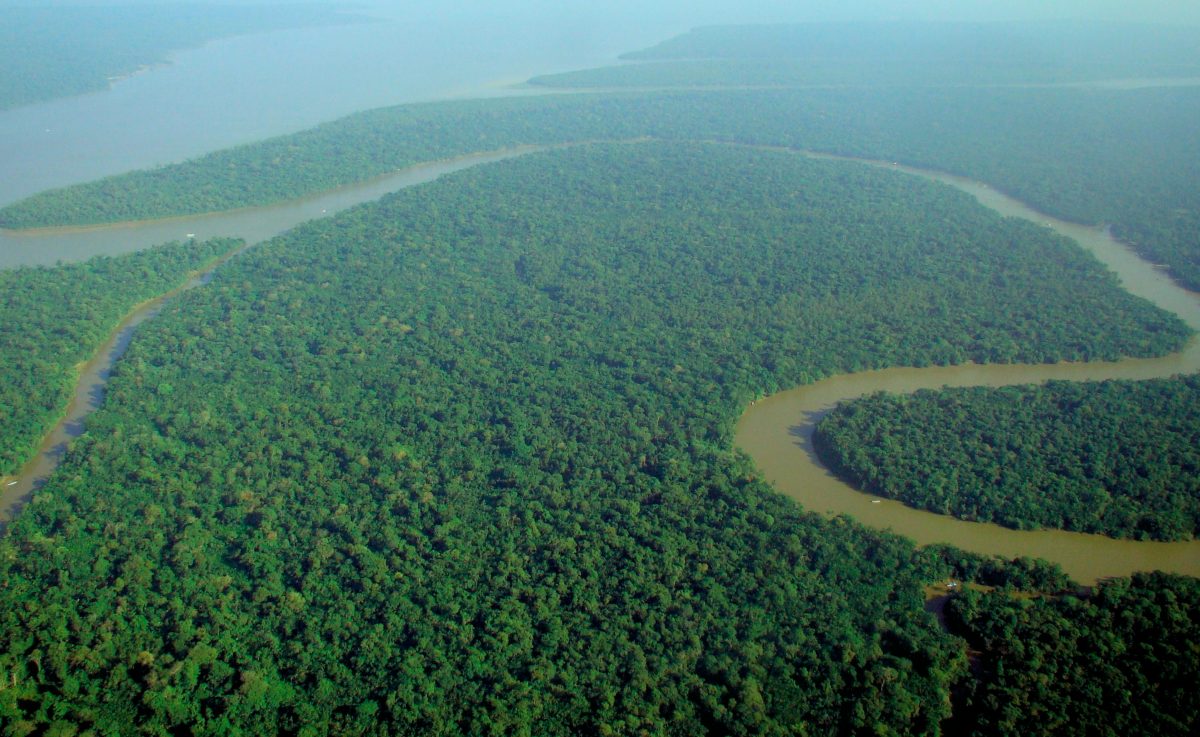
- Lead. Colombia’s new government revoked a decree that had shielded 42% of the country’s territory from new mining and oil contracts, reopening the Colombian Amazon biome to extraction licences for the first time since August.
- Fact. The revoked order — Resolution 0961, signed by former President Gustavo Petro on August 4 — covered about 483,283 square kilometres, an area larger than Spain, and barred new mining concessions and oil and gas exploration across the entire Amazon region.
- Stake. Environmental advocates have called the reversal “ecocide” and warn that it removes a legal firewall from one of the world’s largest remaining carbon sinks, while the new government argues existing forest protections remain in force.
On October 23, 2026, Colombia’s Environment Ministry under President Abelardo de la Espriella signed Resolution 1405, formally cancelling the Amazon reserve designation that the Petro administration had issued just eleven weeks earlier. Colombia One reported the official announcement on October 26.
What was revoked
Petro had protected 42% of Colombia’s national territory by designating the Amazon biome as a permanent reserve days before leaving office. The measure blocked new mining concessions and new oil and gas exploration and production contracts across roughly 483,283 square kilometres — a region whose water cycles also supply rivers that feed Bogotá. No existing licences were cancelled; the order targeted only future permits.
Environment Minister Fabio Arjona defended the revocation by arguing that Petro’s resolution had not completed the legally required prior consultation with Afro-Colombian, Raizal and Palenquero communities. “It did not, on its own, guarantee effective protection of the Amazon biome,” Arjona said. The ministry stressed that other laws — including national parks statutes and environmental crime legislation — remain in place and continue to constrain what licences can be issued.
Wider policy reversal
The revocation is part of a broader pivot in Colombian environmental policy since de la Espriella’s inauguration. Democracy Now reported on November 18 that the new government had also withdrawn Colombia from the Santa Marta coalition, a group of 57 governments pushing to phase out fossil fuels, and had rejected a fossil fuel phaseout at COP31 in Antalya, where delegates are negotiating the terms of an energy transition.
Former environment minister Irene Vélez-Torres, who served under Petro, described the cumulative effect as “ecocide.” She also raised concerns about two new US agreements on critical minerals and nuclear energy that the de la Espriella government signed in October, which she described as damaging to Colombian sovereignty over its natural resources.
Industry and legal landscape
The practical near-term effect of Resolution 1405 is to restore the legal pathway for new mining and oil exploration permits inside the Amazon region. The government has not yet announced specific licence applications, and standard environmental review processes remain a requirement for any project. Critics, however, point out that those review processes have historically proved insufficient to prevent large-scale forest clearance once commercial extraction begins.
Colombia’s Amazon overlaps with the broader transboundary forest that spans Brazil, Peru, Bolivia, Venezuela and Ecuador. Advocates argue that protection measures in one country carry limited value if neighbouring states pursue different policies — and that the cumulative pressure from multiple national reversals could accelerate the region toward a tipping point that scientists have linked to irreversible drying of the forest ecosystem.