
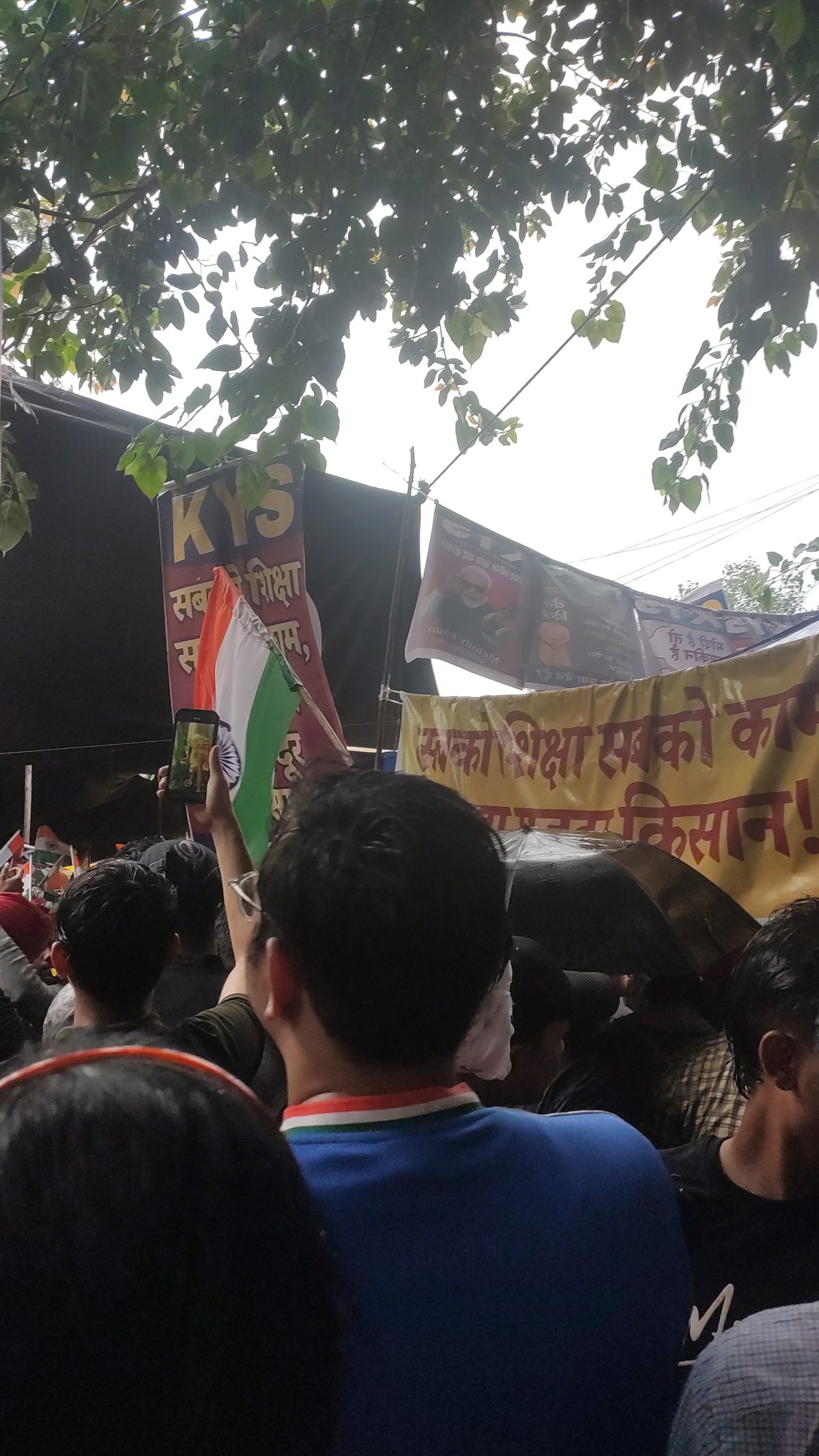
- Lead. More than 10,000 young Indians marched on Parliament on July 20, only to be met with tear gas and baton charges in the movement’s largest confrontation yet with Prime Minister Modi’s government.
- Fact. Nearly 180 people were injured in the clashes — 118 security personnel and 60 protesters — as police dragged demonstrators away from Jantar Mantar, Delhi’s designated protest site.
- Stake. What began as a satirical social media joke has drawn 21 million Instagram followers in weeks, giving India’s exam-reform anger a scale that opposition parties have failed to match for years.
India’s youth-led Cockroach Janta Party (CJP) movement has grown from an online joke into one of the most disruptive challenges to Prime Minister Narendra Modi’s government since his 2024 re-election. On July 20, protesters attempting to march toward Parliament were dispersed with tear gas and batons, with near 180 people injured in the confrontation, according to NPR reporting from the scene.
From Meme to March
The movement emerged roughly two months before the July 20 clash, driven by public fury over alleged irregularities in India’s NEET university entrance examinations — a process that shapes access to medical colleges for millions of students each year. Allegations of paper leaks triggered demands for the resignation of Education Minister Dharmendra Pradhan, along with financial compensation to families of students who died by suicide in the aftermath of the scandal.
What distinguished the Cockroach movement from earlier protest waves was velocity: the CJP’s social media accounts accumulated more than 21 million Instagram followers within days of launch. Founder Abhijeet Dipke, speaking after the police crackdown, offered a brief statement: “We are going to continue our protest.”
Escalation and Government Outreach
Opposition leader Rahul Gandhi joined dozens of Congress lawmakers for a sit-in outside Modi’s residence on Tuesday; police removed them. A senior government minister subsequently held talks with CJP representatives — the first official engagement after nearly a month of silence — but the meeting produced no concessions sufficient to defuse the unrest. Hundreds of demonstrators remained camped at Jantar Mantar under heavy police presence after the clashes.
Twenty-year-old protester Sona Bisht spoke to journalists from the site: “If the government thinks that doing this with Gen Z, they can stop us, then that won’t happen.”
The Structural Grievance
India’s national examination system has faced recurring criticism for its vulnerability to leaks and the acute pressure it places on students. The NEET controversy touches deeper anxieties about youth unemployment and government accountability — themes that the CJP’s satirical framing has made newly accessible to an audience that previously disengaged from formal politics. With Modi’s government so far declining to commit to Pradhan’s removal or to structural reform, the standoff shows no clear path to resolution.