
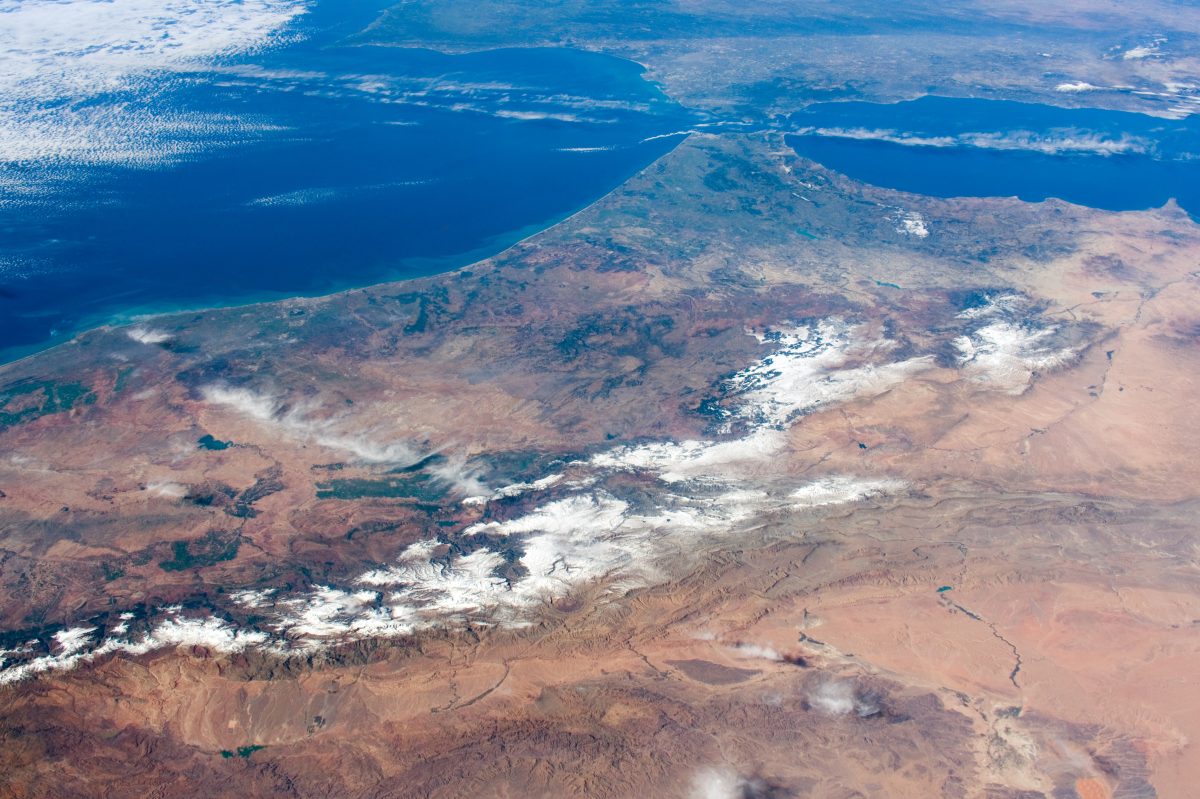
- Lead. Spain’s Supreme Court last month barred returns of sea-intercepted migrants to Morocco, and the number of daily crossings at Ceuta climbed steadily — until this week’s surge overwhelmed the enclave in under 24 hours.
- Fact. More than 49,000 people crossed from Morocco into Ceuta on July 30; at least 57 died — some by drowning, others in a stampede at the breakwater fence at Tarajal beach.
- Stake. The crisis prompted Spain’s prime minister to fly to the territory, France and Italy to restore border checks on travel from Spain, and renewed pressure on the EU to renegotiate its migration compact with Morocco.
A border overwhelmed
The scale of the crossing was without precedent in Ceuta’s recent history. Spain’s Interior Ministry estimated that roughly 49,000 people arrived in a single day, with Ceuta’s regional government putting the figure closer to 60,000. Deaths occurred both in the water — migrants spent hours swimming across — and in the crush of bodies at Tarajal beach’s breakwater fence. The final death toll stood at at least 57 as rescue operations continued into Thursday.
Regional President Jesus Vivas declared an “absolute humanitarian and social emergency” and called for military reinforcement. Spain’s Interior Ministry, which declined to declare a national emergency, announced that 60 armed forces troops would be sent to reinforce the border. Prime Minister Pedro Sanchez flew to the territory to assess the situation in person.
The court ruling that changed the calculus
Officials and analysts traced the immediate trigger to a ruling by Spain’s Supreme Court, issued weeks before the surge, that migrants intercepted at sea while attempting to reach Ceuta or Melilla cannot be returned to Morocco under the country’s existing legal framework. A Guardia Civil spokesperson described the effect: “It has been a slow trickle since the Supreme Court’s ruling, but today has been an explosion.”
People-smuggling networks moved quickly to exploit the change in enforcement conditions, according to Spanish security officials. The pattern mirrors a similar episode in May 2021, when approximately 10,000 people crossed into Ceuta in a matter of days after Morocco temporarily relaxed its own border controls — a move widely interpreted at the time as leverage in a bilateral dispute with Madrid over the Western Sahara.
Europe scrambles to respond
The ripple effects moved quickly beyond Ceuta itself. Italy’s government announced the temporary restoration of some border controls on travel from Spain. France ordered extra checks along its border with Spain. Both moves signalled that a migration surge contained within one Spanish exclave can, under EU free-movement rules, become a concern for governments across the continent within hours.
Spain said it was collaborating with Morocco on the urgent return of recent arrivals. By Friday evening, Spanish authorities reported that most of those who had crossed had returned to Moroccan territory — though the structural conditions that produced the surge remained unchanged.
A pattern with deep roots
Ceuta and Melilla are the European Union’s only land borders with Africa, and both have been pressure points in EU-Morocco relations for decades. Migration surges at these enclaves have historically tracked the state of diplomatic relations between Rabat and Madrid, as well as shifts in Spanish and EU policy on pushbacks and asylum processing.
The July 2026 crisis arrives at a moment when the EU is still negotiating a broader migration pact designed to distribute responsibility for arrivals more evenly among member states. Whether the scale of the Ceuta crossing accelerates or complicates that process is a question EU interior ministers are expected to address when they meet in September.