
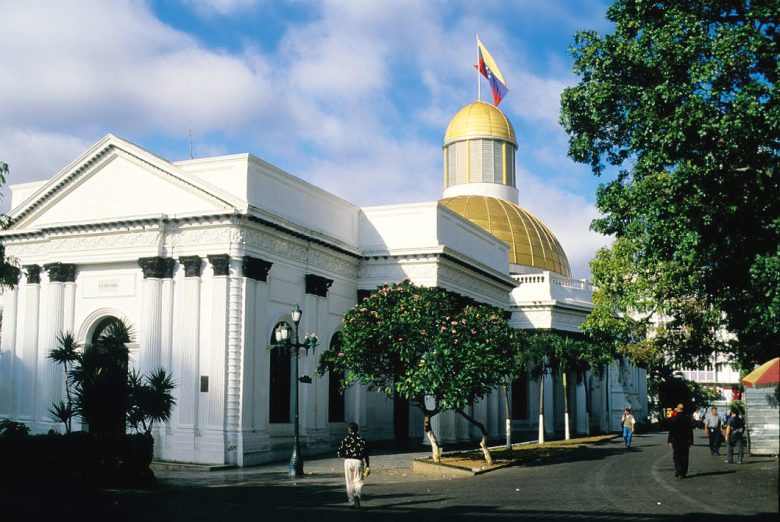
- Opening session. Venezuela’s government and a US-recognised opposition bloc convened in Caracas on 6 August for the first formal day of talks aimed at creating conditions for new elections.
- Key absence. Nobel Peace Prize laureate María Corina Machado — polling as the opposition’s most popular figure — was not invited, prompting immediate criticism from her supporters.
- Stake. The dialogue is the centrepiece of a three-stage US plan for stabilisation, economic recovery, and a democratic transition; its legitimacy hinges partly on who is allowed to participate.
Venezuela’s political transition talks moved from phone calls and technical planning to an in-person session in Caracas on 6 August 2026, marking the formal launch of a framework that US officials have spent months assembling. Al Arabiya reported that both sides had established technical working groups in prior weeks before committing to the face-to-face format.
The Delegations
Sitting across from each other in Caracas were two blocs whose composition was itself the product of months of negotiation. The government is represented by Jorge Rodríguez — president of the current National Assembly and brother of acting president Delcy Rodríguez — a figure who has handled most of Caracas’s sensitive diplomatic contacts in recent years. The opposition bloc is led by Dinorah Figuera, a former congresswoman chosen to represent the rump of the 2015 National Assembly, the last legislative body the United States formally recognises as legitimate.
That choice of baseline — the 2015 assembly rather than more recent institutions — reflects Washington’s long-standing refusal to accept the electoral results that consolidated Nicolás Maduro’s hold on power. By anchoring the talks to that reference point, the US sought to ensure the framework does not implicitly legitimise the government’s subsequent electoral record.
The Absence That Overshadows the Talks
María Corina Machado, who lives in exile and was awarded the Nobel Peace Prize for her sustained opposition campaign inside Venezuela, was not invited to participate. Her exclusion draws a clear line around who the government is willing to accept as a counterpart — and around what kind of opposition the talks are designed to engage. Machado’s supporters warned the dialogue risks producing an agreement without the popular mandate needed to hold.
Her absence is not a procedural detail. Any election framework that emerges from these talks would need to command public trust inside Venezuela, and Machado’s name is the one most associated with the democratic opposition cause. Whether the government eventually agrees to broaden participation — a concession it has so far resisted — will be one of the first tests of whether the talks are substantive or performative.
The US Framework and Wider Context
The dialogue fits into a three-stage US plan: stabilise the political environment, pursue economic recovery, then move toward political reconciliation and elections. Venezuela’s twin earthquakes earlier this year, which killed more than 5,300 people, created both humanitarian urgency and a diplomatic opening, pushing outside actors to re-engage. Marco Rubio publicly announced the transition framework would begin in early August — a signal of Washington’s investment in the process.
Separately, the Dominican Republic and Venezuela have agreed on a framework to gradually restore diplomatic relations severed after Santo Domingo questioned the results of the disputed 2024 Venezuelan presidential election, suggesting regional normalisation is running in parallel to the US-led process.
Venezuela is not the only Latin American country navigating a fraught post-electoral landscape under international scrutiny. In Peru, Keiko Fujimori took office as president after a narrow win that required court confirmation before it was recognised — a reminder that contested electoral outcomes across the region rarely resolve cleanly or quickly.
Technical working groups established during the Caracas session are expected to meet in the coming days to begin drafting substantive proposals. Whether a credible election timetable emerges — and whether the ground rules prove broad enough to include the opposition’s most prominent figures — will determine how much weight the framework ultimately carries.