
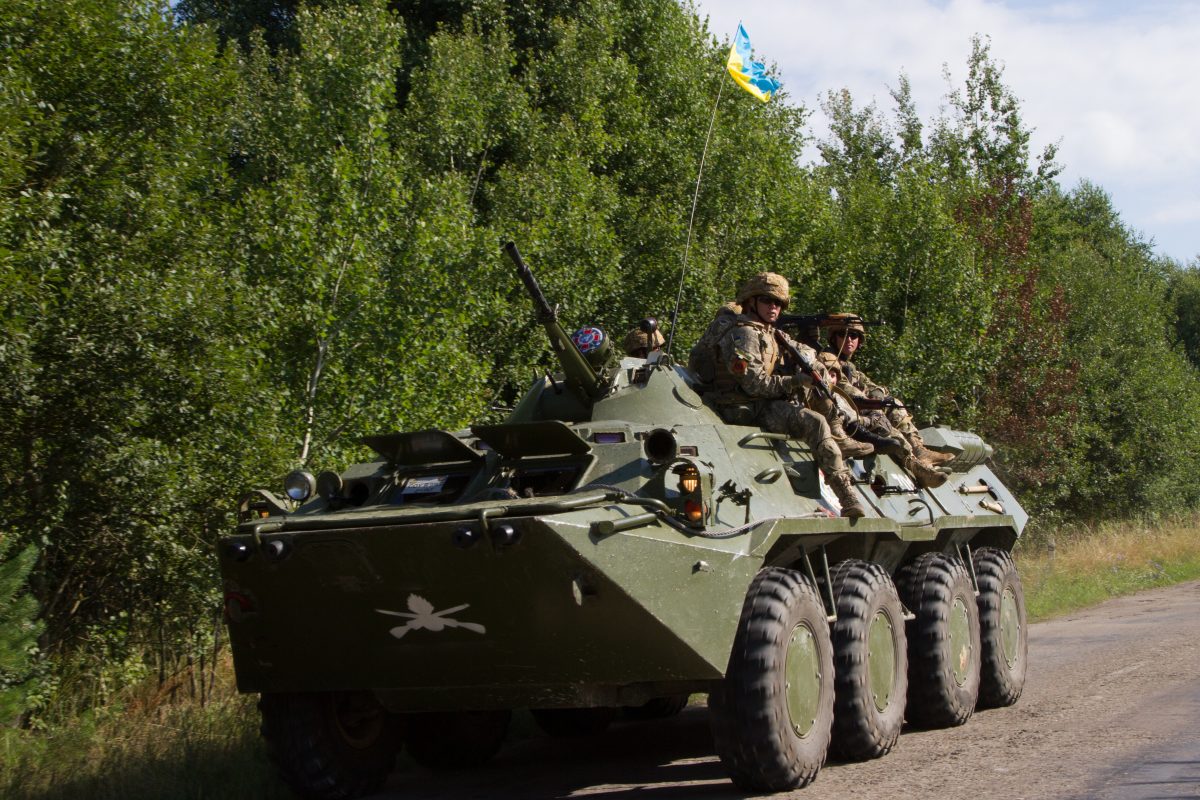
- Lead. Ukraine announced on August 14 the liberation of 26 settlements and at least 745 square kilometres in Dnipropetrovsk — its largest confirmed territorial gain in months — after an operation that pushed Russian forces back across both the Donetsk and Zaporizhia regional borders.
- Fact. President Zelenskyy put Russian losses in the campaign at approximately 10,000 soldiers; Russia suffered 43,000 total casualties in July alone, the highest monthly figure since January 2025.
- Stake. Russia is simultaneously accelerating its missile production, launching 198 ballistic and hypersonic munitions in July and 56 in the first week of August, signalling an intensified strike campaign against Ukrainian energy infrastructure before the Independence Day on August 24 and the winter months ahead.
Ukraine’s ground forces advanced across the Dnipropetrovsk region in a sustained operation that forced Russian troops back across the Donetsk and Zaporizhia regional borders, according to Al Jazeera reporting on August 14. The Institute for the Study of War placed the minimum confirmed recapture at 627 square kilometres; Ukrainian command reported the total above 745 square kilometres (287 square miles) across 26 liberated settlements. “The campaign was carried out exactly as determined,” President Volodymyr Zelenskyy said. Commander-in-Chief Oleksandr Syrskii added: “The operation proved Ukrainian army capability for offensive operations.”
Russian Casualties at a 2025 Peak
The battle has been costly for Russian ground forces. Ukraine recorded approximately 39,000 Russian casualties in June and 43,000 in July — the highest monthly total since January 2025. Zelenskyy placed the death toll within the Dnipropetrovsk campaign itself at around 10,000. On the air-defence side, Ukraine downed more than 40,000 Russian drones in July, a figure that reflects both the scale of Russian aerial pressure and the pace at which Ukrainian crews have adapted their intercept protocols.
The offensive success has come despite continued degradation of Ukraine’s missile-defence reserves. Zelenskyy noted on August 5 that Ukraine is receiving nearly three times fewer anti-ballistic missile interceptors compared with early 2026 — a shortfall that Russian planners are explicitly factoring into the timing of their next escalation phase.
Russia’s Missile Build-Up and the Independence Day Threat
While Ukraine is making gains on the ground, Russia is ramping its missile arsenal at pace. Monthly production of ballistic missiles climbed from 61 in April to 107 in May, 134 in June, and 198 in July — figures that include hypersonic munitions. The first week of August alone saw 56 missiles launched, with strikes hitting Kyiv on August 8 and 11, Odesa on August 9, and Zaporizhia on August 11, where at least nine people were killed.
US intelligence, cited by Ukraine’s Strategic Communications Center on August 8, assessed that Russia is preparing a major strike campaign against energy infrastructure in Kyiv city before Ukraine’s Independence Day on August 24. The stated objective is to disrupt Ukrainian repair efforts before a second intensive winter of strikes — a tactic consistent with the energy-warfare playbook Russia has used since 2022.
The territorial gains in Dnipropetrovsk demonstrate the same capacity for ground surprise that has periodically reset the war’s dynamics, echoing the pattern visible since Ukraine launched over 400 drones at Moscow in the war’s largest single aerial blitz. Whether the summer gains can be consolidated before Russia’s autumn and winter strike campaign intensifies will define the conflict’s trajectory heading into 2027.