
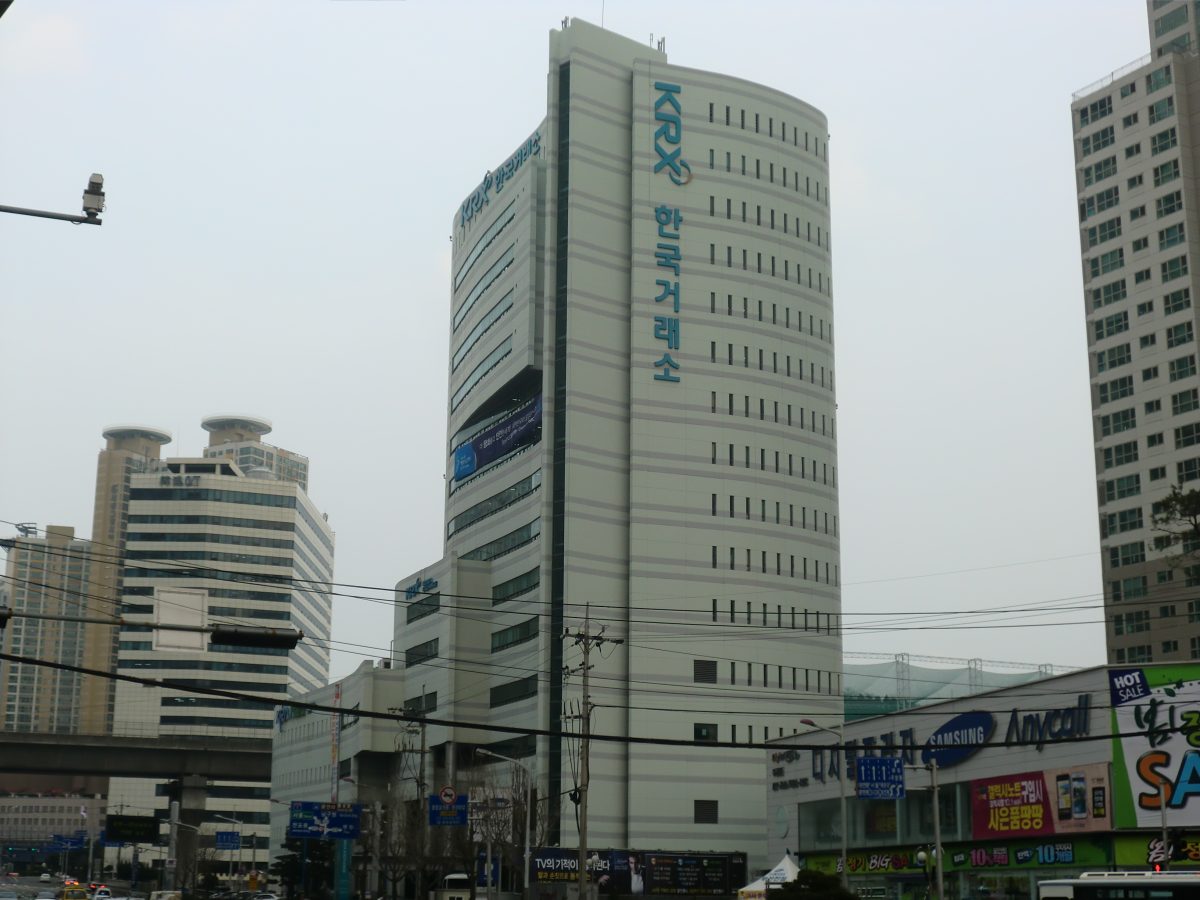
- Lead. South Korea’s KOSPI index plunged 5.5% on Wednesday to close at 6,495.1 points — with intraday losses touching 6.4% — as a sharp semiconductor selloff that began on Wall Street extended across Asian markets, with SK Hynix losing 8.4% and Samsung Electronics falling 7.3%.
- Fact. The Philadelphia Semiconductor Index dropped 5.6% overnight in its biggest single-session decline since late July, with the 30-year U.S. Treasury yield reaching 5.3371% — a level not seen since 2007 — as the primary trigger.
- Stake. Bank of America survey data shows 59% of fund managers are rotating away from AI and semiconductor exposure toward value sectors — more than double the share recorded in July — suggesting the selloff reflects a structural sentiment shift rather than a single-session correction.
The trigger was the bond market. Rising Treasury yields increase the discount rate applied to future earnings, making richly valued technology stocks mechanically less attractive — and few sectors carry higher valuations relative to near-term earnings than memory and AI chips. The 30-year Treasury yield’s breach of 5.3% during Tuesday night’s New York session set off a wave of repositioning that deepened as Asian markets opened Wednesday morning.
The Damage Across Asian Markets
Japan’s Nikkei 225 fell 2.4% and the broader TOPIX index dropped 2.7%, with Kioxia — the Japanese flash memory maker — losing 8.9%, the sharpest single-day decline among major chip names in the region. TSMC and Renesas Electronics also fell in Tokyo trading. Shanghai’s composite index lost 2%, while the MSCI AC Asia Pacific benchmark slid roughly 2% across the session.
The KOSPI’s intraday drop to 6.4% before partial recovery placed South Korea at the epicentre of the selloff. Both of the country’s largest memory manufacturers bore the brunt: SK Hynix, which posted strong quarterly earnings in July, fell 8.4%; Samsung Electronics shed 7.3%. Both companies derive significant revenue from AI server-grade DRAM and NAND flash, making them acutely sensitive to reassessments of AI infrastructure spending cycles. Micron Technology declined 7% in U.S. trading the night before, setting the tone for Asian memory names. Nvidia itself lost 2.3%, reflecting the breadth of the repricing.
What Fund Managers Are Doing
The BofA survey data is the most revealing contextual signal in Wednesday’s move. When 59% of fund managers are actively rotating away from the AI trade in a single month — compared with fewer than 30% in July — the movement is no longer noise around a routine dip but a meaningful shift in how professional allocators are positioning. A similar repositioning drove chip stocks lower ahead of July’s Federal Reserve meeting, though the scale and speed of Wednesday’s decline was larger. After six consecutive days of gains in the sector, profit-taking and yield-driven de-risking converged simultaneously.
Broader Market Context
Brent crude held above $90 per barrel amid lingering Iran-U.S. tensions around the Strait of Hormuz, adding an inflationary dimension that reinforces the case for higher-for-longer interest rates. U.S. S&P 500 futures slipped 0.1% and Nasdaq 100 futures fell 0.2%, indicating the correction has not yet fully worked through American equities. The Federal Reserve’s July meeting minutes, due Wednesday afternoon Eastern time, will be parsed closely for any indication the board is more hawkish than its July statement suggested — a reading that would add another layer of pressure to rate-sensitive growth stocks.
The 10-year Treasury yield sat near 4.69% at the Asian open, a level that, combined with the 30-year at 5.3371%, signals the bond market’s view that the Fed’s cutting cycle is either further off or shallower than markets priced earlier this year. For semiconductor companies trading at elevated forward multiples, that recalibration is not easily absorbed in a single session.