
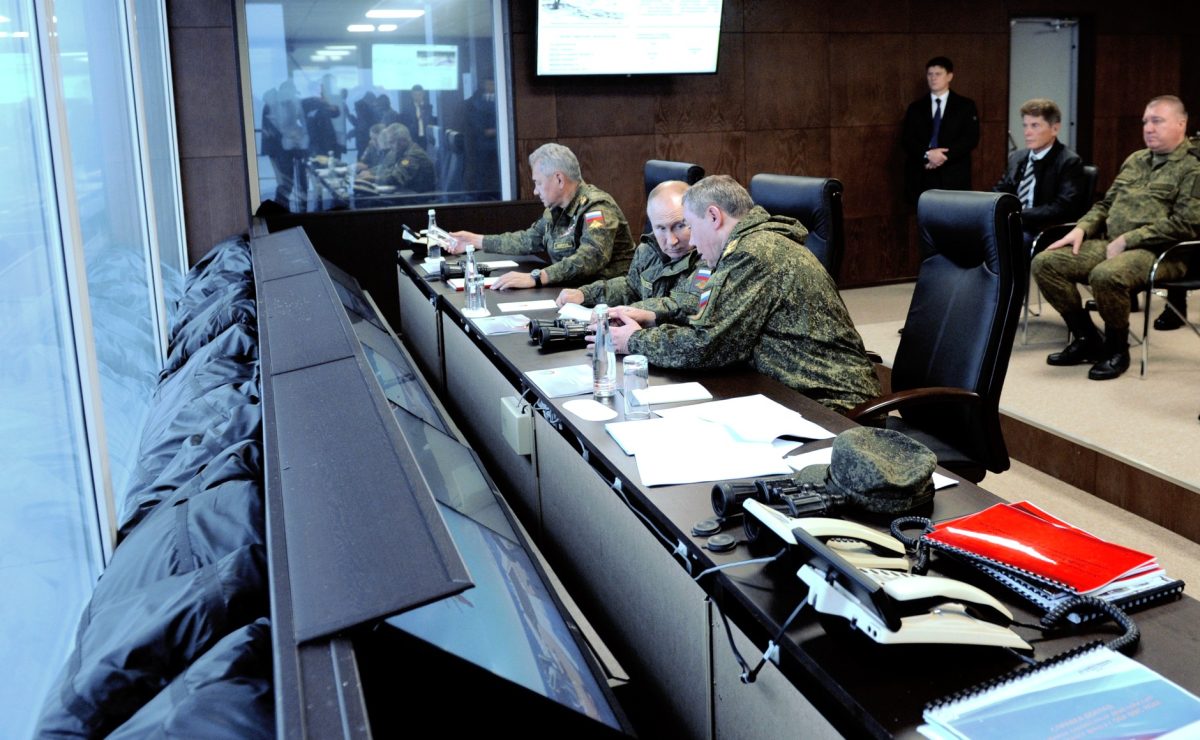
- Scale. Center-2026 involved more than 47,000 troops from China, Russia, Belarus, Pakistan, Kazakhstan, Kyrgyzstan, Mongolia and Tajikistan — the largest multinational exercise on Russian soil this decade.
- Lesson transfer. Russian Defense Minister Andrey Belousov said the drills incorporated “unique experience” from Russia’s ongoing military operations, with live testing of new anti-drone and ground robotic systems.
- Signal. China’s simultaneous diplomatic rapprochement with the US and deepening military integration with Russia reflects a deliberate dual-track strategy that the Xi-Trump summit in September left unresolved.
The People’s Liberation Army’s Central Theater Command formally concluded its participation in Russia’s Center-2026 (Tsentr-2026) strategic exercise with a closing ceremony in Chelyabinsk on Friday, October 3. Chinese troops had deployed to the Chebarkul training ground in Russia’s Ural region, where they trained alongside forces from seven other nations in drills that Russian state media described as applying combat lessons from the Ukraine war.
What Was Tested
According to the PLA Daily, the Chinese contingent deployed Type 99A main battle tanks, drone swarms for real-time reconnaissance, tactical attack drones, unmanned ground vehicles and attack helicopters. The units practiced three-dimensional reconnaissance, integrated information-fire strikes and rapid pursuit operations — doctrines that mirror the combined-arms concepts Russia has been developing in eastern Ukraine. Ground-based robotic systems, including the Bogomol, Impuls, Depesha and Kurier platforms, were also tested alongside drone units during the exercises, according to Russia’s TASS news agency.
Military analyst Song Zhongping said the exercise gave the PLA direct exposure to multi-domain combat against armored formations, noting that recent conflicts have exposed traditional tank columns to drone attrition in ways that demand new countermeasures. “Different countries brought experience from years of counterterrorism and conventional operations,” Song told the Global Times. “The exercise allows militaries to learn from each other’s strengths.”
Geopolitical Context
The timing is notable. The drills concluded days after the September 24 Xi-Trump summit in Washington, at which both sides extended their trade truce and agreed to working-level talks on AI and Taiwan, but left the bilateral military relationship unaddressed. Washington has for years pressed Beijing to limit defence cooperation with Moscow as a condition for improved relations; Beijing has refused to treat the two tracks as linked.
For analysts tracking the PLA’s modernisation, the exercise data feeds into an ongoing debate about how quickly Chinese forces are absorbing drone-warfare doctrine. Xi Jinping removed several senior CMC figures last year amid what analysts interpreted as dissatisfaction with the pace of the military’s adaptation to modern battlefield conditions — a dynamic examined in more detail in earlier reporting on the CMC military purge.
What the Exercise Signals
China’s participation in Center-2026 does not constitute a military alliance with Russia — Beijing continues to reject that framing — but the operational depth of the cooperation is a meaningful indicator. The PLA is studying a live conflict laboratory, testing integrated drone-armour tactics in simulated conditions that approximate what Russian forces have encountered since 2022. Whether those lessons translate into battlefield capability depends on factors — training culture, logistics, command structures — that a two-week exercise cannot replicate. But the knowledge transfer is real, and its trajectory is pointed.