
- Lead. More than 700 people have died and nearly 2,000 have been infected in eastern Congo’s Ebola outbreak — the fastest-growing on African record — since it was declared in May 2026.
- Fact. The WHO says 80% of new cases now fall outside known contact lists, meaning containment has effectively broken down.
- Stake. The Bundibugyo strain has no approved vaccine or treatment; the outbreak has crossed into Uganda, and a US humanitarian worker has tested positive.
Eastern Democratic Republic of Congo is fighting the worst Ebola outbreak in its modern history. As of July 14, at least 1,926 people have been infected and 702 have died since the outbreak was officially declared in May — making it the third-largest Ebola outbreak ever recorded and, according to the Africa Centres for Disease Control, the fastest-growing on the continent.
Contact tracing has broken down
WHO emergency chief Chikwe Ihekweazu delivered a blunt assessment after returning from Bunia, in Ituri province. “Perhaps the most alarming finding is that many of the newly reported deaths are people who died in their communities without ever reaching a health facility,” he said. “And as of today, 80% of new cases are outside our contact lists and so are coming to us from unknown chains of transmission.”
People who die outside the health system cannot be isolated, treated, or have their contacts traced promptly — sharply increasing the risk of further spread. “We have not caught up in the race,” Ihekweazu said. The outbreak, he added, “continues to outpace the response efforts.”
A strain without an approved treatment
The current outbreak involves the Bundibugyo variant of Ebola, a rarer strain for which neither an approved vaccine nor a treatment exists. Congo’s experience with the more common Zaire strain — which claimed more than 2,000 lives in the 2018–2020 Kivu outbreak — produced vaccines and therapies that are not effective here. Clinical trials of an experimental therapeutic began at the Evangelical Medical Centre in Bunia in early July, offering the first potential intervention.
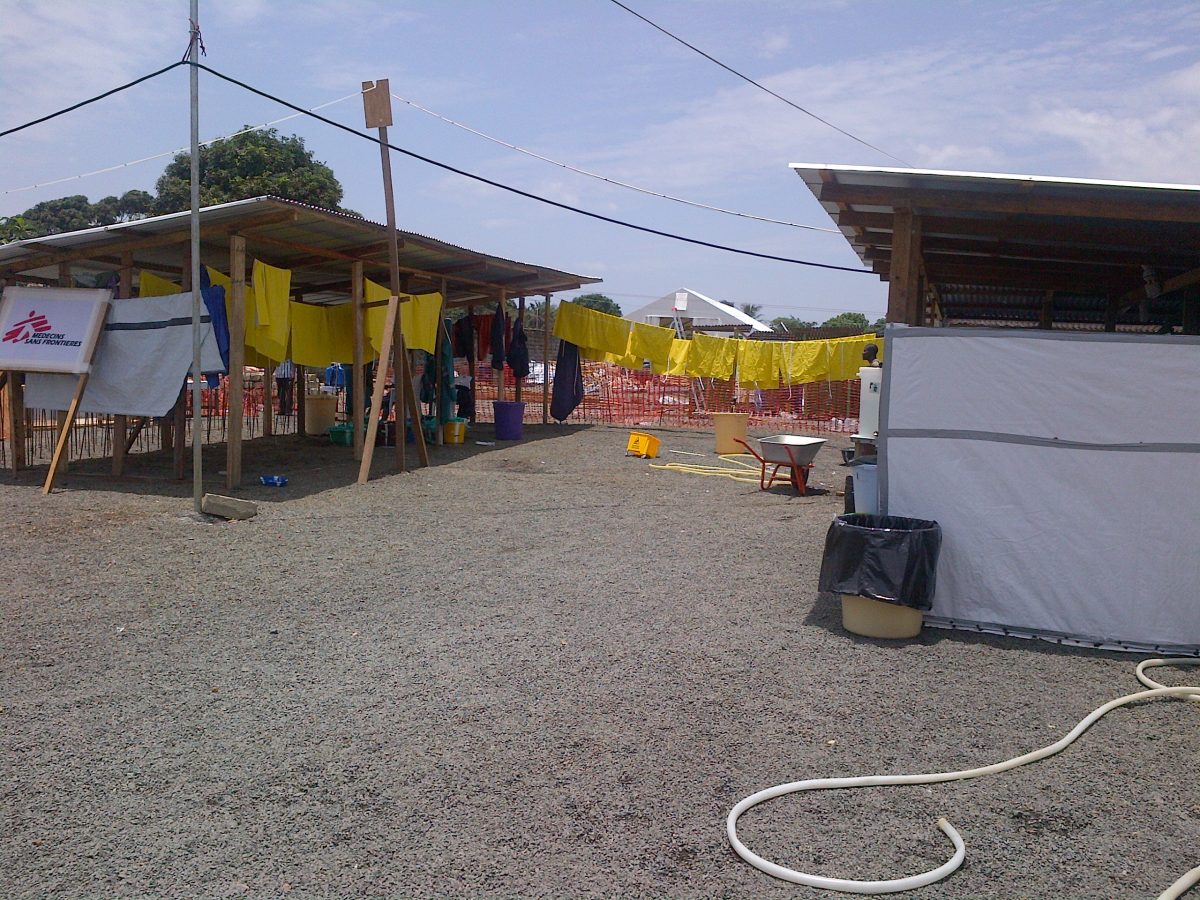
The response infrastructure has expanded rapidly: laboratory capacity has grown from one facility to 14, and treatment capacity in Bunia now stands at roughly 800 beds. But the scale of transmission is outrunning both diagnostics and isolation capacity.
Structural obstacles compound the crisis
The outbreak is unfolding against a backdrop of chronic instability in eastern Congo. Healthcare workers in the region have staged strikes over unpaid salaries. Armed groups have attacked health centres, and community mistrust — rooted in years of conflict — has complicated contact tracing and encouraged families to keep sick relatives at home rather than seek treatment.
Cases have now spread beyond DRC’s borders into Uganda. A US humanitarian worker active in the region has also tested positive, extending concern to international responders on the ground.
The Africa CDC has formally classified the outbreak a public health emergency of continental security, a designation intended to unlock faster funding and cross-border coordination. How quickly that translates into field capacity will determine whether the trajectory bends before the rainy season arrives and road access across Ituri deteriorates further.