
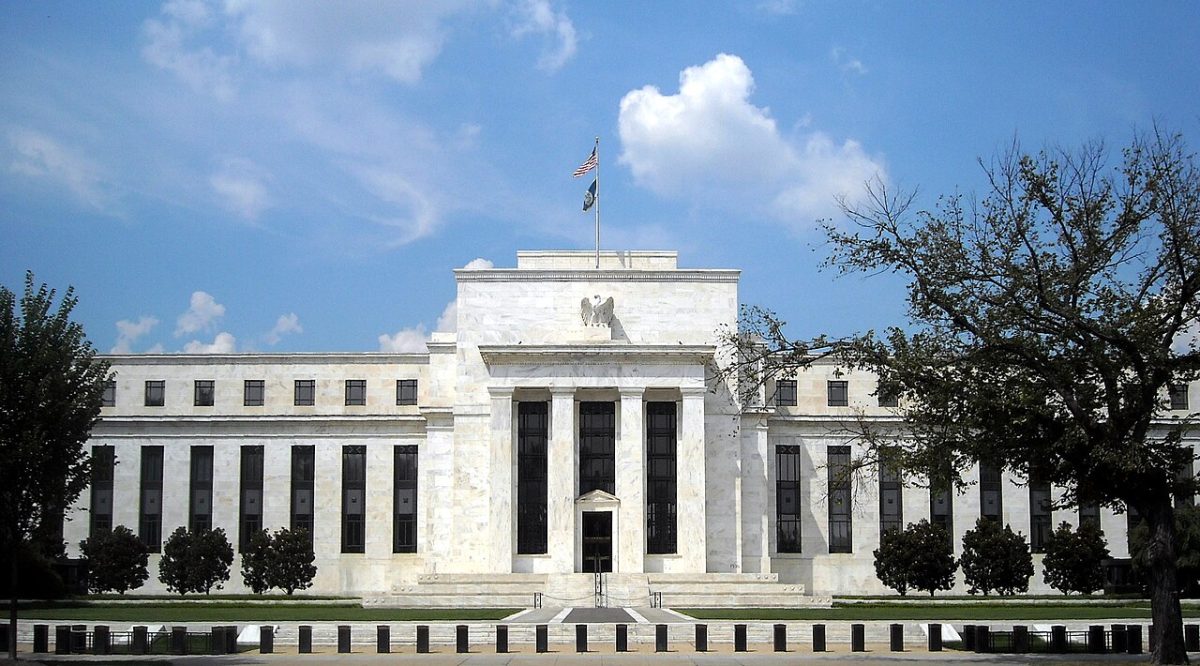
- Hawkish hold. The Federal Open Market Committee voted 10-2 on October 28 to keep the federal funds rate at 3.75%–4.00%, with two dissenters favouring an immediate hike — a split that signals active internal disagreement about whether the pause should continue.
- Growth-inflation mismatch. Chair Kevin Warsh cited likely third-quarter GDP growth above 3% and described employment conditions as positive, yet said inflation remains “still too high” relative to the Fed’s 2% PCE target.
- December live. The hold extends the pause begun in September, but the two-person dissent and Warsh’s hawkish tone leave a December hike as a genuine possibility, not just a tail risk.
The Federal Open Market Committee concluded its two-day October meeting on October 28 and held the fed funds target range at 3.75%–4.00%, according to FX Street’s post-meeting recap. The vote split 10-2, with two members preferring a 25 basis-point hike. It was the second consecutive hold since the September meeting that lifted the rate to its current level from 3.50%–3.75%.
Warsh’s Warning
Chair Kevin Warsh used the post-meeting press conference to reiterate that the committee has no tolerance for inflation persisting above 2% and that strong growth removes one of the primary arguments for holding rates steady. He said third-quarter GDP was likely to come in above 3%, a reading consistent with the Treasury’s own recent projections. On employment, he described conditions as broadly positive, citing continued job creation and an unemployment rate that has held near 4.2%.
Warsh also said the Fed is not dismissing supply-side shocks — including Brent crude near $114 a barrel, ongoing tariff effects and AI capital expenditure — and is actively evaluating whether they are feeding through into wages and services prices. His characterisation was more explicitly cautionary than July’s meeting, where three members dissented but his own tone was somewhat more neutral.
Market Reaction
Equities responded mildly positively. The S&P 500 gained 0.28% to close at roughly 7,744, the Nasdaq Composite added 0.27%, and the Philadelphia Semiconductor Index rose 1.75%. Alphabet’s after-hours earnings miss — shares fell more than 10% after the company reported below-consensus Q3 results — limited broader enthusiasm.
The Fed decision was broadly in line with pre-meeting expectations, with markets pricing around an 80% probability of a hold going into October 28, a level that had firmed considerably after Warsh declined to signal a hike in recent public appearances. The two-member dissent, however, was at the hawkish end of what markets anticipated.
Oil, Inflation and the December Decision
Brent crude has traded near $114 a barrel throughout October, driven by Middle East supply disruption and OPEC+ output discipline. Energy’s contribution to CPI sits near 9% on an annual basis — well above its longer-run share. Warsh has resisted calls to treat energy as a transitory factor, arguing that prolonged above-target oil prices eventually pass through into services and wages.
The next FOMC meeting is scheduled for December 9-10. A November CPI print running above 3.5% year on year, combined with continued GDP growth, would likely tip the two dissenters’ argument into majority territory. A softer reading — or a material weakening in employment — could extend the pause into 2027. The committee will also receive the September core PCE print before that meeting, which will be the most closely watched pre-December data release.