
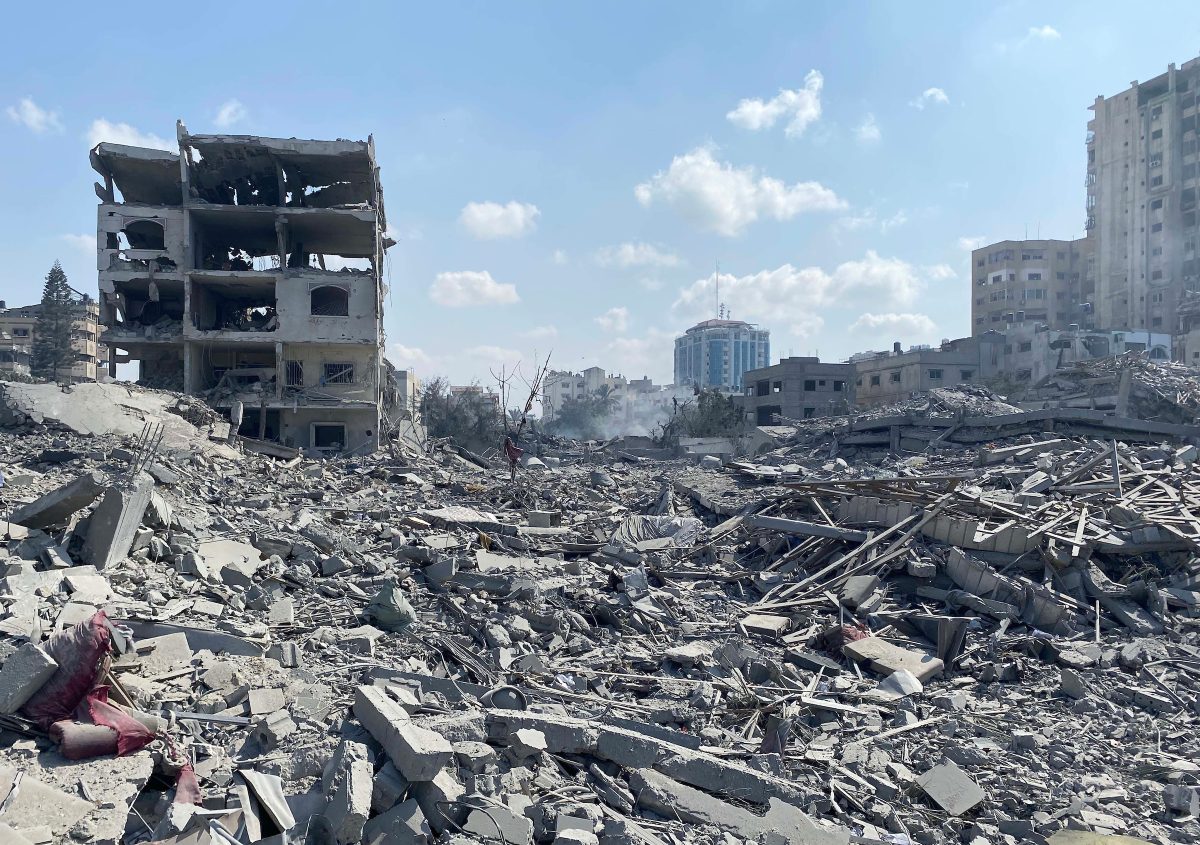
- Lead. An Israeli drone struck mourners at a funeral in Nuseirat refugee camp on July 18, killing seven Palestinians and wounding 22 — the latest in a pattern of strikes that has pushed casualties since the October 2023 ceasefire above 1,100.
- Fact. The Israeli military said it targeted a Palestinian Islamic Jihad cell and acknowledged that uninvolved individuals may have been harmed; Hamas called the strike “a heinous crime.”
- Stake. With 1,123 dead on the Palestinian side since the ceasefire took effect, the toll is drawing renewed pressure on international mediators to enforce an agreement that halted heavy fighting but not targeted strikes.
The strike hit mourners gathered outside the Ahmad Yassin Mosque in the Souq al-Balata area of Nuseirat refugee camp in central Gaza, according to Al Jazeera. Those assembled were waiting to accompany the body of a Palestinian killed in a separate Israeli strike earlier that day. Seven were killed and 22 wounded in the funeral strike; five additional Palestinians died in separate incidents across the strip during the same 24-hour period.
A Ceasefire in Name
The October 2023 ceasefire brought the heaviest phase of fighting to an end but left Israel the operational latitude to strike what its military describes as active militant cells. That latitude has been used with regularity: the Conflict and Armament Research database ACLED recorded more than 40 Israeli strikes in Gaza in June 2026, the highest monthly count since the nominal ceasefire began. Since the agreement took effect, 1,123 Palestinians have been killed and five Israeli soldiers have died, according to Gaza health authorities cited by the Sunday Guardian. The total Palestinian death toll since October 7, 2023 now exceeds 73,000.
International rights groups and UN agencies have repeatedly called on Israel to restrict operations in civilian areas. The Israeli government has maintained that its targeting doctrine is calibrated to legitimate military objectives and that the military reviews every incident in which civilian harm is alleged.
The Military’s Justification
The Israeli military confirmed the Nuseirat strike and stated it had targeted “a cell belonging to the Palestinian Islamic Jihad militant group.” Regarding the earlier strike that killed the mourned Palestinian, the military said the target was a Hamas militant without providing identifying details. In a statement, the IDF acknowledged being “aware of the claims that several uninvolved individuals were harmed as a result of the strike” and said the outcome remained “under review.”
Hamas’s spokesperson condemned the attack as “a heinous crime,” adding that such strikes “continue systematic ceasefire violations while killing innocent citizens in front of mediators and the international community.”
Diplomacy at a Standstill
The violence in Gaza occurs as Israel simultaneously manages its northern front. Prime Minister Netanyahu has linked any Israeli withdrawal from south Lebanon to Hezbollah’s disarmament, a condition Hezbollah has rejected, leaving that ceasefire framework stalled as well. Arab states participating in mediation efforts for both fronts have grown increasingly vocal about the difficulty of defending arrangements that carry so little practical constraint on Israeli military activity. The July 18 Nuseirat strike — striking a funeral procession attended by civilians — landed at a moment when the legitimacy of those frameworks was already under strain.