
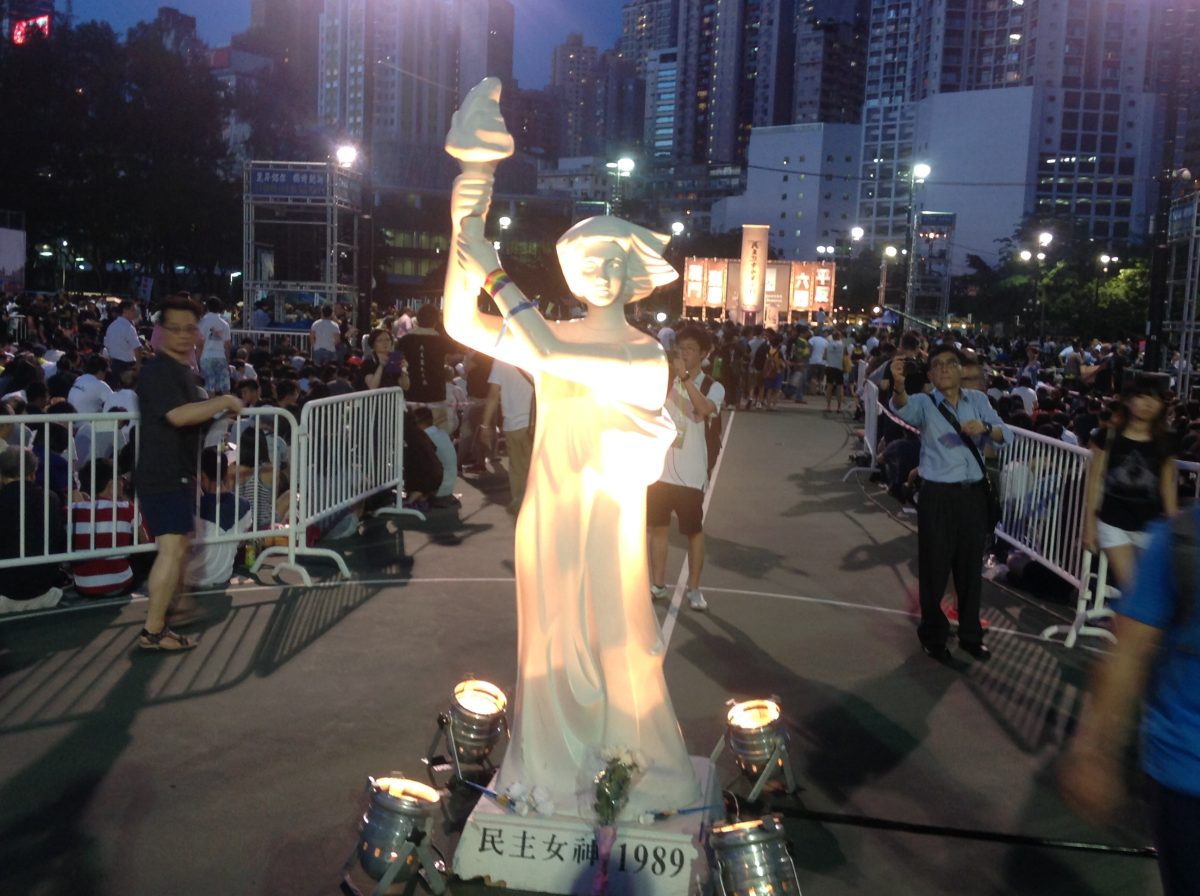
- Verdict. A Hong Kong court convicted Lee Cheuk-yan and Chow Hang-tung of inciting subversion on Thursday — the most senior convictions yet tied to the city’s annual Tiananmen candlelight vigil.
- Stakes. Both face up to 10 years in prison under the national security law Beijing imposed in 2020, with sentencing to be scheduled at a later date.
- Context. A third co-defendant, former vice chair Albert Ho, had already pleaded guilty in January 2026, leaving Lee and Chow as the only defendants to contest the charge at trial.
Two of Hong Kong’s most prominent democracy figures were found guilty of inciting subversion on Thursday, drawing an end to a prosecution that had tracked the city’s political transformation for four years. Lee Cheuk-yan, former chair of the Hong Kong Alliance in Support of Patriotic Democratic Movements of China, and Chow Hang-tung, a barrister who served as the group’s vice chair, were convicted after the court rejected their arguments that the Alliance’s campaigns did not constitute an attempt to overthrow state power.
What the Court Found
Prosecutors presented eulogies delivered at June 4 candlelight vigils, exhibits gathered from the Alliance’s annual memorial venues, and interview footage dating to 1990 to establish that the group’s calls to “end one-party rule” constituted incitement to subvert the government. The court accepted that framing. Defence arguments — that the Alliance adhered consistently to nonviolence and that its slogans sought to restore political power to the people rather than advocate the violent overthrow of the state — were rejected.
Human Rights Watch said the verdicts “make a mockery of Hong Kong’s once-proud rule of law.” Chow, who represented herself during portions of the trial and has been held in pre-trial detention, faces the same statutory maximum as Lee: up to a decade in prison under the inciting-subversion charge.
The Alliance and Three Decades of Vigils
The Hong Kong Alliance organised candlelight vigils in Victoria Park each June 4 for more than 30 years, commemorating the victims of the 1989 Tiananmen Square crackdown. Attendance reached tens of thousands in peak years before colonial-era freedoms narrowed after 2019. The Alliance dissolved itself in September 2021 under pressure from national security authorities, shortly before police raided its offices and seized the materials that would later appear as prosecution evidence.
Lee, 68, served time following the 2019 unrest and had remained in custody through his detention on national security charges. Both defendants will face separate sentencing hearings, at which the prosecution may seek terms approaching the statutory maximum.
A Shifting Legal Landscape
Thursday’s conviction adds to a substantial body of national security law verdicts that have reshaped Hong Kong’s civil society since Beijing imposed the legislation in June 2020. Dozens of activists, journalists, and opposition figures have been prosecuted under the law, which local courts have consistently read broadly. Beijing has maintained the legislation restored order after months of street unrest; critics argue it has effectively dismantled the firewall between the city’s legal system and the mainland’s.
The ruling arrives as governments in the United Kingdom, Canada, and Australia — countries that have granted asylum or residency rights to Hong Kong activists since 2020 — watch the case closely. For the thousands of Hong Kongers now living abroad, the verdict underscores the terms under which they chose to leave.