
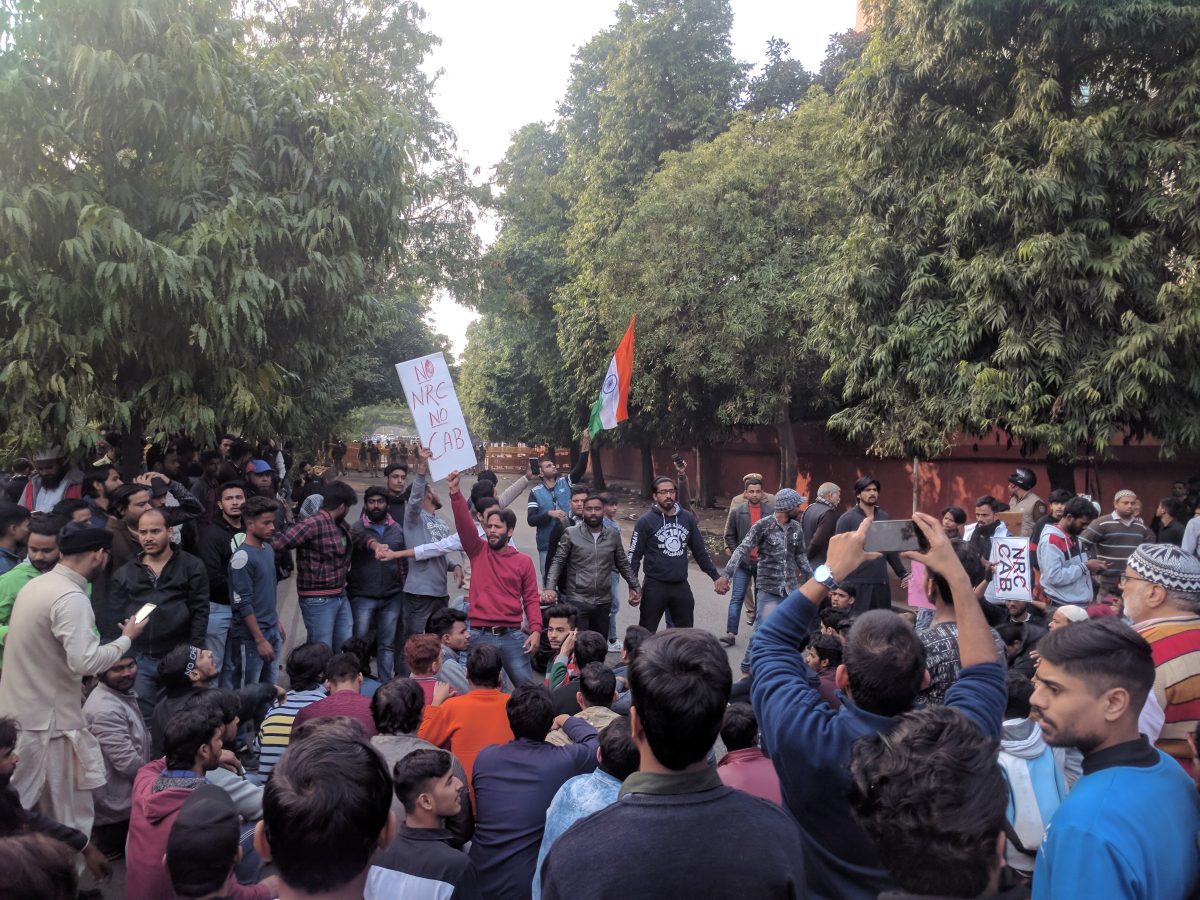
- Lead. India’s Election Commission removed roughly 130 million names from the country’s voter rolls through a nationwide exercise critics say targeted minorities, setting off the biggest protest crackdown since the Citizenship Amendment Act demonstrations of 2019.
- Fact. Authorities detained more than 7,000 people on Saturday alone, including opposition lawmakers, practising lawyers, and journalists, and suspended internet access across central New Delhi.
- Stake. India’s Supreme Court upheld the revision over the summer, closing the main legal route for a wholesale rollback ahead of general elections that must be held within two years.
In June 2025, India’s Election Commission launched the Special Intensive Revision (SIR), framed as a cleanup of dead voters, people who had relocated, and what the ruling Bharatiya Janata Party described as illegal migrants. By the time the exercise concluded, official and media figures showed roughly 130 million names had been removed. In West Bengal alone, approximately 9 million voters — around 12 percent of the state electorate — were struck from the rolls.
Critics disputed the framing from the outset. A Time investigation published October 13 found that voters with the required identity documents were still removed, an outcome it attributed in part to algorithmic error. Civil society groups argued the removals fell disproportionately on Muslims and other marginalised communities. The Election Commission described internal disagreements over methodology as normal deliberation; Chief Election Commissioner Gyanesh Kumar has not addressed specific exclusion cases publicly.
The Crackdown
Demonstrations spread from New Delhi to other major cities during the second week of October. More than 20,000 police and paramilitary personnel were deployed before a planned Saturday rally at Jantar Mantar, a traditional protest ground less than two kilometres from Parliament. Authorities barricaded city-centre roads, suspended mobile internet in several districts, and detained more than 7,000 people by evening, among them members of parliament, lawyers, and at least two journalists including the political editor of Scroll. Protesters returned on Monday, and opposition parties submitted a fresh petition at the Supreme Court alleging procedural irregularities in the revision.
The Cockroach Movement
Much of the street organising has been driven by a youth-led coalition known as the Cockroach movement, a name that reclaims language used against minorities during the 2019 citizenship debates. NPR reported on October 10 that the movement has drawn large numbers of first-time voters who discovered their own names missing. Leaders have set one condition for ending demonstrations: the resignation of Chief Election Commissioner Kumar.
In West Bengal, roughly 90 percent of voters who formally appealed their exclusion were eventually restored to the rolls — a figure the opposition says proves the purge was both arbitrary and reversible, and which the government cites as evidence that the appeals system worked. Reports from the Time investigation indicate that some excluded voters were also denied routine passport renewals, and that welfare payments in parts of West Bengal were briefly withheld from people whose appeals were pending.
The Legal Ceiling
The Supreme Court upheld the SIR’s legality in a summer 2026 ruling that affirmed the Commission’s broad authority to require voters to re-prove eligibility and found no evidence of systemic disenfranchisement. That ruling set a high bar for the fresh Monday petition. Opposition lawyers say they are now targeting the specific algorithms used in the exercise rather than its statutory basis — a narrower argument that may take months to litigate.
The episode sits within a broader pattern of courts being asked to referee electoral participation. Earlier this year, Israel’s Supreme Court reinstated Arab political parties that an elections committee had moved to bar — a ruling that drew the opposite conclusion from its Indian counterpart. For now, India’s opposition faces a dual pressure: maintain street momentum long enough to force a political response while the courts move on their own timetable.