
- Lead. Russia’s Foreign Minister Sergei Lavrov rejected an unconditional ceasefire demand backed by 51 UN member states and the European Union at the Security Council on September 23, closing off any near-term prospect of a negotiated pause in fighting.
- Fact. Denmark’s Foreign Minister Lars Loekke Rasmussen delivered the joint statement on behalf of signatories that included the UK, France, Germany, Canada, Japan, and Ukraine; 14 of the 15 Security Council members separately supported partial ceasefires covering energy sites or grain exports.
- Stake. Ukraine recorded 277 combat engagements on September 24, among the highest daily counts of the war, with Russian forces making advances in Kharkiv and Zaporizhzhia oblasts as the diplomatic exchanges unfolded in New York.
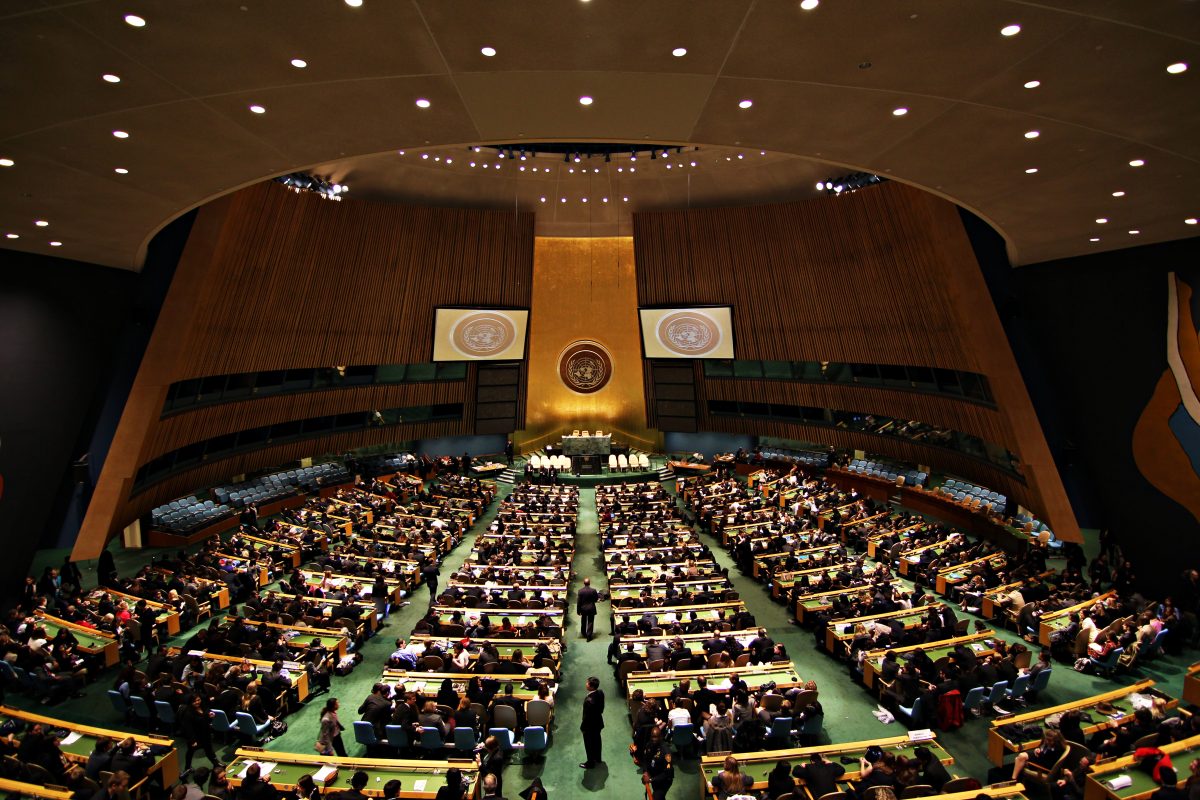
Fifty-one UN member states plus the European Union demanded that Russia accept a full, immediate, and unconditional ceasefire at a UN Security Council meeting on September 23. Danish Foreign Minister Lars Loekke Rasmussen delivered the statement on behalf of a signatory group that included the United Kingdom, France, Germany, Canada, Japan, and Ukraine itself. The statement, reported by Agence Europe, called on Russia “finally to accept a ceasefire.”
Russian Foreign Minister Sergei Lavrov rejected the demand in direct terms. “Russia will not pause the operation for the period of negotiations in any format,” he told the Security Council, accusing European governments of seeking a military pause to “replenish” Ukraine’s arsenals. Lavrov said Moscow sought a “long-term peace deal” on terms previously outlined by President Vladimir Putin — terms Kyiv and Western governments have consistently rejected as tantamount to territorial surrender.
Zelenskyy Calls for Trade Restrictions
Ukrainian President Volodymyr Zelenskyy addressed the General Assembly separately, urging member states to restrict trade with Russia. “When someone gives Russia more money through trade, they give this war more time,” he said, according to PBS NewsHour. Zelenskyy proposed a sequenced de-escalation — beginning with a halt to Russian strikes on Ukrainian energy and food infrastructure — and called for additional air defenses, energy-sector protection, and safeguards for Black Sea grain shipments. Ukrainian Foreign Minister Andrii Sybiha accused Russia of blocking any path to peace.
Separately, 14 of the 15 Security Council members supported partial ceasefire measures covering energy facilities or grain exports, suggesting limited appetite for de-escalation measures even among some governments closer to Moscow. China and the United States were both among the 14.
The Frontline Reality
On the ground, Ukraine recorded 277 combat engagements on September 24 — among the war’s highest single-day counts. Russian forces seized two villages in Kharkiv Oblast, including Buzovo, while a kamikaze drone struck a municipal bus in Zaporizhzhia city. In Kyiv, an overnight attack killed two people and injured eight, damaging a maternity hospital. Russian strikes on September 23 alone included 43 airstrikes, 173 guided aerial bombs, and more than 4,000 kamikaze drones.
The UNGA confrontation follows a failed peace mission by US envoys that ended without any agreement, after which Russia resumed large-scale strikes on Ukrainian cities. The juxtaposition of diplomatic language in New York and an intensifying military campaign on the ground reflects how far apart the two sides remain on any core terms.