
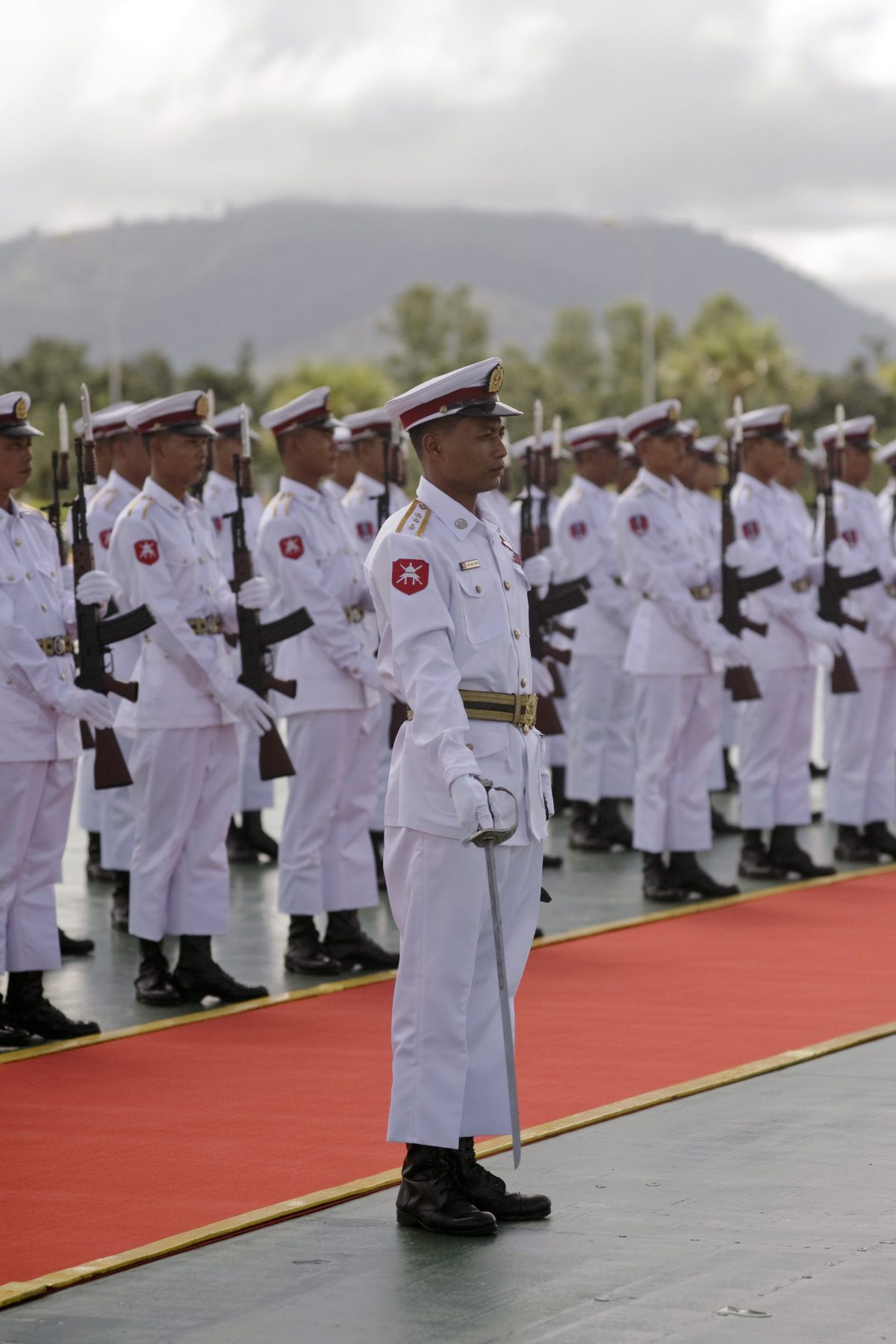
- Lead. Myanmar’s military leader Min Aung Hlaing arrived in Vietnam on September 4 for two days of talks with Vietnamese leaders — his third visit to an ASEAN member state since being sworn in as president following an April 2026 election that critics say was engineered to cement military rule.
- Fact. Bilateral trade between Myanmar and Vietnam has collapsed from $853 million in 2020 to $590 million in 2025, and fell further to $335 million in just the first half of 2026 alone, reflecting the economic cost of sustained international pressure on the junta.
- Stake. The visit signals Naypyidaw’s continued push to rebuild standing within Southeast Asia, even as Western governments maintain sanctions and ASEAN itself remains internally divided over how to engage the regime that seized power in the February 2021 coup.
Min Aung Hlaing has accelerated his diplomatic calendar since formally assuming the presidency, positioning the visits as evidence of normalising relations within the region. Vietnam, which holds observer status in several multilateral forums alongside Myanmar, has maintained limited economic and diplomatic contact with Naypyidaw throughout the civil conflict — a posture that made it a more accessible interlocutor than Western-aligned capitals.
A Long Road Back to ASEAN
ASEAN suspended Myanmar’s participation in high-level meetings shortly after the 2021 coup, adopting a Five-Point Consensus that called for an end to violence, political dialogue and access for humanitarian aid. That framework has largely stalled. Min Aung Hlaing’s outreach to individual ASEAN capitals — he has also visited Thailand and Cambodia in recent months — represents a parallel track aimed at rebuilding bilateral ties even as formal bloc-level access remains blocked.
China has provided the junta’s most consequential external backing, supporting the military government diplomatically at the United Nations and supplying arms and economic investment. Beijing’s endorsement has allowed Naypyidaw to sustain its position despite the ongoing civil war, in which resistance forces — including ethnic armed organisations and People’s Defence Force units — continue to hold significant territory in border regions.
Trade Collapse and Investment Gap
The economic figures illustrate the isolation more starkly than any diplomatic statement. Myanmar’s bilateral trade with Vietnam declined by more than 60 percent between 2020 and the first half of 2026, according to figures cited by NPR reporting on the visit. Foreign direct investment from ASEAN partners has similarly contracted, as companies and governments weigh reputational and regulatory risk.
Vietnam’s own approach reflects a broader Southeast Asian tension: maintaining enough economic contact to remain relevant while avoiding the deeper embrace that draws Western criticism. Hanoi has publicly called for a return to civilian rule but has not joined the most stringent sanctions regimes.
Civil War Context
Despite the diplomatic activity, the conflict inside Myanmar’s borders shows no signs of resolution. The military has gained ground in some areas, particularly with Chinese mediation along the northern border, but resistance forces remain active across Chin, Kayah, Karen and Sagaing regions. The junta’s international outreach, while notable, does not translate into domestic stability — and the gap between diplomatic normalisation and political settlement remains wide.
Whether Vietnam’s engagement produces tangible outcomes — trade facilitation, investment guarantees, or a nudge toward the ASEAN Five-Point Consensus — will determine whether this round of visits marks a genuine shift or remains largely symbolic.