
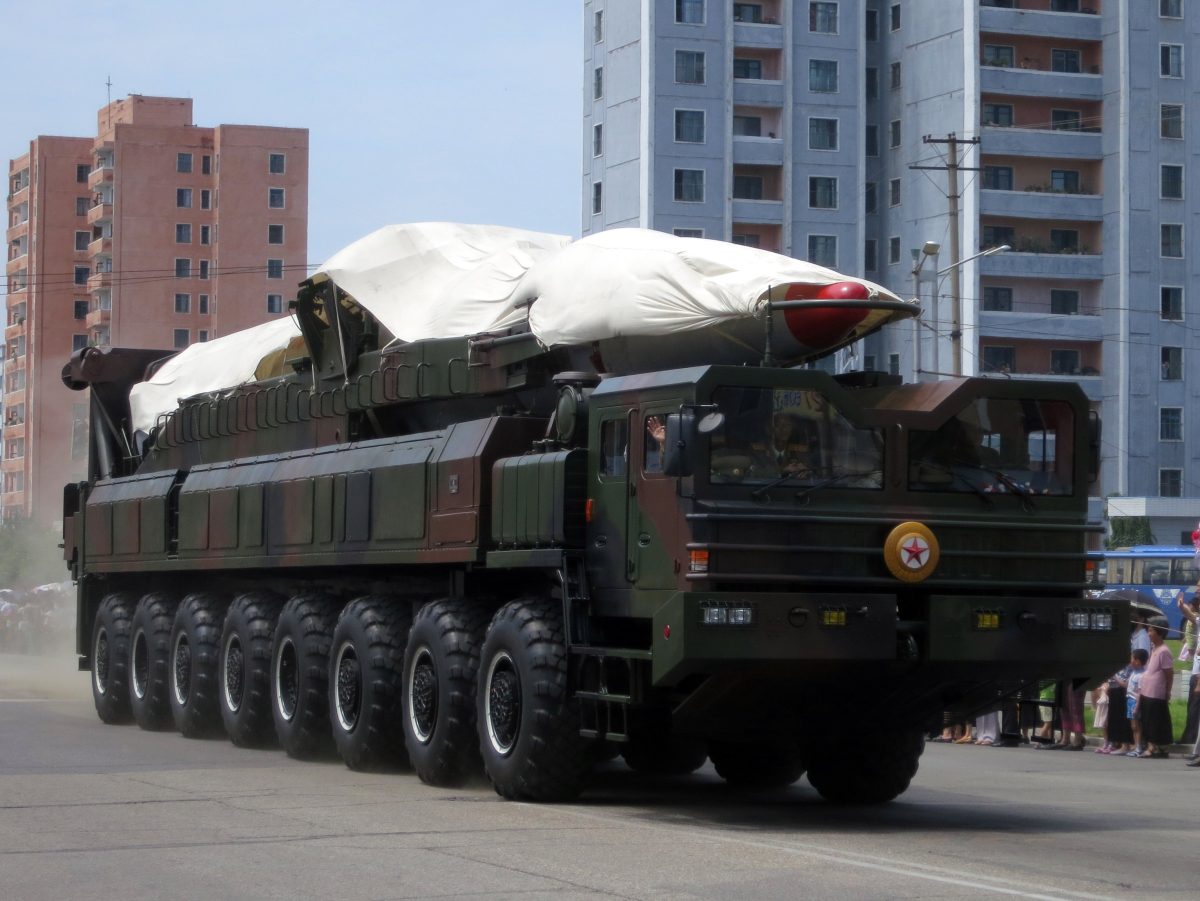
- Lead. Ukraine’s Defence Intelligence has told Reuters that a North Korean missile unit is moving into Russia’s Voronezh region, equipped with six launchers and up to 120 KN-23 and KN-24 short-range ballistic missiles — weapons already documented in strikes on Ukrainian cities.
- Fact. An initial batch of 40 missiles and North Korean personnel has already been delivered, according to Andrii Cherniak, a representative of Ukraine’s military intelligence directorate, in an exclusive Reuters report published August 5.
- Stake. The deployment adds a substantial new strike capacity to Russia’s arsenal at a moment when the front lines in eastern Ukraine remain contested and Kyiv has been expanding its own long-range campaign inside Russian territory.
The Voronezh region sits roughly 500 kilometres from Ukraine’s northeastern border, placing its launch sites well within range of Kharkiv, Sumy, and Kyiv. If the six launchers are positioned and armed with the full complement of 120 missiles, they would represent one of the largest single additions to Russia’s ballistic strike capacity since the war entered its current phase. Between 2023 and 2025, North Korea supplied Russia with approximately 150 ballistic missiles in total; the new deployment would substantially exceed that cumulative figure in a single transfer.
The KN-23 and KN-24 in Context
Both missile types are North Korean-developed short-range ballistic missiles with quasi-ballistic flight profiles designed to evade conventional air-defence intercept geometries. Ukrainian officials and international observers have documented their use in previous strikes, with the weapons drawing particular concern because their low-altitude, manoeuvring trajectories complicate Patriot intercept solutions. Ukraine’s own drone campaign against Moscow has escalated sharply in parallel, suggesting both sides are absorbing and matching each other’s strike escalation.
Around 9,500 North Korean troops are already stationed in Russia’s Kursk border region, though Ukrainian intelligence says they are not currently deployed in direct combat. President Zelensky stated last month that Moscow was preparing facilities in the Voronezh area to receive an additional 30,000 North Korean soldiers, a figure that, if accurate, would represent a force commitment comparable to several full Russian divisions.
Strategic Implications
The deployment underscores the depth of the Russia–North Korea military relationship and the degree to which Pyongyang is now a material participant in the conflict rather than merely a political supporter. It also complicates Western deterrence calculus: North Korea’s participation limits the diplomatic tools available to pressure Moscow, since Pyongyang operates outside the financial and export-control architecture that Western sanctions rely on. For Kyiv, the arrival of fresh ballistic missile stocks on Russian soil raises the urgency of securing additional Patriot batteries and interceptor rounds from NATO allies, a supply question that has remained unresolved for months.