
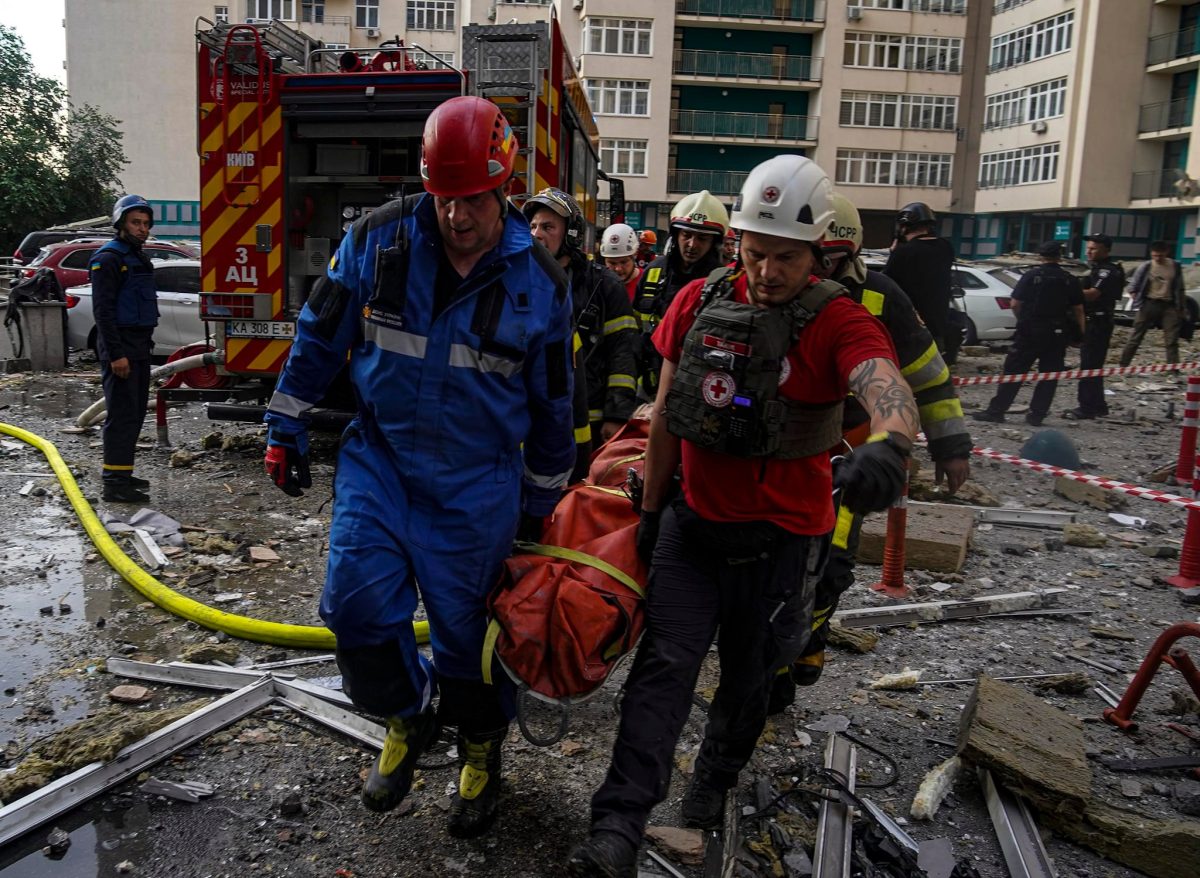
- Lead. Russia fired 41 ballistic missiles at Kyiv overnight on July 18-19 — the largest single ballistic missile barrage since the invasion began in February 2022 — alongside 125 drones, striking five city districts.
- Fact. Ukraine intercepted roughly half the ballistic missiles and 108 of 125 drones, but the volume overwhelmed air defences: one person was killed and 16 wounded in Kyiv, with at least 12 more deaths confirmed across Kharkiv, Zaporizhia, Donetsk, Kherson, Odesa, and Sumy.
- Stake. The attack exposed Ukraine’s critical shortage of Patriot interceptors — a vulnerability President Zelenskyy described as “our constant and top priority” — as Western allies weigh whether to license Kyiv to produce the missiles domestically.
The overnight attack on July 18-19 concentrated on ballistic weapons, which travel on a compressed arc that leaves air defenders far less reaction time than cruise missiles. Ukraine’s military intercepted approximately half the 41 ballistic missiles, fewer than in recent attacks when interceptor stockpiles were fuller, according to Al Jazeera. Five Kyiv districts — Sviatoshynskyi, Shevchenkivskyi, Solomyanskyi, Desnianskyi, and Dnipro — sustained damage.
The Interception Gap
Ukraine’s Patriot batteries have been operating at dangerously low interceptor levels for weeks. Friday’s attack showed what that shortage means in practice. Acting Foreign Minister Andrii Sybiha called it “a brutal terrorist attack on the Ukrainian capital” and demanded “devastating pressure on Moscow to end this terror.” President Zelenskyy was direct: “Protection against ballistic missiles is our constant and top priority right now.”
Prime Minister Sergii Koretskyi convened an emergency security session as rescue teams worked through the affected districts. Across Ukraine, the same overnight operation killed at least 12 more people: four in Kharkiv, two each in Donetsk and Kherson, one each in Zaporizhia, Dnipropetrovsk, Sumy, and Odesa — where a 16-year-old was among the dead.
Ballistics Over Cruise Missiles
Russia’s concentration of 41 ballistic missiles in a single overnight salvo was without precedent in the war’s history. Earlier large combined attacks, including one that sent 74 missiles and nearly 500 drones against Kyiv, mixed cruise missiles and drones rather than concentrating ballistic weapons. The change in approach reflects Moscow’s apparent calculation that Ukraine’s interceptor deficit made a mass ballistic salvo more difficult to defeat than an equivalent cruise missile payload.
Washington’s Domestic Production Signal
President Trump signalled willingness to license Ukraine to manufacture Patriot interceptors domestically — a step that would reduce dependence on US stockpile deliveries but would require substantial industrial build-out. No formal announcement or timeline followed. Until either deliveries resume or domestic production begins, Ukraine’s air defence capacity over Kyiv faces a ceiling imposed not by the number of launchers it has, but by how many interceptors remain in them.