
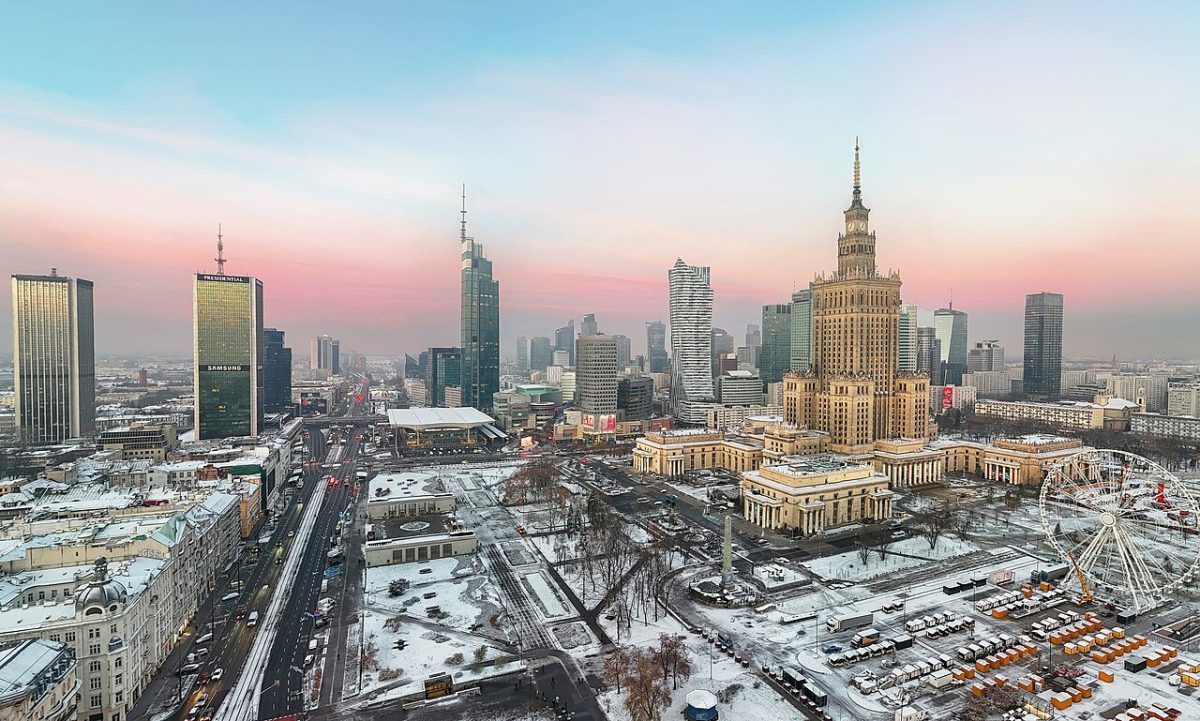
- Lead. Kremlin aide Nikolai Patrushev stated that “Warsaw will cease to exist within two or three days” if Poland enters military conflict with Russia, invoking the full weight of Moscow’s arsenal in a direct threat to a NATO capital.
- Fact. The remarks appeared in an interview with the Russian newspaper Argumenty i Fakty, distributed via the state-run TASS news agency on September 15, after Polish Foreign Minister Radosław Sikorski said at a Kyiv conference that NATO could destroy Russia’s oil-refining capacity within six weeks.
- Stake. The exchange, framed by both sides in terms of NATO versus Russia rather than Poland versus Russia, is the most explicit threat against a member-state capital since the full-scale invasion of Ukraine began in 2022 — and it arrives as NATO has already downed a Russian drone over Lithuanian airspace this week.
What Patrushev Said
Patrushev, a former secretary of Russia’s Security Council and one of Vladimir Putin’s closest long-term advisers, did not explicitly invoke nuclear weapons in his published remarks, but the reference to “the entire arsenal of forces and means at our disposal” carries unmistakable connotation for a country with one of the world’s largest nuclear stockpiles. He dismissed Sikorski’s assessment of NATO’s military advantages as “amateurish,” and added that Russia has not yet deployed its full military capacity during the war in Ukraine — a claim that echoes earlier Kremlin messaging aimed at deterring deeper Western involvement.
The interview format, via a mainstream state outlet rather than a fringe channel, gives the statement official colour without requiring the Kremlin to endorse it directly — a mode of signalling Moscow has used before when testing escalation thresholds.
What Prompted It
Sikorski made the remarks that drew Patrushev’s response at the Yalta European Strategy conference held in Kyiv on September 12 and 13. The Polish foreign minister argued that NATO’s approximately 2,500 military aircraft would give the alliance overwhelming air superiority in any conflict with Russia, and that the alliance could neutralise Russia’s oil-refining infrastructure within six weeks — a comment directed as much at Western audiences still debating the pace of support for Ukraine as at Moscow itself.
Rather than address Sikorski’s specific claims, Patrushev shifted to direct deterrence language, targeting Warsaw as the symbolic seat of NATO’s most hawkish eastern flank.
The Broader Pattern
Poland has accelerated defence spending to roughly 5% of GDP — the highest share in NATO — and has hosted a growing rotation of allied forces on its territory. Warsaw’s proximity to the Suwałki corridor, the narrow land passage between Belarus and the Russian exclave of Kaliningrad, makes it a focal point of NATO contingency planning. Patrushev’s threat lands at a moment when the hybrid war between Russia and NATO is intensifying across the Baltic region, even as diplomatic back-channels remain open. Whether the Kremlin intended the remarks as genuine deterrence or as domestic messaging ahead of Russian regional elections, their effect is to further narrow the space for de-escalation.