
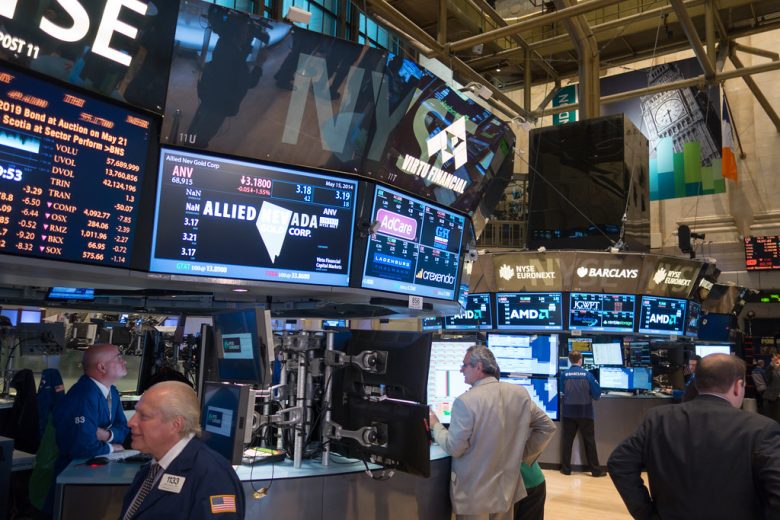
- Relief rally. The S&P 500 posted its first weekly gain in five weeks, with all eleven sectors advancing — a broader recovery than the index move alone suggests.
- Chips rebound without Nvidia. The Philadelphia Semiconductor Index jumped 8% for the week, as AMD (+18.9%) and Broadcom (+18.2%) absorbed investor flows that left Nvidia on the sidelines after Jensen Huang’s resignation.
- Inflation headwinds remain. October PPI data were softer than expected, but markets now fully price a December Fed rate hike — keeping the rally’s durability in question.
Wall Street closed the week of November 10–13 with its strongest weekly performance in three months, pulling out of a losing streak that began after the Democratic midterm sweep rattled markets in early November. The S&P 500 gained 2.5% for the week, closing at 7,561.67 on Friday despite a 0.4% retreat on the final day. The Nasdaq Composite added 2.3%, also ending a four-week decline, according to data reported by The Street.
Who Led the Recovery
Energy stocks outperformed for the week, gaining 5.1%, followed by Industrials at 3.6%. Materials was the only sector to end lower. Within technology, AMD surged 18.9% and Broadcom rose 18.2%, as investors rotated into chip names positioned to benefit from Nvidia’s leadership vacuum. The Philadelphia Semiconductor Index’s 8% weekly jump — its best since August — was notable for happening while Nvidia itself fell 12.8%, its worst week since April 2025.
Steve Sosnick of Interactive Brokers captured the market’s mood: “The mindset is ‘if NVDA is out of the way, who wins?'” Angelo Zino at CFRA argued that AI hardware demand remains solid and that Huang’s departure would not change the structural growth trajectory. Patrick Moorhead of Moor Insights & Strategy said other chipmakers could fill any gaps Nvidia leaves in the near term.
The Macro Overlay
October producer prices rose 0.3%, below the 0.4% forecast, with annual headline PPI at 6.5% and core at 5.0%. The data were cooler than feared, lending some support to the rally. But Fed officials signalled this week that additional rate increases remain on the table, and fed funds futures now fully price a December hike. The 10-year Treasury yield closed at 5.14%, up 28 basis points for the week.
The recovery comes after the broader market sold off sharply following the post-midterm rout and the AI sector selloff that wiped $2.2 trillion in late October. Nvidia’s earnings report, due November 17, will give the market its first look at whether CEO uncertainty has affected the company’s order book.