
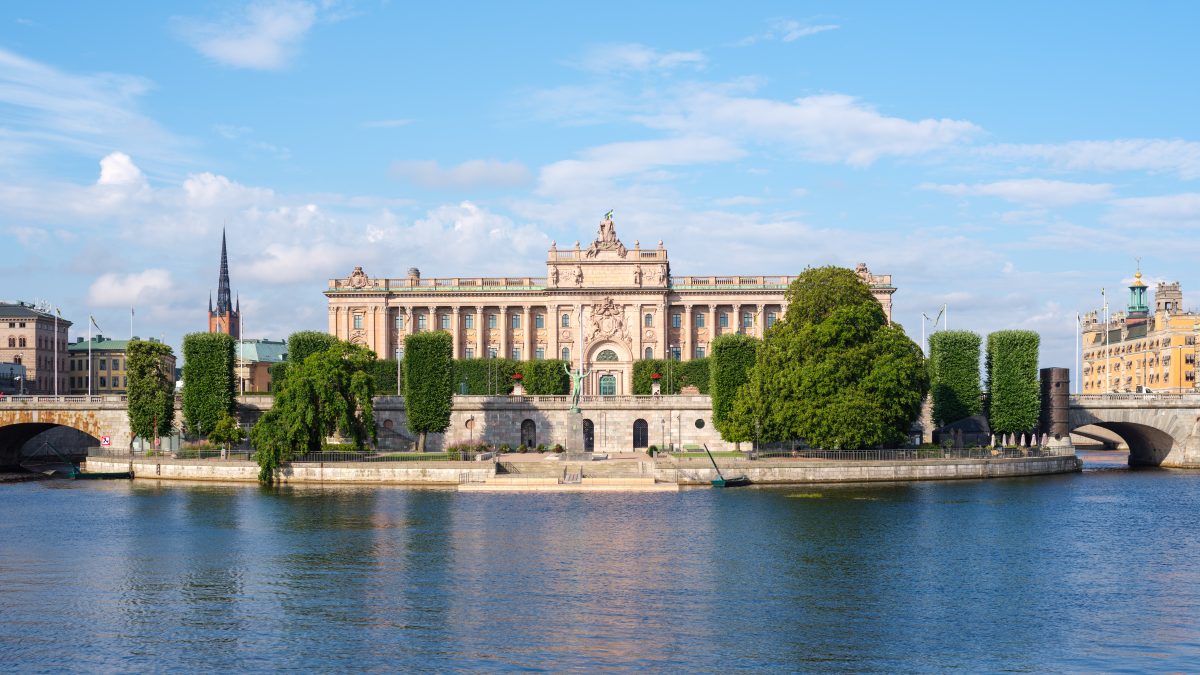
- Lead. Sweden’s opposition bloc has seen its polling margin fall by more than half in a month, from 6.9 points to 2.6, putting the September 13 Riksdag election firmly in play.
- Fact. A Novus survey released September 2 puts the Social Democrat-led left bloc at 50.3% versus 47.7% for Ulf Kristersson’s center-right government—a gap small enough to be reversed by late-deciding voters.
- Stake. This will be Sweden’s first parliamentary election since the country formally joined NATO in March 2024, and the outcome will shape Stockholm’s role in a European defence landscape redefined by the Russia-Ukraine war.
With eleven days until polling day, Sweden’s election campaign entered its most volatile stretch as a survey by Novus, released September 2, showed the opposition’s lead contracting sharply. The Social Democrats under Magdalena Andersson remain the largest individual party, but the right-of-centre coalition of Prime Minister Ulf Kristersson—the Moderates, Christian Democrats and Liberals, backed by the Sweden Democrats under Jimmie Åkesson—has substantially closed the gap.
How the Blocs Stack Up
The Novus poll put the four-party Tidö coalition and its Sweden Democrat support at a combined 47.7% of the vote, leaving the opposition alliance of Social Democrats, Greens, Centre Party and Left Party at 50.3%. A margin of 2.6 points across 349 Riksdag seats translates to a small number of constituencies where a swing of a few thousand votes could flip the parliamentary arithmetic. In August, the same pollster recorded a 6.9-point gap—a collapse of more than four points in a single month.
Sweden’s proportional representation system means every vote counts across party lines. If any party in the ruling coalition falls below the 4% threshold required to enter parliament, it would transfer effective seats to the opposing bloc, potentially swinging the outcome without the largest parties themselves moving much at all.
The Issues Driving the Race
Three issues dominate the closing weeks. The first is security. The Tidö Agreement signed a deal in March 2026 that would offer the Sweden Democrats cabinet seats if the coalition wins a parliamentary majority—the so-called Sweden Promise—a concession that may consolidate right-wing voters but risks unsettling centrist ones. The second is crime: a string of gang-related shootings earlier this year brought policing back into focus. The third is economics. With inflation still elevated across the eurozone, cost-of-living pressures remain acute for Swedish households.
A school attack on August 21 briefly forced party leaders to suspend campaign appearances, inserting a grim postscript into a contest already shaped by concerns over public safety.
What the NATO Factor Changes
For the first time, Swedes will vote as members of the Atlantic Alliance. Sweden’s Nordic neighbours have been grappling with their own relationship to European institutions as the continent’s security architecture shifts. The governing Kristersson bloc supported NATO membership; the Social Democrats ultimately backed accession as well, removing it as a dividing line. What remains contested is defence spending trajectories and Sweden’s posture on Ukraine aid.
Polls open across Sweden on September 13. Preliminary results are typically available the same evening. Given the compressed margin, the race for which bloc controls the Riksdag’s 349 seats may not be resolved until smaller parties confirm whether they have cleared the parliamentary threshold.