
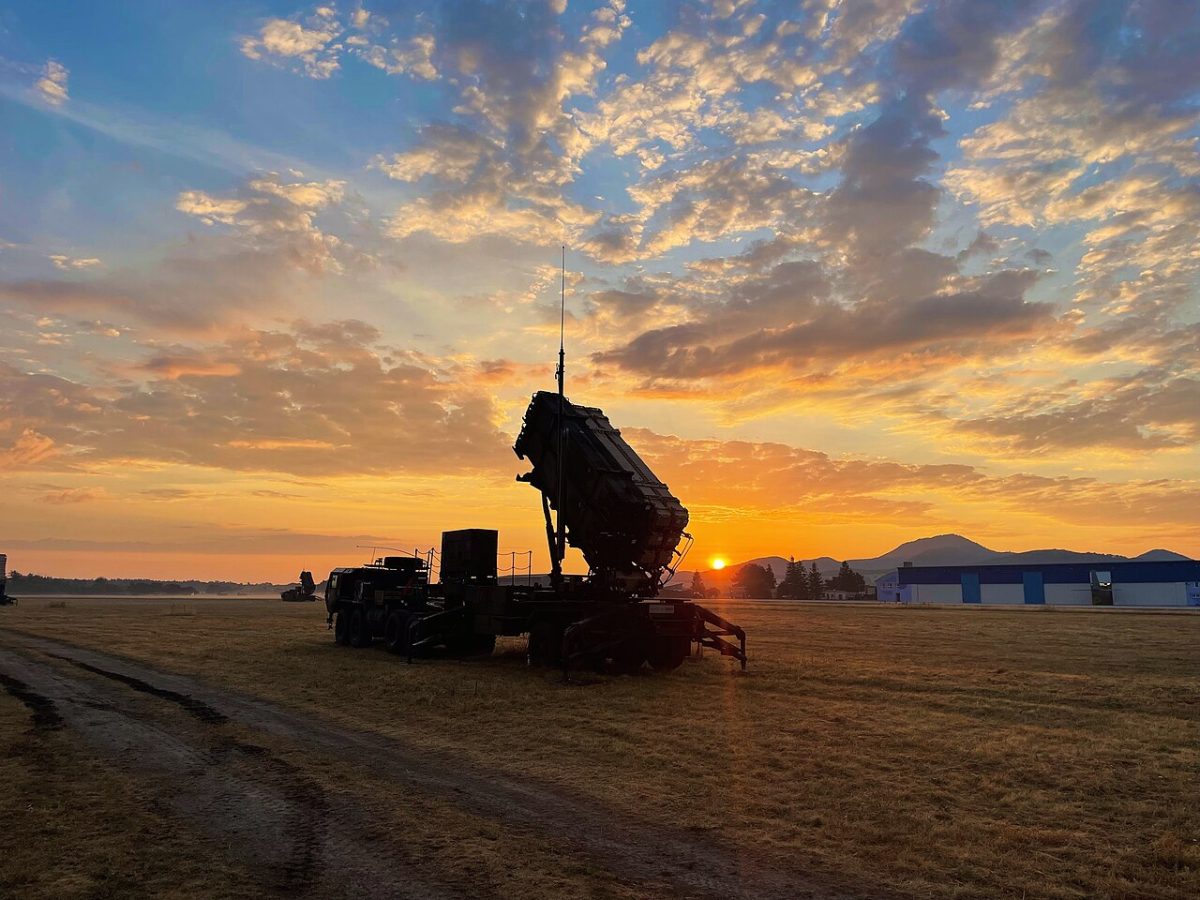
- Lead. Ukraine’s Patriot batteries intercepted only 29 of 195 Russian ballistic missiles in July—a failure rate that reflects the near-depletion of Western-supplied interceptors as ally deliveries fell to one-third of their 2025 pace.
- Fact. President Volodymyr Zelensky told CNN that Ukraine has access to roughly 1% of the US Patriot stockpile; 5% would be enough to carry the country through winter, when Russia historically escalates missile strikes on energy infrastructure.
- Stake. The US has curtailed Patriot shipments since February, redirecting stocks for operations against Iran—leaving Kyiv exposed ahead of the same winter campaign that knocked out its power grid in previous years.
Ukraine’s Air Force stopped publishing daily missile intercept figures this summer—a quiet signal of a crisis that the numbers, when still available, had already begun to tell. In July alone, Russian forces fired 195 ballistic missiles at Ukrainian territory. Ukrainian air defenses stopped 29 of them. Another 40 reportedly failed to reach their targets for other reasons. The rest got through, striking cities and infrastructure across the country.
The Arithmetic of Depletion
According to Foreign Policy, Ukraine’s allies supplied just one-third as many air-defense interceptors in 2026 as in the same period of 2025. Former Ukrainian Defense Minister Mykhailo Fedorov put the gap in starker terms: Russia was firing more missiles in a single week than Ukraine’s partners were providing over several months. Russia is producing roughly 198 ballistic missiles per month, a rate that its defense industry has sustained through more than two years of Western sanctions.
Zelensky’s framing of the shortage in percentage terms—1% of US stockpile currently available, 5% needed for winter, 10% sufficient to stop all Russian ballistic missile attacks—was a deliberate attempt to make the ask legible to a Washington audience. Kyiv has also formally requested a licence to manufacture Patriot interceptors domestically, an acknowledgment that supply from existing allied stockpiles cannot be treated as a reliable baseline.
The Iranian Diversion
The proximate cause of the shortfall is the Iran war. Since February, when US forces became directly engaged in operations against Iranian missile and drone infrastructure, Washington has held back Patriot stocks it would otherwise have routed to Ukraine. European allies have attempted to compensate—Germany supplied three complete Patriot systems, the Netherlands assembled one featuring five launchers, and Poland transferred five interceptors—but their own inventories are strained by commitments to NATO’s eastern flank and accelerating domestic rearmament programs.
The intersection of the two conflicts has created a zero-sum competition for the same weapons. Ukraine’s own intelligence assessed that Russia is planning a 600,000-strong draft across 2026 and 2027—suggesting Moscow intends to sustain a high operational tempo through precisely the period when Kyiv’s defenses are most depleted.
The Pan-European Option
Kyiv has begun pressing for something more structural: a pan-European anti-ballistic missile system that would pool interceptor production and procurement across the continent, reducing dependence on the goodwill of any single ally. The proposal faces familiar obstacles—diverging national procurement cycles, industrial capacity limits, and the political difficulty of asking governments to subordinate sovereign defense decisions to a collective framework.
Ukraine is heading into its third winter of full-scale war with less air-defense coverage than at any point since Russia escalated its strikes on energy infrastructure. The question of whether Washington will release even a portion of its Patriot inventory before temperatures fall is, for Kyiv, more consequential than any diplomatic formulation about the shape of a future settlement.