
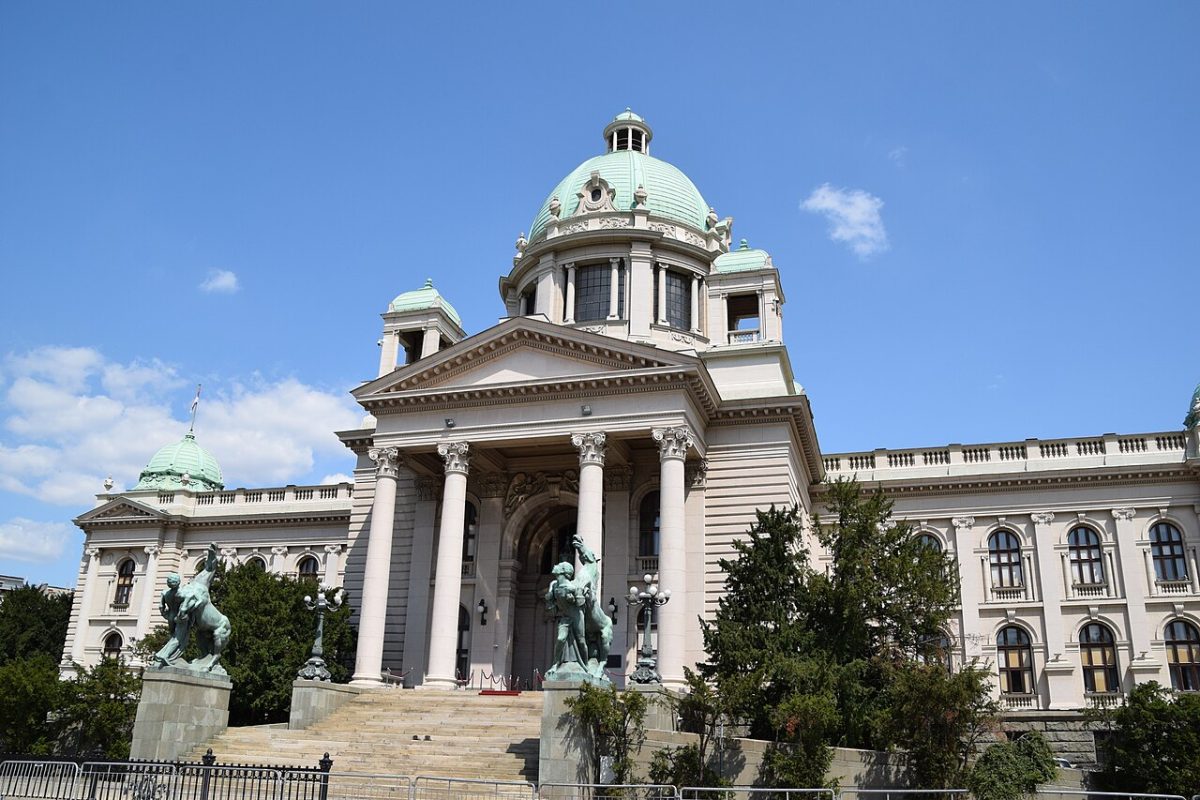
- Lead. President Aleksandar Vučić signed a decree dissolving Serbia’s National Assembly on September 9 and called a snap parliamentary election for October 25, more than a year ahead of the December 2027 schedule.
- Fact. Nearly two years of student-led anti-corruption demonstrations — ignited by the November 2024 collapse of a railway station canopy in Novi Sad that killed 16 people — have sustained pressure on Vučić’s government and produced calls for early elections.
- Stake. The ruling Serbian Progressive Party has nominated Vučić to run for prime minister, meaning a victory would allow him to shift executive levers from the largely ceremonial presidency to the head of government, deepening his grip on power after twelve years at the top of Serbian politics.
The Decision
The Serbian government formally proposed early elections on September 7, two days before Vučić put his signature on the dissolution decree. Prime Minister Djuro Macut framed the move as a stabilising measure: “Serbia has faced protests, blockades, deep divisions, problems in education and heavy pressure on institutions,” he said, arguing that a new mandate would help “mitigate tensions in society.” Under the constitution, between 45 and 60 days must be allowed for campaigning, placing election day at October 25 — or potentially October 18 depending on the final decree wording.
The decision to call early elections was itself one of the central demands of the protest movement, which has blockaded university campuses and staged rolling demonstrations in Belgrade and other cities. By moving first, Vučić is trying to dictate the timing rather than concede it.
The Protest Movement
The student-led unrest that has defined Serbian public life since late 2024 grew out of demands for accountability after the Novi Sad railway station roof fell on commuters in November of that year. Protesters have since broadened their platform to include allegations of state violence, organised-crime links to the ruling party, and media censorship under Vučić’s administration. The scale and persistence of the movement — comparable in duration to the demonstrations that eventually toppled Slobodan Milošević in 2000 — made it the most significant domestic challenge Vučić has faced in more than a decade in power.
The opposition enters the campaign in a fragmented state, but the protests have given anti-government sentiment an organisational infrastructure that formal parties previously lacked.
International Pressures
The election comes as Serbia’s standing in the European Union has deteriorated. Brussels officials criticised the government for hosting a public homage to convicted war criminal Ratko Mladić, a ceremony that drew condemnation from EU member states and complicated Serbia’s long-stalled accession process. Vučić has simultaneously been faulted for maintaining close ties with Russia and China rather than aligning Serbia more firmly with European security structures — a balancing act that has grown harder to sustain since Russia’s full-scale invasion of Ukraine.
The October 25 vote will test whether a dozen years of Vučić-era dominance survives contact with a mobilised electorate or whether the protest movement translates into seats.