
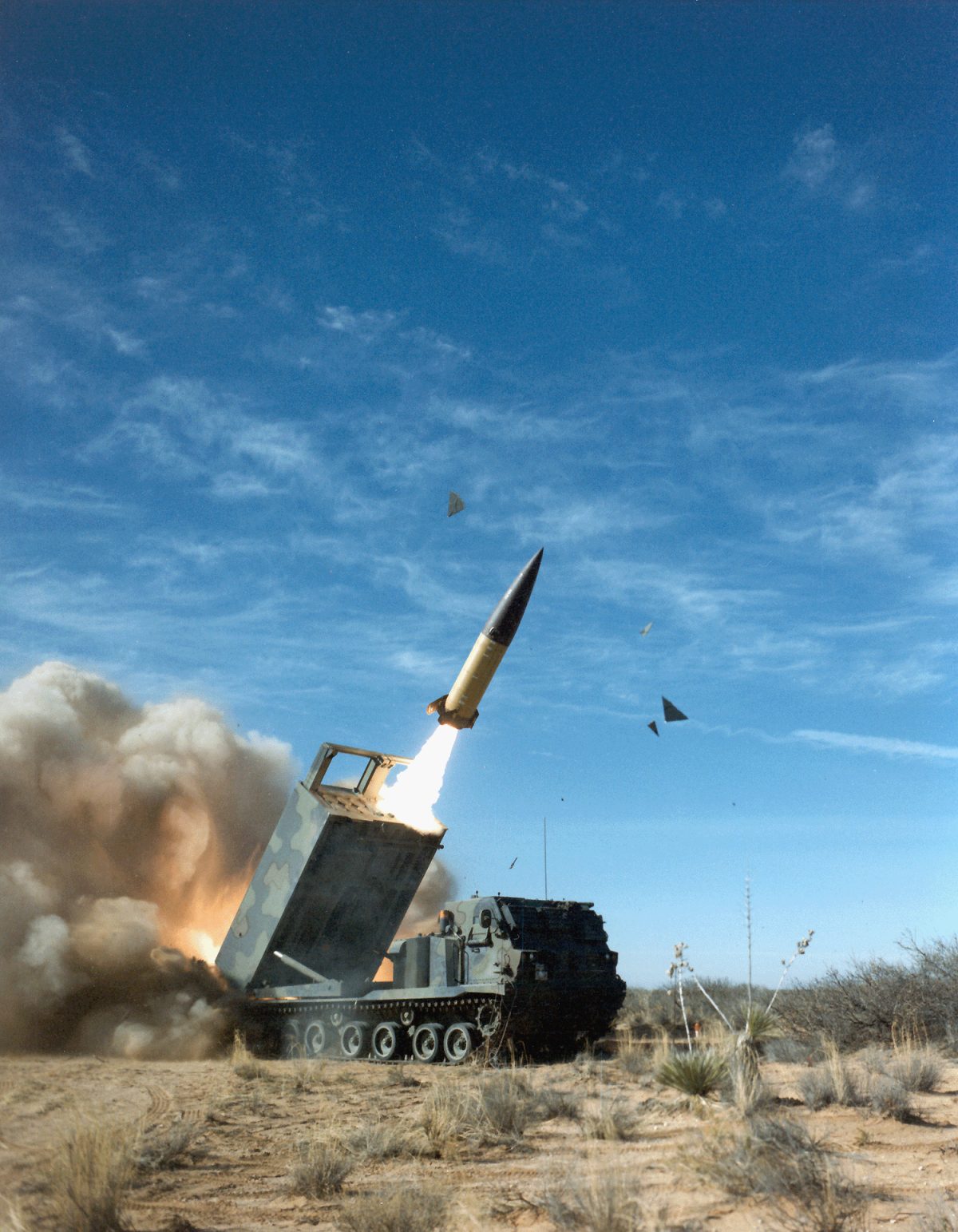
- Lead. Washington has formally notified Congress of plans to re-export roughly $280 million in US-origin weapons held by Turkey to Ukraine, including 70 M39 ATACMS missiles and 12 M270 multiple-launch rocket systems.
- Fact. Russia’s Foreign Ministry spokeswoman Maria Zakharova warned the transfer would cause “serious harm” to bilateral relations with both the United States and Turkey, and demanded official clarifications from both capitals.
- Stake. Unless Congress passes a joint resolution blocking the transfer within two weeks of the August 6 notification, the re-export is automatically authorised — a timeline that sets up a de facto decision by mid-August.
The proposed transfer, first published in the Congressional Record on August 6, covers a substantial package of older US-manufactured weapons sitting in Turkish government inventories. Beyond the ATACMS missiles — which have a range of approximately 165 kilometres — the package includes 2,500 M26 rockets fitted with cluster warheads and 47,000 203mm cluster artillery shells. Turkey’s stated rationale, relayed through the State Department, is a wish to reduce ageing stockpiles and redirect defence spending toward modernisation, according to the Kyiv Independent.
Moscow’s Diplomatic Response
Russia’s Foreign Ministry moved quickly to frame the transfer as a contradiction of both countries’ stated interest in a diplomatic resolution to the Ukraine war. Zakharova called it evidence that Washington and Ankara were “using peacemaking rhetoric while simultaneously engaging in military supplies,” adding that any completion of the deal would “inevitably undermine mutual trust.” The ministry dispatched formal requests to US and Turkish diplomatic channels seeking clarification on whether the transfer would proceed.
The specific involvement of Turkey adds a particular diplomatic dimension. Ankara has attempted to position itself as a potential mediator between Moscow and Kyiv throughout the conflict, and its willingness to facilitate the weapons handover — even of older, licensed materiel — signals the limits of that balancing act. The M270 launchers and ATACMS missiles are among the most capable long-range strike systems Ukraine has used to hit targets deep inside Russian territory, including a 400-drone blitz on Moscow and strikes on refineries more than 1,300 kilometres from the front.
Cluster Munitions and International Law
Human Rights Watch has flagged the cluster munitions component of the package as a particular concern. Approximately 40% of cluster submunitions historically fail to detonate on impact, effectively converting them into long-lived antipersonnel hazards for civilian populations long after hostilities end. Neither the United States nor Turkey is a signatory to the 2008 Convention on Cluster Munitions, which prohibits the use, production, transfer and stockpiling of such weapons. The US maintained a moratorium on cluster munition exports from 2009 to 2023, when President Biden authorised a first transfer to Ukraine under emergency authority.
The congressional notification process under the Arms Export Control Act gives lawmakers two weeks to intervene with a joint resolution of disapproval. Given the current composition of Congress and its general posture on Ukraine assistance, such a resolution is considered unlikely to advance. The transfer is expected to begin in late August 2026, with private logistics firms in Turkey, Bulgaria and the United States named in the notification as facilitating companies.