
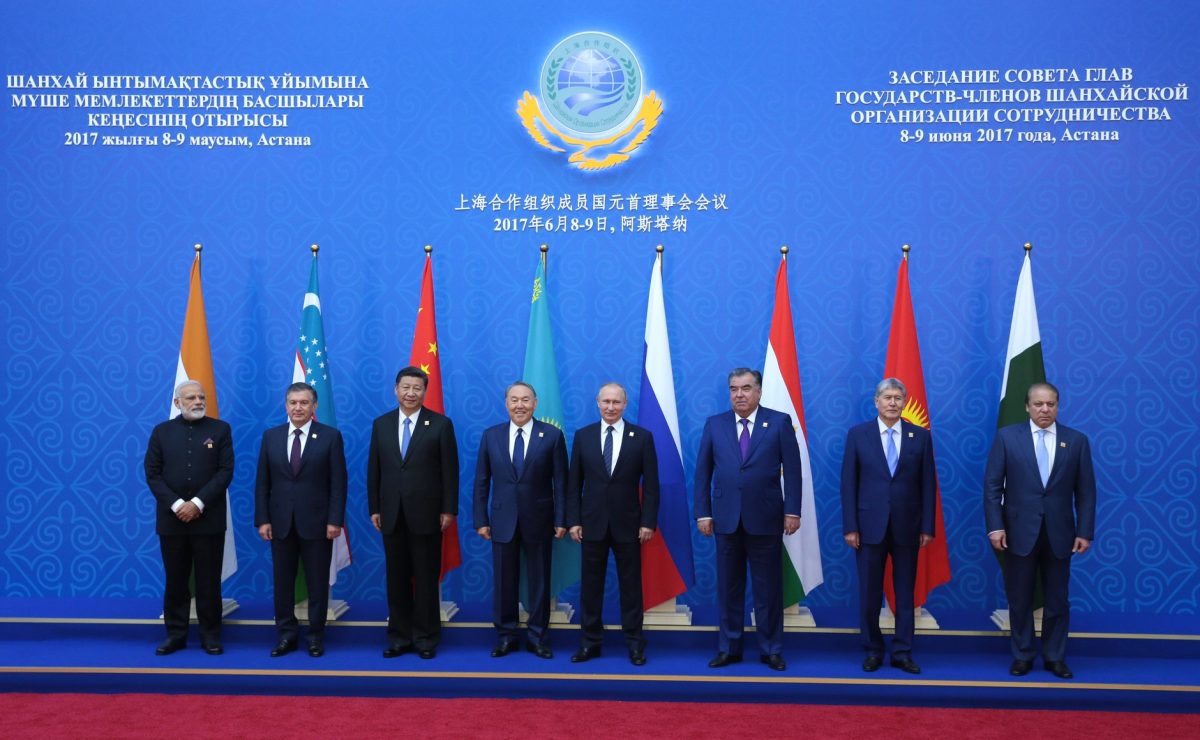
- Gathering. Xi Jinping, Vladimir Putin, Narendra Modi, Shehbaz Sharif and Masoud Pezeshkian met in Bishkek on August 31–September 1 for the 26th SCO leaders’ summit, the first since the grouping turned 25 years old.
- Bilateral agenda. Modi held separate talks with both Xi and Putin; Putin is also scheduled to meet Iranian President Pezeshkian — a meeting that carries weight as Tehran navigates its ongoing confrontation with Washington.
- Context. The SCO grouping now spans more than 40 percent of the world’s population and commands growing significance as China and Russia promote an alternative to Western-led institutions.
Three flags on the same stage
The 26th Shanghai Cooperation Organisation summit opened in Bishkek, Kyrgyzstan on August 31, drawing leaders from the organisation’s eight full member states to a city that hosted the SCO’s first-ever standalone leaders’ summit in 2007. This year’s gathering coincides with the 25th anniversary of the bloc’s formation.
Narendra Modi, Xi Jinping, Vladimir Putin, Pakistani Prime Minister Shehbaz Sharif and Iranian President Masoud Pezeshkian were among the confirmed attendees for the plenary session, according to International Business Times.
Modi-Xi and Modi-Putin bilaterals
On the summit sidelines, Modi held bilateral talks with Xi Jinping, with India’s External Affairs Ministry noting that both leaders “welcomed the positive momentum and steady progress in bilateral relations” since their previous meeting in Kazan in October 2024 during the BRICS summit. Separately, Modi was expected to meet Putin to “review the entire gamut of bilateral relations,” according to the Ministry of External Affairs.
Putin’s schedule in Bishkek included separate meetings with both Xi and Iranian President Pezeshkian, Outlook India reported, citing Kremlin spokesman Yuri Ushakov. The Putin-Pezeshkian meeting carries particular weight as Iran faces sustained US pressure over the Strait of Hormuz.
Summit at 25
Founded in Shanghai in June 2001, the SCO has expanded well beyond its original Central Asian security mandate. It now includes India, Pakistan and Iran among its full members and spans economies accounting for roughly 42 percent of the global population. The Bishkek meeting gives member states a platform to coordinate positions ahead of autumn sessions at the United Nations and other multilateral forums.
For Russia, the summit provides diplomatic cover at a moment when Western capitals have largely isolated Moscow. For China, multilateral activity through the SCO reinforces its claim to leadership of a non-Western order. The pattern of Putin’s recent international activity — from the disputed Kuril Islands to Bishkek — underscores Russia’s intent to demonstrate viable partnerships despite the war in Ukraine.