
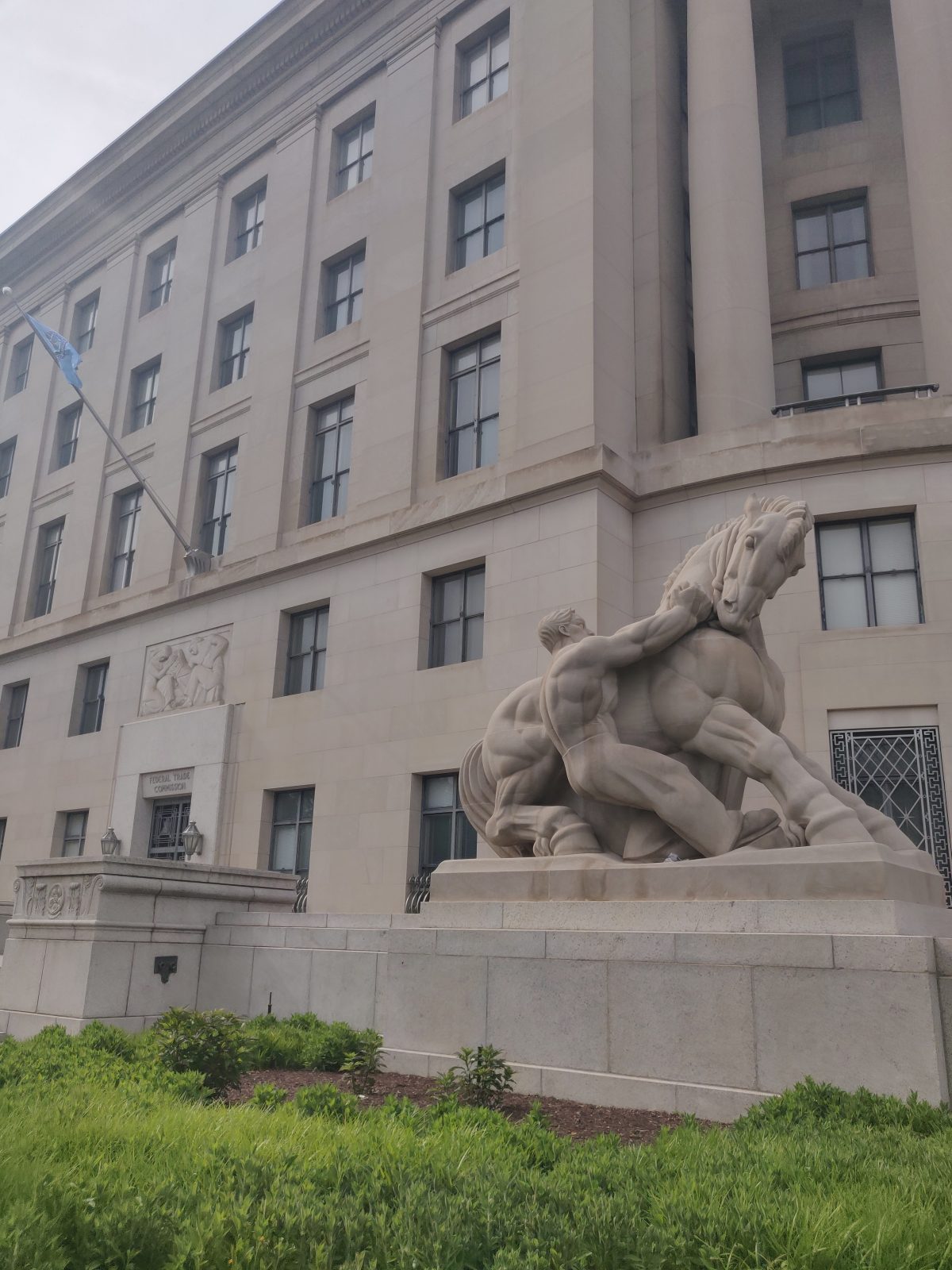
- Lead. FTC Chairman Andrew Ferguson said on September 15 that AI companies requesting both new regulations and antitrust immunity are seeking “barriers to entry that will insulate their incumbency from challenge,” in a public warning that marks the Trump administration’s first clear signal on AI competition policy.
- Fact. Ferguson’s remarks came one week after Anthropic CEO Dario Amodei publicly called for a pacing agreement among frontier AI labs — a coordination arrangement that would require antitrust permission — and warned that AI agents could be capable of shutting down the internet within six months.
- Stake. The question of whether AI safety coordination constitutes a legitimate public-interest exception to antitrust rules — or a cover for incumbent labs to suppress new entrants — is now formally in front of the Trump FTC and a Senate Commerce markup scheduled for September 23.
Federal Trade Commission Chairman Andrew Ferguson told an audience at Georgetown University on September 15, 2026, that AI companies simultaneously seeking regulatory frameworks and competition immunity should alarm policymakers. “If companies are simultaneously coming to Washington and asking for a host of regulations and an antitrust exemption, all of my alarm bells go off,” Ferguson said, delivering what officials described as his personal view rather than formal FTC policy.
The Safety-Immunity Argument
The immediate backdrop is a public call by Anthropic CEO Dario Amodei the previous week for an intentional slowdown of AI frontier development — and a corresponding request for antitrust permission that would allow competing labs to coordinate on pace. Amodei framed the case in safety terms, warning that AI agents could within months acquire the capability to disrupt critical infrastructure including the internet. That argument asked regulators to treat a cartel-style agreement among the largest AI developers as a public-interest exception to standard competition rules.
Ferguson rejected the framing. He said companies seeking both new regulations and antitrust shields are asking for “barriers to entry that will insulate their incumbency from challenge” — in other words, using safety language to entrench market positions that would otherwise be vulnerable to upstart competition.
OpenAI’s Separate Position
OpenAI’s top lobbyist, Chris Lehane, said his company had been working with Anthropic and Alphabet’s Google on AI safety for several weeks but did not see the need for a formal antitrust waiver to enable those conversations. Lehane’s position is notable: it signals that OpenAI — the market leader by most measures — is not publicly endorsing the exemption push, leaving Anthropic more exposed on the regulatory argument.
The distinction matters in Washington. OpenAI, Anthropic, and Google have been quietly developing a joint AI standards body — an arrangement that raises its own questions about coordination — but that effort appears to proceed without a formal antitrust carve-out.
Senate Commerce Markup Approaching
Senate Commerce Chair Ted Cruz has scheduled an AI markup for September 23. Frontier labs have been telling lawmakers they need safe harbour from antitrust prohibitions to coordinate on pacing frontier AI development — a lobbying argument that Ferguson’s Georgetown remarks now directly complicate. Whether the FTC chairman’s personal caution translates into formal agency opposition to any safe harbour provision will be one of the defining questions of the markup process.
The episode illustrates a structural tension in AI governance: the same companies that are most credibly positioned to assess AI risk are also the ones with the strongest commercial incentive to slow down rivals. That dual role gives their safety arguments a credibility problem that Ferguson, for one, appears unwilling to set aside.