
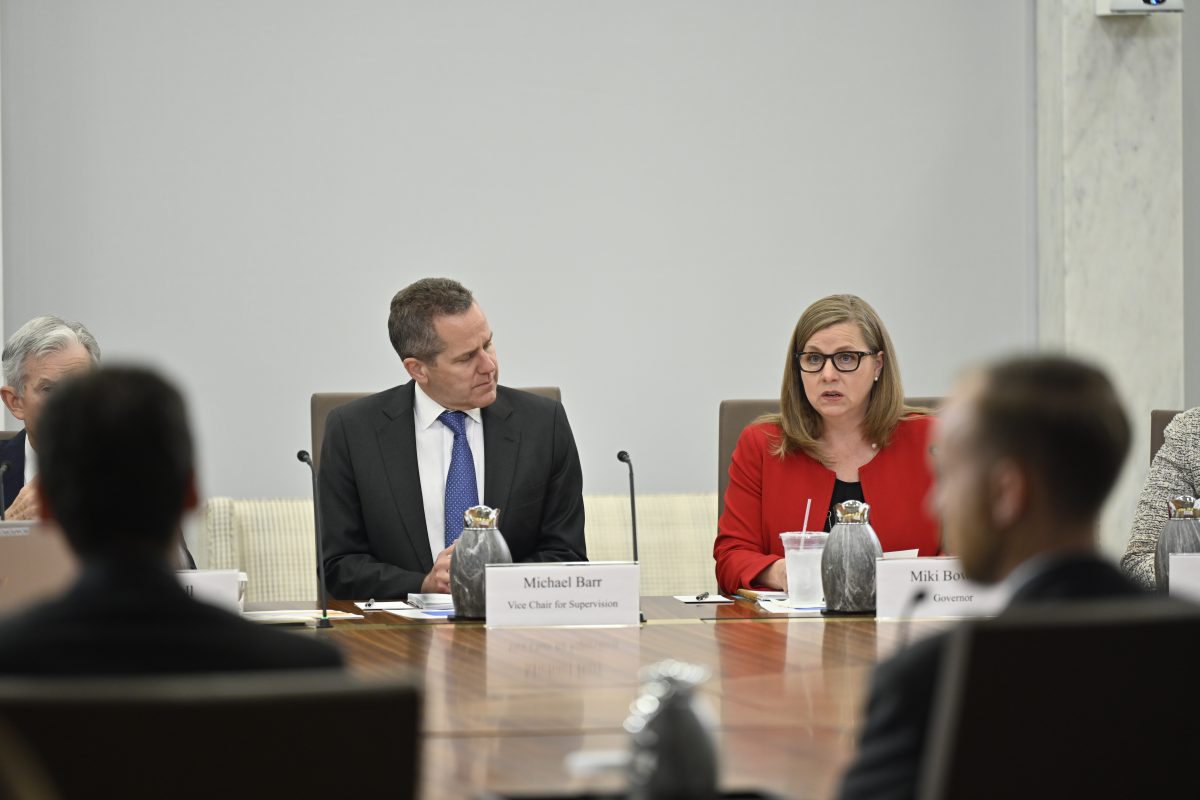
- Lead. Federal Reserve Chair Kevin Warsh told IMF officials at their Bangkok annual meetings that he was not signalling the outcome of the October 27–28 FOMC meeting, preserving maximum optionality one week before what markets overwhelmingly expect to be a pause after September’s quarter-point hike.
- Fact. Prediction markets and futures contracts put the probability of a hold at between 84% and 87.5% as of October 20, with Kalshi at 87.5%, Polymarket at 85.5%, and CME FedWatch futures at roughly 84%—a wide consensus given Warsh’s deliberately ambiguous communication.
- Stake. The October 28 meeting will produce no updated projections and no dot plot, leaving markets to price the next move—likely a December hike—on Warsh’s words alone; his history of communication surprises keeps a small probability of a hike alive.
Why a Pause Is the Base Case
The September CPI print—3.7% headline, 2.6% core—gives the Fed room to pause without abandoning its commitment to returning inflation to target. The September jobs report, which showed payrolls expanding by just 29,000 and unemployment rising to 4.2%, added a further case for caution: the labour market is cooling faster than the Fed had modelled in its most recent projections, and a second consecutive hike risks tightening into a slowdown.
Warsh, who raised the target range by 25 basis points to 3.75%–4.00% in September—the Fed’s first hike since 2023—said at the International Monetary Fund event in Bangkok on Friday morning that he was not signalling a decision one way or the other. The phrasing was consistent with his broader approach since taking the chair: avoid pre-committing to a path, keep options open, and respond to incoming data in the meeting itself. That style has frustrated markets seeking forward guidance but has also, on occasion, produced decisions that ran against consensus pricing.
The December Outlook
While the October meeting is widely expected to end without a move, markets have already priced a hike at the December 9 FOMC meeting as the more likely vehicle for any further tightening. The logic: pausing in October and tightening in December allows the Fed to assess two more CPI reports and one more payrolls release before acting, giving policymakers a richer data set to justify a move. One market-implied path tracked by MacroMicro put the year-end Fed funds rate at roughly 4.14%—consistent with a single additional quarter-point hike before January.
The Fed’s Williams has publicly kept the door open to a fourth hike this year, and the October 28 statement language will be scrutinised for any shift in the characterisation of risks. A more hawkish than expected statement could tighten financial conditions even without an immediate rate move, while a softer tone could push the December hike expectations further out.
The Broader Tightening Cycle in Context
The US tightening cycle is not operating in isolation. The Reserve Bank of India raised rates by 25 basis points to 5.5% on October 7 in its first hike since 2023, responding to inflation risks that the IMF has described as driven in part by the oil shock from disrupted Hormuz shipping. The Bank of England held at 3.75% in September but faces a November meeting where forecasters expect CPI to print above 4%, making a hike increasingly likely. The ECB raised its deposit rate to 2.5% last month and ING expects the next move to come in December.
September’s US CPI of 3.7% was driven heavily by fuel costs, a pattern visible across most advanced economies as the Middle East conflict continues to constrain oil supply. The October 28 FOMC meeting will not resolve the question of where the Fed’s terminal rate sits, but Warsh’s statement and press conference will be parsed for every signal about how much further the committee is willing to go before declaring its work done.