
- Europe loses its most disruptive insider. Viktor Orbán’s defeat removes the leader who most effectively weaponised EU membership against the EU itself.
- Tisza won 138 of 199 parliamentary seats on 53.6 percent of the vote. Fidesz, Orbán’s party, collapsed to 55 seats and 37.8 percent — its worst showing since 2006.
- A two-thirds majority means constitutional changes are now possible. Whether Magyar uses it to restore judicial independence or unlock EU funding withheld from Budapest will define his premiership.
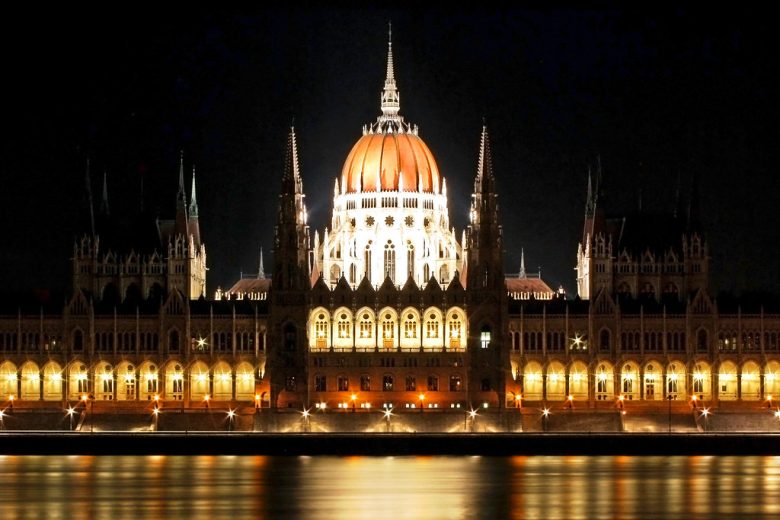
Hungary voted on 12 April in what the country’s election commission described as the highest-turnout parliamentary contest since 1985 — the last election held under communist rule. At 79.6 percent, turnout shattered the post-1990 record and signalled the intensity of an electorate that had, for fifteen years, felt it lacked a credible alternative to Fidesz. Péter Magyar’s centre-right Tisza party supplied that alternative with devastating efficiency, winning 138 of the 199 seats in the National Assembly, according to results with 97.35 percent of precincts counted.
What the numbers mean
Fidesz won 37.8 percent — still a substantial share, but not enough to hold the supermajority it had used since 2010 to rewrite constitutional rules, stack courts, and shape electoral boundaries in its own favour. Orbán conceded before midnight, describing the outcome as “painful” but “clear.” Magyar, speaking to jubilant supporters in Budapest, was direct: “Tonight, truth prevailed over lies.” He added that no party had ever received “such a strong mandate” as Tisza in post-communist Hungary.
The scale of the swing matters beyond symbolism. Tisza’s majority allows Magyar to amend the constitution without a coalition partner — a power Orbán wielded freely and one that Magyar has said he will use to restore the independence of Hungary’s judiciary, a precondition Brussels has attached to releasing roughly €20 billion in frozen EU cohesion funds.
What changes in Europe
The most immediate geopolitical consequence is the removal of Orbán’s veto from EU decision-making on Ukraine. He had single-handedly blocked or delayed an estimated €90 billion in EU loan guarantees and military assistance packages. Magyar has said Hungary will align with Western European mainstream policy on Kyiv, unblocking not just money but political momentum at a moment when the EU’s credibility as a security actor is contested.
Orbán’s international network — ties to the Kremlin, to Donald Trump’s circle (Vice President JD Vance flew to Budapest to campaign for him in the final week), and to far-right movements across Europe — does not dissolve overnight. The Fidesz organisation remains intact, and 37.8 percent of the vote is a constituency Magyar will have to govern around rather than through. But the playbook of capturing institutions gradually from within a liberal democracy now has a high-profile proof of reversibility.
Magyar’s difficult inheritance
Magyar was inaugurated as Prime Minister on 9 May, nine days after the National Assembly convened. He inherits a country whose independent media ecosystem was largely dismantled over the previous decade, whose courts were stacked, and whose public broadcaster functions as a Fidesz mouthpiece. Rebuilding those institutions while managing an economy under EU fiscal surveillance will require sustained patience from Brussels and from Hungarian voters who expect faster results than institutional repair typically allows.