
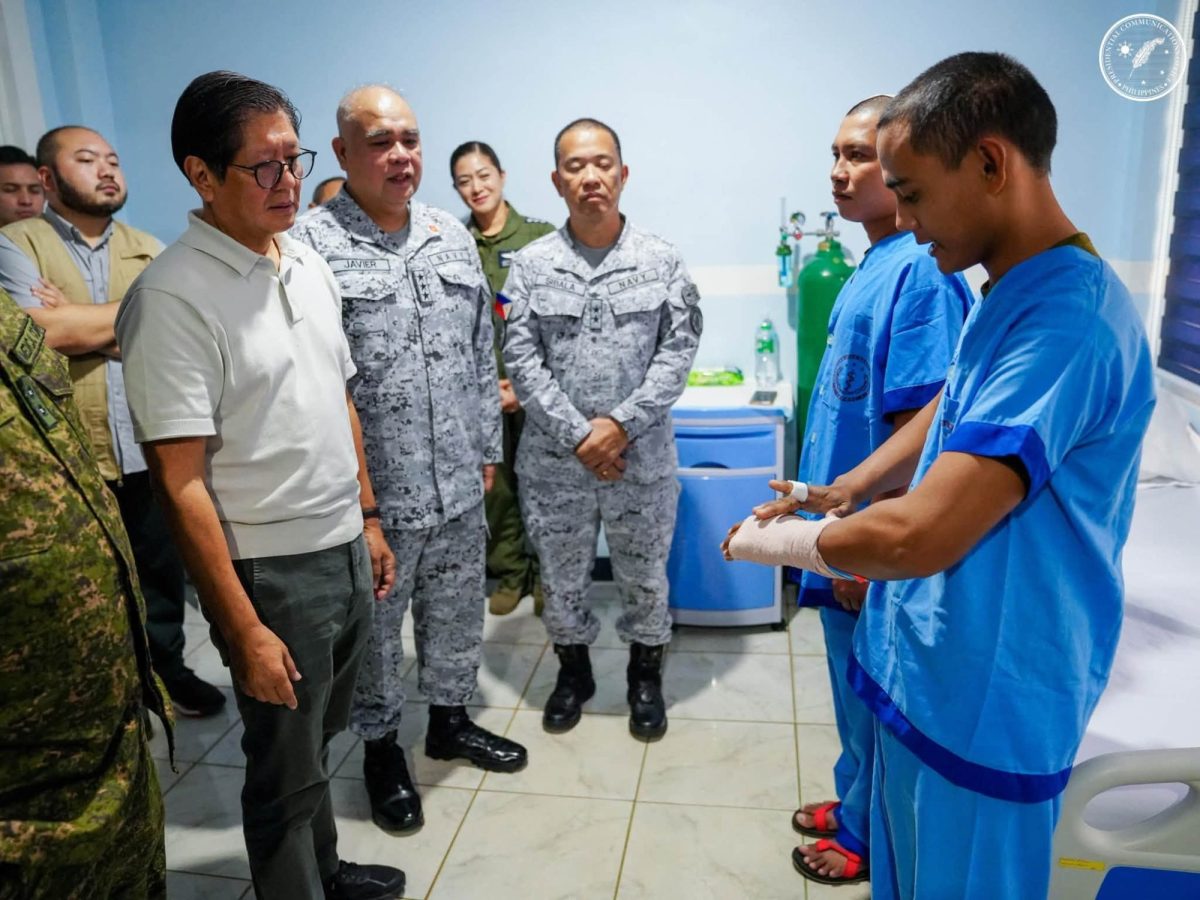
- Lead. A Filipino sailor sustained injuries on July 21 when Chinese Coast Guard personnel confronted Philippine navy troops near a beached Philippine vessel that serves as a garrison at Second Thomas Shoal, the most contested feature in the South China Sea.
- Fact. US Secretary of State Marco Rubio, who arrived in Manila that week for ASEAN meetings, condemned China’s actions as “dangerous and aggressive” and warned that allowing a coercive power to control the waterway would pose “serious new threats” to regional sovereignty.
- Stake. The clash casts doubt on negotiations for a binding Code of Conduct between ASEAN and China that diplomats have spent years trying to finalise.
The confrontation at Ayungin Shoal — known in China as Ren’ai Jiao — represents what Philippine officials described as “the first serious seaborne encounter in months” at the site. Manila said Chinese Coast Guard personnel assaulted Filipino sailors who were attempting to reach a beached Philippine Navy vessel, BRP Sierra Madre, which the Philippines deliberately ran aground in 1999 and has since maintained as a garrison. Beijing countered that the Philippines had provoked the incident by sending personnel in small rubber boats toward Chinese vessels.
Condemnation from Washington and Canberra
The US State Department issued a statement calling the Chinese Coast Guard’s actions “escalatory,” and both Washington and Canberra condemned what they characterised as unprovoked aggression against Philippine service members. Rubio, arriving in the Philippines on the day the incident became public, framed the confrontation in broader strategic terms, arguing that falling under the influence of a power “willing to use trade as a geopolitical weapon” would endanger the sovereignty and economic future of Southeast Asian states.
The episode compounded tensions that were already overshadowing a scheduled gathering of ASEAN foreign ministers in Manila. Rubio and Chinese Foreign Minister Wang Yi converged on Manila for that meeting, where South China Sea conduct was among the most fraught agenda items.
Code of Conduct in Doubt
The incident arrives at a sensitive moment for a decade-long effort to produce a legally binding Code of Conduct governing behaviour in the South China Sea. China’s ambassador to Manila said he believed a deal remained achievable by year’s end, but the latest confrontation renewed questions inside ASEAN about whether Beijing’s stated willingness to negotiate coexists with its operational conduct in the waters.
A Pattern of Escalating Friction
Second Thomas Shoal has been the site of repeated confrontations between Chinese and Philippine vessels over the past three years, including water cannon incidents and the seizure of supplies destined for the Philippine garrison. Each episode sharpens a dilemma for Manila: the 1951 Mutual Defense Treaty with the United States covers Philippine armed forces, and officials in Canberra and Washington have signalled they view the treaty’s scope broadly. That calculus, rather than the outcome of any single skirmish, may ultimately determine whether these clashes remain a slow-burn irritant or become a more serious flashpoint.