
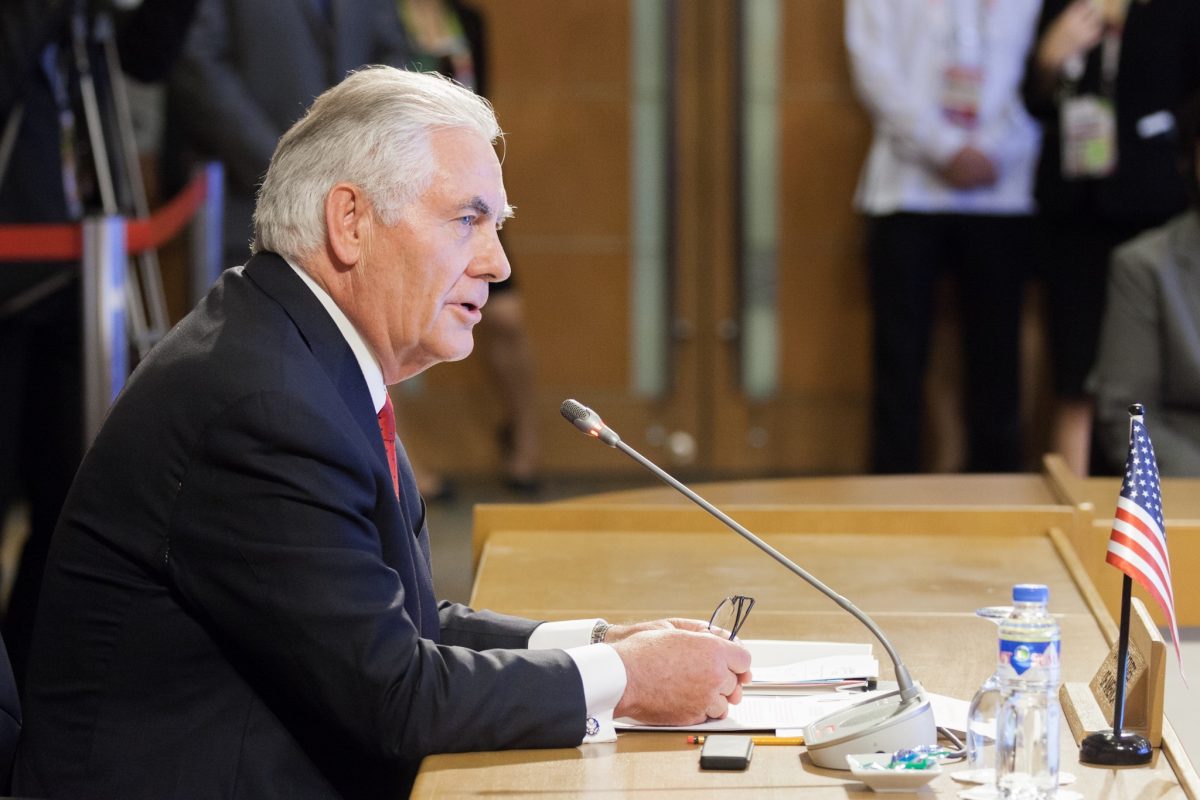
- Lead. The Philippines opens its 2026 ASEAN chairmanship’s most concentrated diplomatic week on July 18, with US Secretary of State Marco Rubio, Chinese Foreign Minister Wang Yi and Russian Foreign Minister Sergey Lavrov all attending in Manila — a convergence of major powers that seldom happens at a single regional forum.
- Fact. The agenda includes ratification of the ASEAN Petroleum Security Agreement, a direct institutional response to the Strait of Hormuz disruption that has reshaped oil flows across Asia since earlier this year.
- Stake. For Southeast Asian governments navigating an unresolved US-China rivalry and a shooting war in the Gulf, the simultaneous presence of all three foreign ministers gives Manila leverage to push competing powers toward concrete regional commitments.
A series of ASEAN-led meetings runs from July 18 to 24 in Manila, anchored by the formal ASEAN Foreign Ministers’ Meeting on July 21 and flanked by bilateral consultations, the East Asia Summit foreign ministers’ session and the ASEAN Regional Forum. Philippine Foreign Affairs Department spokesman Dax Imperial described the gathering as “one of the most significant diplomatic engagements” of Manila’s chairmanship year, adding that the meetings “reflect ASEAN’s enduring commitment to dialogue, cooperation, and regional peace at a time of significant global uncertainty,” according to the Manila Times.
Who Is in the Room
Beyond Rubio, Wang Yi and Lavrov, the meetings will also draw Australia’s Penny Wong, Japan’s foreign minister, India’s foreign minister, New Zealand and the European Union’s representative alongside all 11 ASEAN member state delegations. The ASEAN Plus Three meeting — grouping ASEAN with China, Japan and South Korea — is also scheduled for the same week, making Manila the most diplomatically dense venue of 2026 outside the NATO Ankara summit held earlier this month.
The Philippines holds the rotating 2026 ASEAN chairmanship, giving Manila both the hosting authority and significant influence over which agenda items receive formal communiqué language.
Energy Security as the Pressing Agenda Item
One of the concrete deliverables the Philippines is pursuing is progress on ratification of the ASEAN Petroleum Security Agreement, a framework for emergency oil-sharing among member states. The timing is pointed: after the US-Iran ceasefire collapsed and Washington launched fresh strikes, the Hormuz Strait — through which roughly one-fifth of the world’s seaborne oil passes — has remained a contested chokepoint. Brent crude was trading above $87 a barrel in the days before the meetings opened, a level that reflects sustained supply risk rather than a short-term price spike.
South Korea, Japan and several ASEAN economies are significant Gulf oil importers. Their exposure to Hormuz disruption has made energy security a politically urgent topic in a way that standard ASEAN diplomatic caution tends to discourage from formal communiqués. Manila’s chairmanship is using the petroleum security framework as a vehicle to translate that urgency into a ratified instrument.
Myanmar and the TAC Anniversary
Two other threads run through the week. ASEAN foreign ministers held an initial consultation with Myanmar’s military government representative on the sidelines of preparatory meetings — described as an “icebreaker” session aimed at testing whether ASEAN’s Five-Point Consensus framework can be revived after five years of near-total breakdown. No substantial concessions from the junta are expected at this stage, but the contact itself marks a departure from ASEAN’s recent practice of excluding Myanmar from formal ministerial participation.
The week also marks the 50th anniversary of the Treaty of Amity and Cooperation in Southeast Asia, the non-aggression pact that underpins ASEAN’s dialogue partnerships with every major power in the room — China, the United States and Russia all signed on. The anniversary gives Manila a framing device to present the meetings as a reaffirmation of multilateral principles at a moment when the practical behaviour of all three powers has tested those principles in different ways.