
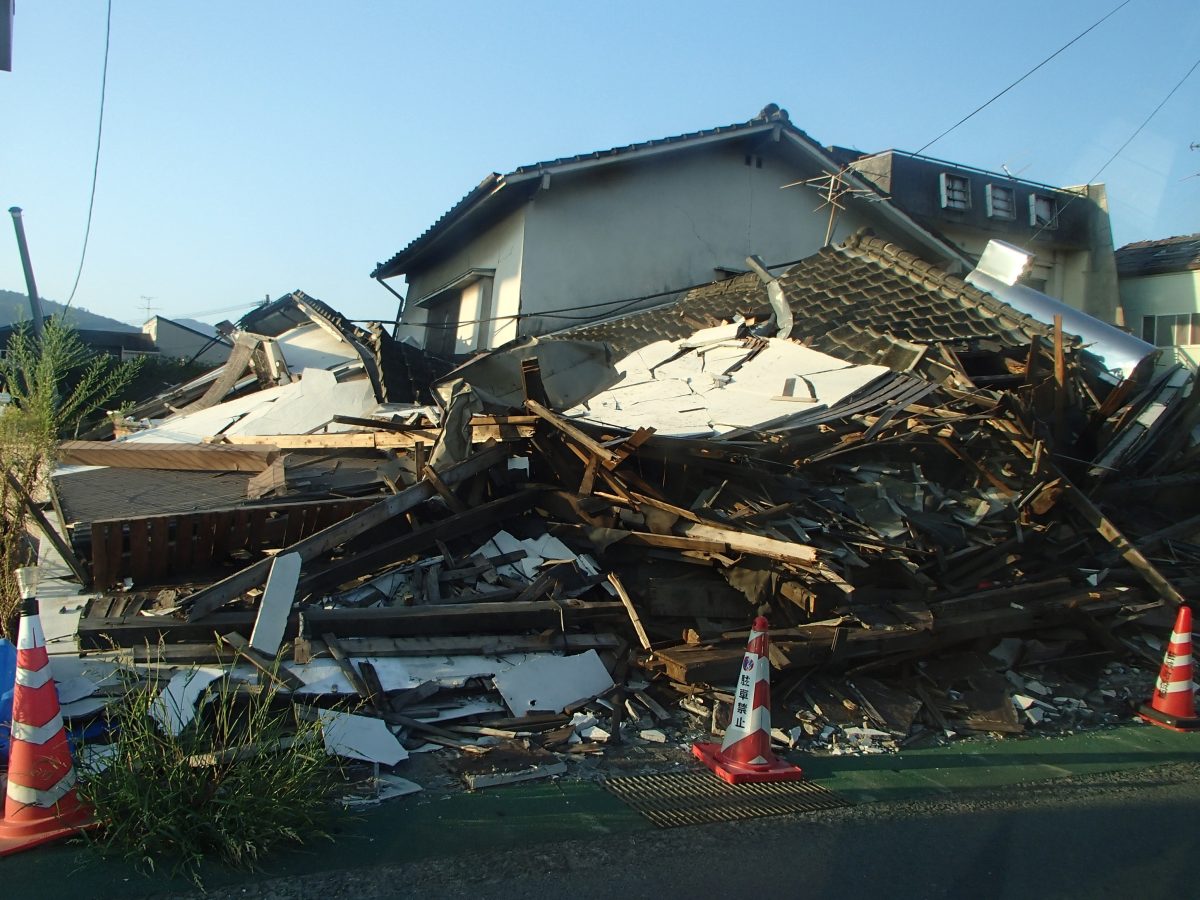
- Quake. A magnitude 7.1 earthquake struck Kumamoto Prefecture at 4:30 p.m. local time on Tuesday, July 28 — the most powerful to hit the region in nearly a decade — at a shallow depth that amplified surface shaking across southern Kyushu island.
- Toll. At least 28 people are confirmed dead, including five killed when a gas explosion tore through a shopping mall and five more at a factory collapse, with rescuers still working through rubble as of Wednesday morning.
- Scale. Nearly 34,900 homes lost electricity, 15,000 lost running water, and more than 8,800 people moved into over 400 emergency shelters across the prefecture.
A shallow strike with deadly force
The quake ruptured at a depth of roughly ten kilometres, a shallow reading that concentrates destructive energy at the surface. Tsunami warnings were issued for coastal zones within minutes and lifted later in the evening. The Japan Meteorological Agency placed the region under elevated aftershock alerts, warning residents against re-entering damaged structures while the ground continued to shift.
An explosion at Aeon Mall in Kashima town — triggered by a gas leak approximately one hour after the initial shock — complicated search-and-rescue operations and accounted for at least five of the confirmed deaths. A structural collapse at a Nippon Paper Industries mill in Yatsushiro killed five workers; seven others were pulled from the debris alive. According to NPR, at least three people remained listed as missing inside collapsed structures as of Wednesday morning, as crews worked against the 72-hour survivor-detection threshold.
Government response
Prime Minister Sanae Takaichi convened an emergency cabinet session Tuesday evening and dispatched Self-Defence Forces units to assist civilian search teams. “There are people who are still waiting to be rescued, and it’s a race against time,” Takaichi said. A delegation of firefighters from Taiwan arrived to assist. Bullet train services on the Kyushu Shinkansen were suspended between Kumamoto and Kagoshima-Chuo while engineers assessed track integrity, and Aso Kumamoto Airport partially resumed operations by Wednesday morning. Local authorities opened water-distribution points as utility crews worked to restore service to the 15,000 homes without running water.
A region familiar with the ground shaking
Kumamoto was devastated by two powerful earthquakes in April 2016 — a 6.2-magnitude foreshock followed by a 7.0 mainshock — that killed 50 people and rendered more than 180,000 buildings uninhabitable. Seismologists noted the 2026 quake appears to have ruptured a different segment of the Hinagu fault zone rather than the same faults that broke a decade ago. The prefecture had invested in seismic retrofit programmes since 2016, yet the pace at which casualties accumulate in the hours after a major strike underlines how quickly those investments can be tested. Venezuela’s earthquake earlier this year, which ultimately killed more than 1,700 people, demonstrated how rapidly figures can climb in the days following a major event.