
- Lead. Venezuela’s confirmed earthquake death toll has risen to 1,719 — more than seven times the initial figure — six days after twin Mw 7.2 and Mw 7.5 quakes struck on June 24, 2026, with roughly 50,000 people still unaccounted for.
- Fact. President Delcy Rodríguez, who has governed since Nicolás Maduro’s removal in January, was booed by residents in the Caracas district of Chacao, and the International Crisis Group described the official response as “totally non-existent to, at best, completely inadequate.”
- Stake. The disaster is the first major test of Rodríguez’s legitimacy at a moment when Venezuela’s emergency infrastructure is weakened by a decade of economic collapse and substandard construction practices.
A toll that keeps rising
The two earthquakes struck northwestern Venezuela within 39 seconds of each other on the evening of June 24. A Mw 7.2 foreshock centred near San Felipe, Yaracuy state, was followed by a Mw 7.5 mainshock near Yumare, triggering cascading building collapses across La Guaira, Falcón, and central Caracas. As of June 29, Al Jazeera reported that authorities had confirmed 1,719 deaths and 5,034 injuries, with approximately 50,000 people registered as missing on a government crowdsourcing platform. Aftershocks continued to complicate rescue operations across the affected regions.
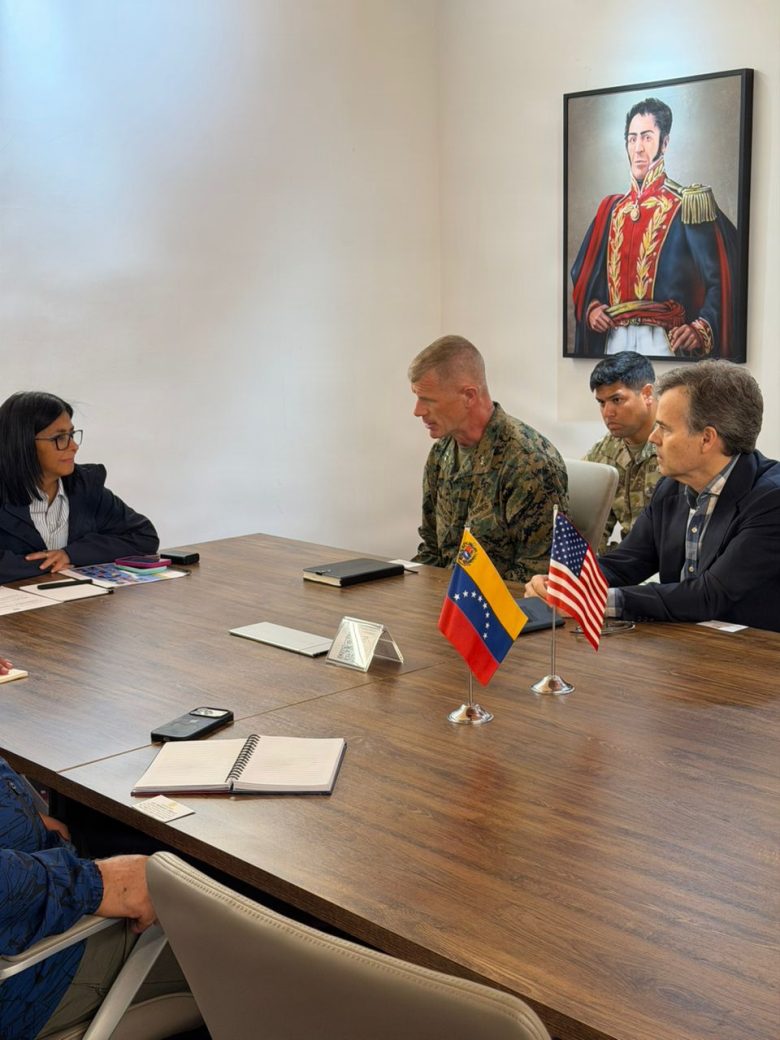
More than twenty international rescue teams arrived from El Salvador, Spain, Qatar, and the United States, including a delegation led by US Marine Corps Major General Kevin J. Jarrard and Chargé d’Affaires John M. Barrett, who met with Rodríguez on June 26 to coordinate relief logistics. The government declared a state of emergency, appealed for international assistance, and deployed the military to control access to the worst-affected areas.
A slow and contested response
The official relief effort has provoked sustained public anger. Residents of the Caracas neighbourhood of Chacao booed Rodríguez during an inspection visit. In Falcón state, citizens broke through military security cordons to reach affected communities themselves. Mairet Perez, a community volunteer working a rubble site, told Al Jazeera that her group lacked adequate spades, helmets, and basic guidance on where to direct their efforts.
Phil Gunson, Venezuela analyst at the International Crisis Group, offered a stark assessment of what he observed: “The government response is anything from totally non-existent to, at best, completely inadequate.” Journalists have been permitted to reach affected areas only on government-arranged transport, limiting independent documentation of conditions on the ground.
Rodríguez’s first crisis
The earthquake is the most serious domestic emergency Rodríguez has faced since taking power. She assumed the presidency in January 2026 after US forces captured Maduro as part of narco-trafficking enforcement operations, inheriting a country in economic disarray and without a settled political structure. Many Venezuelans reject the legitimacy of the movement she leads, and the government’s response to the disaster has intensified that sentiment in real time.
The physical vulnerability of the built environment reflects years of underinvestment. Buildings collapsed within minutes of the first tremor, as early coverage of the disaster documented, pointing to construction standards that went unenforced across successive governments. Emergency services, already thinned by years of budget cuts, have struggled to reach communities separated from Caracas by blocked or damaged roads.