
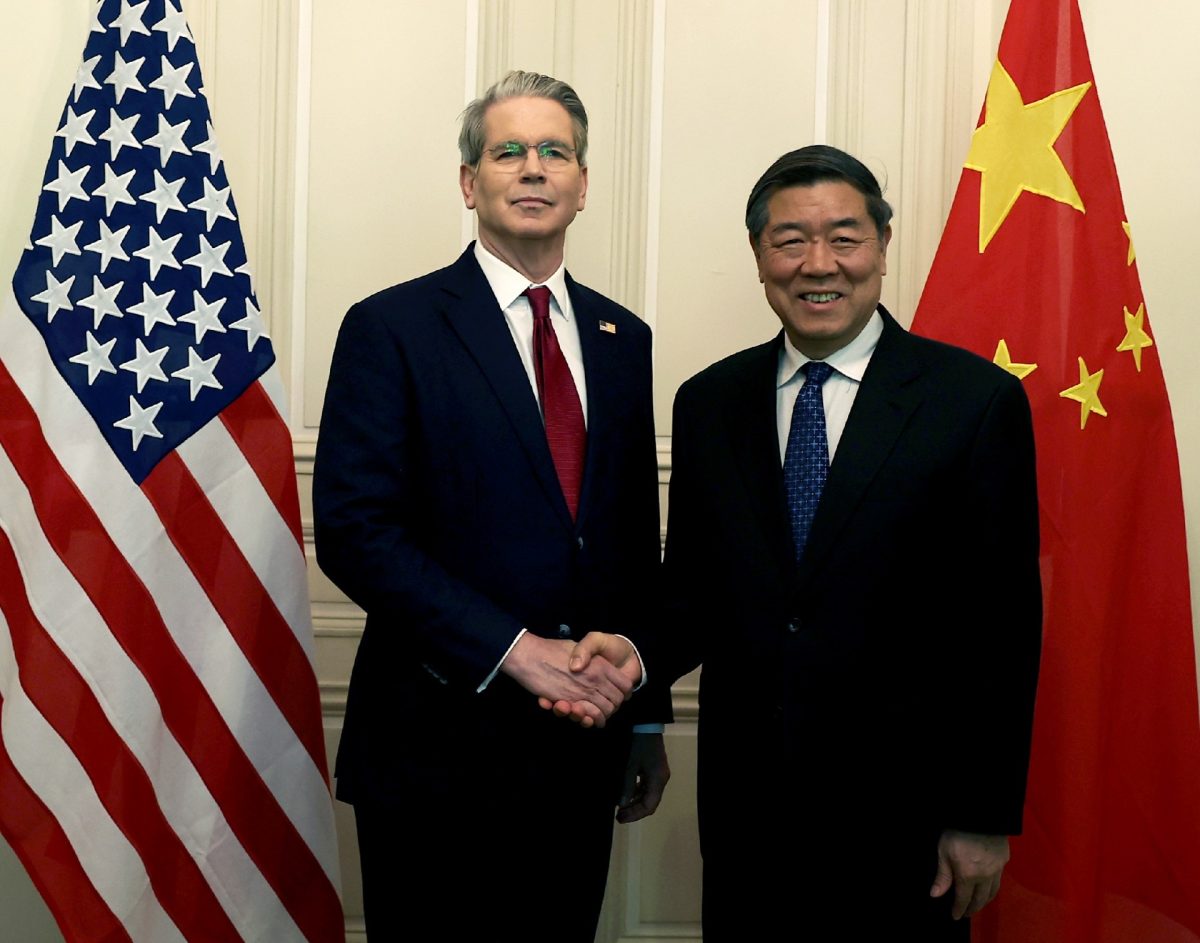
- Direct contact. Chinese Vice-Premier He Lifeng held a video call on July 30 with US Treasury Secretary Scott Bessent and Trade Representative Jamieson Greer to raise “serious concern” over the latest round of US trade restrictions, a rare direct intervention at the senior economic-official level.
- Fact. Bessent told He that Washington expected Beijing to “fully meet its commitments on rare earths and US agricultural products,” signalling that the US side views China’s compliance with earlier agreements as the precondition for any easing of new curbs.
- Stake. Xi Jinping is expected to visit the United States in September, and the outcome of the July 30 call may determine whether that summit carries a substantive economic agenda or simply manages a relationship still under pressure from successive tariff rounds.
What Triggered the Call
The conversation came after Washington imposed new tariffs on roughly 60 trading partners under Section 301, accusing them of inadequate enforcement of forced-labour bans. China is at the centre of that action, and Beijing also objected to a separate US ban on imports of Chinese-manufactured humanoid and quadruped robots on national security grounds — a move that state media characterised as an attempt to “suppress” Chinese technology companies.
According to a readout from Xinhua, China’s official news agency, the July 30 call was described as “candid, in-depth and constructive,” a standard formulation that signals the two sides are managing, rather than resolving, their differences. The specific language of “serious concern” carries a formally elevated tone in Chinese diplomatic communication.
The trade pressure builds on earlier measures. China’s rare earth export crackdown earlier this year had already locked in a sixfold price surge for critical materials used in US defence and semiconductor supply chains — a leverage tool Beijing has been reluctant to surrender, even as American officials insist it must.
Divergent Priorities at the Table
Bessent’s demand that China honour its rare earth and agricultural commitments reflects the Trump administration’s consistent framing: that trade liberalisation, where it exists, must be reciprocal and enforceable. The US side sees Beijing’s compliance with deliverables from the October 2025 Trump-Xi summit as a litmus test of good faith ahead of a possible September renewal.
Beijing’s position is more complex. China has an incentive to hold trade relations stable enough to support domestic growth targets while avoiding concessions that could be read domestically as capitulation to American pressure. The rare earth question is particularly sensitive because it sits at the intersection of trade policy and strategic competition over advanced manufacturing.
The parties agreed to continue discussions “in the next phase” — a phrase that suggests the July 30 call was structured to preserve channels rather than reach agreement, buying time before the diplomatic calendar intensifies in the autumn.
The September Variable
Xi Jinping’s anticipated US visit in September gives both governments a reason to manage the current friction without allowing it to escalate into a full rupture. A deteriorating trade atmosphere in the weeks before the summit would reduce the room for the leaders to claim progress, while a managed calm could allow a broader agenda — covering semiconductors, AI governance, and military-to-military communication — to emerge.
Whether that sequence holds depends partly on what Washington does with the Section 301 enforcement process over the next several weeks and whether Beijing’s signals on rare earths translate into observable delivery. The July 30 call suggests both sides see value in keeping the line open, but neither has yet shown willingness to move substantially from its stated position.