
- Record quarter. AMD reported Q2 2026 total revenue of $11.5 billion, up 50% year-on-year, with data centre sales more than doubling to $6.7 billion — 58% of total revenue.
- Platform launch. AMD’s Helios rackscale AI system entered full production, with Anthropic committing to deploy up to 2 gigawatts of Instinct MI450 GPUs and Microsoft expanding its Azure collaboration.
- Guidance. AMD forecast Q3 revenue of $12.7–$13.3 billion and said it expects data centre revenue to more than double year-on-year in 2027.
AMD posted record second-quarter results on 4 August 2026, with total revenue of $11.5 billion — a 50% year-on-year increase that beat analyst expectations — and data centre segment revenue of $6.7 billion, up 107% from the same quarter a year earlier. The results, reported by Data Center Dynamics, confirmed a pattern that has been building across several quarters: AMD’s AI accelerator and server processor business is now large enough to move its overall revenue profile toward data centre in a structurally meaningful way, with that segment accounting for 58% of total sales.
What Drove the Quarter
The data centre segment’s 107% growth was driven by strong demand for both Instinct GPUs — AMD’s AI accelerator line — and EPYC server processors. AMD benefits from the same AI infrastructure build-out that has driven Nvidia’s growth, because hyperscalers and cloud providers have strong incentives to qualify multiple GPU suppliers to reduce dependence on a single vendor. That dynamic has helped AMD win meaningful contracts even as Nvidia retains a commanding overall market-share lead in AI accelerators.
AMD’s client segment also showed improvement, though data centre remains the dominant growth driver by a wide margin. Total gross margin reached 54%, consistent with the company’s shift toward higher-value AI and data centre products.
Helios: AMD’s Rackscale Bet
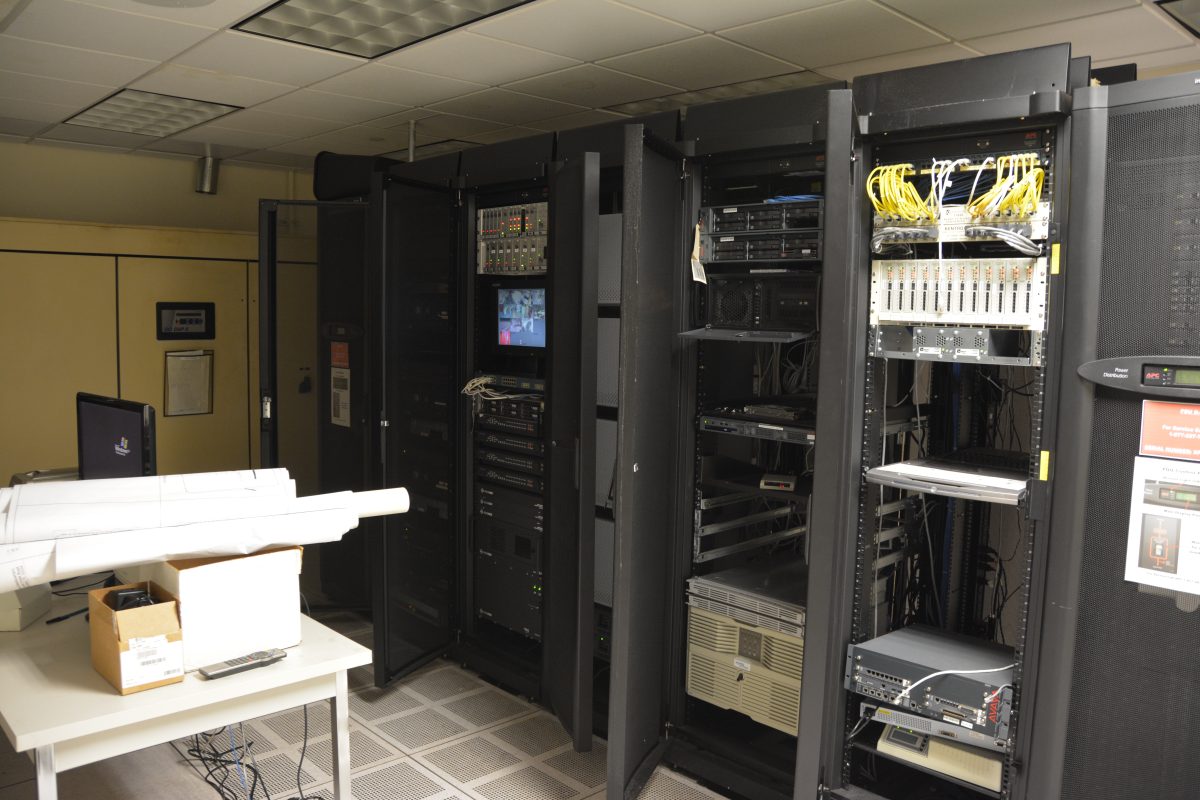
The most strategically significant development accompanying the results was the launch of the Helios rackscale solution — a complete AI infrastructure system combining AMD Instinct MI450 Series GPUs, 6th Gen EPYC CPUs, and Pensando Salina and Vulcano networking into a single rack-level product. Helios has entered full production and is expected to begin shipping to customers before the end of Q3 2026.
Two partnerships announced alongside the results signal the commercial weight behind the platform. Anthropic and AMD agreed to deploy up to 2 gigawatts of Instinct MI450 GPUs in Helios racks — a deal that positions AMD as a principal hardware supplier for one of the leading frontier AI laboratories. Microsoft announced an expanded collaboration to deploy Helios and 6th Gen EPYC at scale across Azure, providing AMD with credible reference customers in the hyperscaler tier. The Azure commitment matters particularly because it creates visible proof-of-deployment at the scale hyperscalers care about.
Competitive Context and Outlook
AMD’s gains come as the AI chip market fragments between training-focused large-scale deployments — where Nvidia leads — and inference workloads, where cost-per-token has become a growing purchasing criterion. The arrival of aggressively priced AI models from outside the US, illustrated by DeepSeek V4-Flash’s release at $0.14 per million tokens, has intensified focus on inference efficiency as hyperscalers evaluate their hardware choices.
AMD guided for Q3 2026 revenue of $12.7–$13.3 billion, implying year-on-year growth of roughly 41%. The company said it expects data centre segment revenue to more than double year-on-year in 2027 — a projection that, if met, would further narrow the gap with Nvidia’s dominance in AI compute. The Helios platform launch, backed by commitments from Anthropic and Microsoft, gives AMD a credible answer to the question of whether its AI accelerator strategy can sustain the scale of growth its data centre segment now demands.