
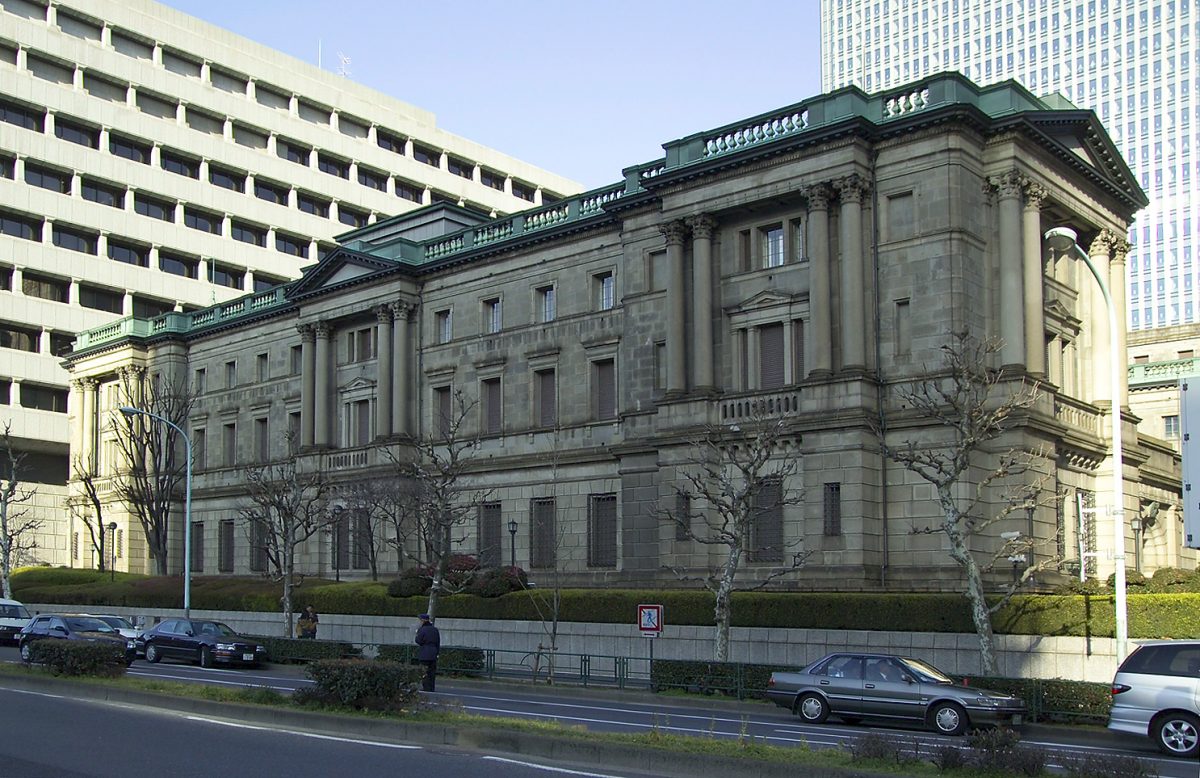
- Lead. The Bank of Japan’s official Summary of Opinions from its July 30–31 meeting, published on August 10, reveals internal pressure for a faster rate-hike trajectory than markets currently price, with one board member explicitly stating the pace of increases “could be faster than market expectations.”
- Fact. The BOJ held its policy rate at 1.0 percent — the highest level since 1995 — on an 8-to-1 vote, with one dissentient pushing for an immediate move to 1.25 percent. Core inflation is now projected to accelerate “clearly above” 2 percent from the second half of the bank’s 2026 fiscal year.
- Stake. A September hike is now the consensus base case among Japanese rate-watchers, but a minority view on the board suggests the terminal rate could arrive earlier than most forecasts anticipate, with direct implications for the yen and global capital flows.
The Bank of Japan’s rate-setting board ended its July meeting holding borrowing costs steady but produced an internal document, released publicly on August 10, that reads as considerably more hawkish than the headline decision implied. The Summary of Opinions — a record of individual members’ views from the July 30 and 31 meeting — shows at least one of the nine policymakers arguing that underlying price pressures have hardened enough to justify moving faster than financial markets currently anticipate, according to reporting by Bloomberg.
What the Summary Says
The key passage from the July summary is direct: “Given that underlying CPI inflation has been approaching 2 percent and greater consideration should be given to upside risks to prices than before, it could be considered that the pace of policy interest rate hikes will be faster than market expectations.” That is a significant statement from a central bank that has historically been careful to telegraph moves well in advance and avoid surprising bond markets.
The dissent on the actual vote was equally telling. Eight members backed the hold at 1.0 percent while one — widely identified as board member Hajime Takata — called for an immediate increase to 1.25 percent. That 8-1 split is narrower than it appears in percentage terms: one hawkish dissent at the BOJ carries institutional weight because it is unusual, and it puts the September 18–19 meeting in focus as the next live opportunity for action.
The board also raised its inflation forecast, projecting that core CPI is likely to accelerate to a level “clearly above” 2 percent from the second half of the BOJ’s fiscal year — the period running from September 2026 through March 2027. The reasons cited include yen depreciation, AI-driven demand for energy, and elevated crude prices tied to the ongoing disruption of Middle East oil flows.
Context: From Negative Rates to 1 Percent in Eighteen Months
The BOJ’s journey from negative interest rates to a 1 percent policy rate has been one of the most consequential shifts in global monetary policy over the past two years. Japan’s persistent import-cost inflation — amplified by a structurally weaker yen — combined with the first genuine wage-price dynamics the economy has seen in decades persuaded the bank to exit its ultra-loose stance in a series of steps. The June 2026 hike to 1 percent, the first time the rate had reached that level since September 1995, was a milestone that the BOJ framed as a measured normalisation rather than a tightening cycle.
That framing is now being tested internally. Tokyo’s inflation data for two consecutive months has already come in above expectations, and board member Naoki Tamura has publicly stated that rates should gradually approach a neutral level of around 2 percent — a destination that implies at least three to four more quarter-point increases from current levels.
Market Implications
The summary’s hawkish tone pushed the yen firmer against the dollar in early Monday trading, reversing some of the depreciation that had accumulated over the summer. Japanese government bond yields edged higher at the two- and five-year maturities as traders reassessed the probability of a September move. Swap markets are now pricing roughly a 60 percent chance of a 25-basis-point increase at the September meeting, up from below 40 percent before the summary was released.
For global investors who have used Japan’s low-rate environment as the funding leg for carry trades into higher-yielding assets, the prospect of a faster BOJ normalisation carries real portfolio risk. A series of rapid yen-funded carry unwinds in 2024 and early 2025 offered a preview of how disruptive that adjustment can be. Whether the BOJ moves in September or holds for another meeting, the July minutes have established that the debate inside Kazuo Ueda’s board is no longer about whether to hike, but about how quickly.