
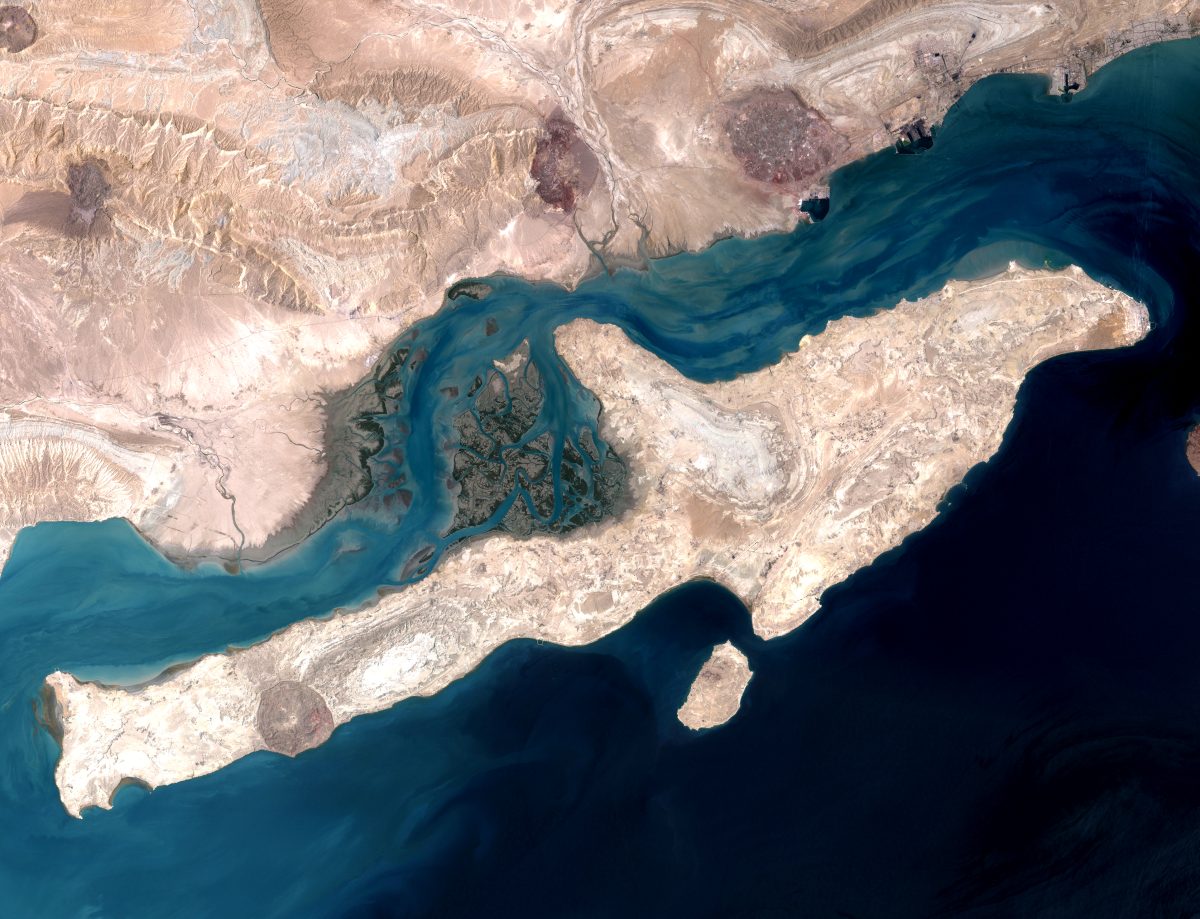
- Lead. Brent crude futures rose more than 1 percent to $84.43 a barrel on Monday after Iranian Foreign Minister Abbas Araghchi stated publicly that the Strait of Hormuz will not reopen until the United States eases sanctions and pays war reparations — conditions Washington has shown no sign of accepting.
- Fact. Ship-tracking data shows that only 8 to 15 vessels transited the Strait daily in early August, compared with roughly 130 before the war began in late February — a 90 percent reduction in a waterway that normally carries one-fifth of global oil supply.
- Stake. Even as equities trade near record highs on strong earnings and rate-cut optimism, oil’s persistent risk premium signals that energy markets are pricing a prolonged standoff rather than a near-term diplomatic breakthrough.
The Strait of Hormuz standoff entered its sixth month on Monday with no resolution in sight, pushing October Brent futures to $84.43 a barrel at 4:30 GMT — about 16 percent above their level before the United States and Israel began military operations against Iran in late February, according to Al Jazeera. Iranian Foreign Minister Abbas Araghchi told state media that the waterway would remain effectively closed until Washington agreed to lift sanctions and provide war reparations to Tehran, adding conditions that diplomats in Muscat, where Oman has been mediating, described as a significant step backward from earlier draft language.
Why the Premium Is Sticking
Markets had briefly priced in a quicker resolution following informal signals in late July that Iran and Oman were close to agreeing a framework for limited commercial passage. Those hopes faded on August 6 when Iran’s state news agency Fars published an initial draft plan that placed far more restrictive conditions on ship traffic — including requirements for advance Iranian approval of vessel manifests and crew — than the United States had indicated it could accept. “The lack of concrete movement, together with lingering questions about the practical details of any agreement, is keeping a risk premium in the price,” said Tim Waterer of KCM Trade.
The human and commercial scale of the disruption is difficult to overstate. Before the conflict, the Strait of Hormuz handled the transit of roughly 20 million barrels per day of crude oil and refined products — one in every five barrels consumed globally. The diversion of cargoes to alternative routes through pipelines and around the Cape of Good Hope has added weeks to voyage times and significantly raised freight and insurance costs. Treasury Secretary Scott Bessent publicly dismissed the Strait as “irrelevant” given the rerouting, but oil markets have consistently disagreed, and Brent’s 16 percent uplift since February reflects that judgment.
Equities Tell a Different Story
The disconnect between oil’s risk premium and equity market buoyancy widened on Friday. The S&P 500 advanced 3.58 percent while the Nasdaq surged more than 5 percent, driven by S&P 500 earnings that have run roughly 50 percent above year-ago levels according to a composite of reporting companies through the second quarter. Softer-than-expected US nonfarm payrolls data released on Friday further reduced market expectations for Federal Reserve rate hikes, adding a tailwind to rate-sensitive growth stocks.
The MSCI All Country World Index hovered near a record high on Monday morning, with Asian shares tracking Wall Street’s Friday gains. The dichotomy — expensive equities, elevated oil — reflects an unusual configuration where corporate earnings are strong enough to sustain valuations even as energy costs remain elevated. That balance can hold as long as oil stays in the mid-$80s rather than climbing toward the $100 threshold where pass-through to consumer prices and profit margins becomes more acute.
The Week Ahead
An earlier moment of optimism when oil fell on signals of an Iran pause now looks premature, and attention turns to Tuesday’s ADP employment release and Wednesday’s US Consumer Price Index for July. A hotter-than-expected CPI print would complicate the narrative that the Fed is done tightening, potentially reversing some of the rate-cut optimism that lifted equities on Friday. For energy markets, the more important variable remains Araghchi’s demands: whether Tehran’s public stance reflects a negotiating position or a settled policy will determine whether Brent holds near $84 or presses toward $90 in the weeks ahead.