
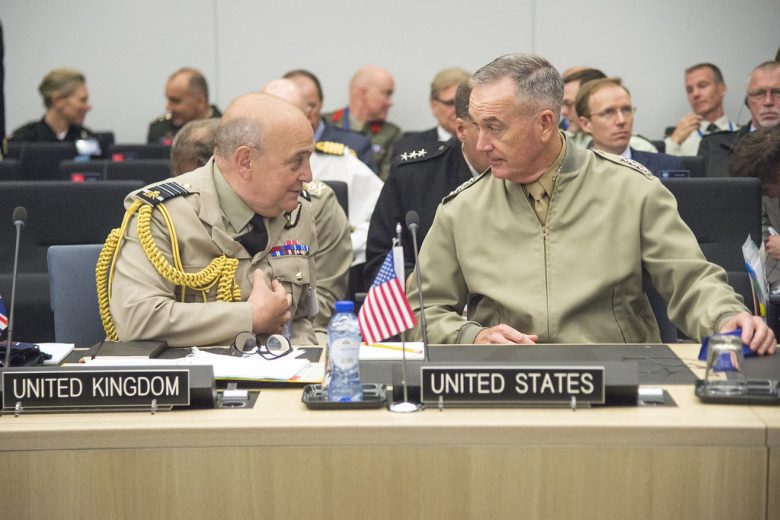
- Trump has publicly questioned whether the US would honour NATO’s Article 5 guarantee. European governments can no longer treat the American nuclear umbrella as automatic.
- France is the EU’s only nuclear power and has a doctrine of strategic ambiguity that has historically excluded alliance-wide coverage. Any extension of that doctrine to cover Poland or the Baltics would rupture 60 years of French strategic thinking.
- Germany’s Bundestag approved a constitutional change removing defence from the debt brake in March, unlocking what Berlin describes as a generational investment in European security architecture.
French President Emmanuel Macron has held preliminary talks with the leaders of Poland, Estonia, Latvia, Lithuania, and Germany about the conditions under which France would extend its nuclear deterrence to cover Eastern European NATO members, according to reporting this month. The discussions are at an early stage — no formal framework has been proposed, and French officials have declined to confirm specific details — but their existence marks a break with the French strategic tradition that has, since Charles de Gaulle, treated the force de frappe as a strictly national instrument.
The catalyst is the erosion of confidence in the US commitment to NATO. Trump has suggested on multiple occasions that the alliance could continue without American participation, most recently in April when he said European members needed to “pay their own way or find their own arrangements.” For Eastern European governments that border Russia and have watched Russian forces advance against Ukraine for four years, the question of who provides the ultimate security guarantee has moved from theoretical to urgent.
Germany’s role
Germany’s decision in March to exempt defence spending from its constitutional debt brake — the Schuldenbremse — was the institutional precondition for taking the European deterrence question seriously. The Bundestag approved the change with the cross-party majority needed for a constitutional amendment, unlocking what Chancellor Friedrich Merz described as “a generational investment in the security of Europe.” German defence spending is expected to reach 3.5 percent of GDP by 2027, up from 2.1 percent in 2024.
Berlin has historically been reluctant to engage in nuclear discussions given its post-war constitutional commitments, but Merz’s government has indicated openness to a European nuclear framework that does not require Germany to possess weapons — only to participate in governance structures and contribute to delivery systems. That position moves Germany closer to France than at any point since reunification.
What it would take
The practical barriers are significant. French nuclear doctrine requires presidential authority for any use; extending deterrence to cover third countries means, in some operational sense, pre-committing a French president to respond to an attack on Warsaw or Tallinn. No French government has been willing to accept that constraint explicitly. The discussions underway are about whether a new framework can provide credible deterrence without that explicit commitment — whether structured ambiguity can reassure allies while preserving French freedom of action.
NATO Secretary-General Mark Rutte has endorsed European defence investment while carefully avoiding any language that concedes American withdrawal from the alliance. The gap between Rutte’s institutional optimism and the contingency planning happening in Paris and Berlin reflects a European security architecture simultaneously defending its current form and preparing for its possible absence.