
- Lead. Jared Kushner and Benjamin Netanyahu met for hours in Jerusalem on Monday but made little progress advancing the Trump administration’s 15-point plan to demilitarise Gaza, with the two sides deadlocked over who must move first — Hamas disarming or Israeli forces withdrawing.
- Fact. Netanyahu publicly rejected a provision requiring Hamas to disarm while Israel withdraws in parallel; his office insists disarmament must be “prompt and completed before any reconstruction happens in Gaza.”
- Stake. Hamas has agreed in principle to disarm but demands Israel end strikes and begin pulling back troops first — a sequence Netanyahu’s government rejects, leaving Gaza’s civilian population with no clear end date for displacement and destruction.
Kushner, who entered the weekend by meeting Hamas’s new leader in Egypt, arrived in Jerusalem on Monday for talks that included U.S. Ambassador Mike Huckabee and former British Prime Minister Tony Blair. The meeting produced one concrete output: an agreement to form two working groups, one focused on Hamas disarmament verification and one on Palestinian humanitarian needs. According to a source briefed on the discussions, Kushner and Netanyahu agreed that a U.S. military general should supervise the handover of Hamas weapons — but neither side committed to a timeline.
The Sequence Problem
At the heart of the impasse is a structural disagreement about ordering. Trump’s 15-point plan envisions Hamas surrendering its weapons to a Palestinian third party while Israeli forces withdraw from Gaza concurrently. Netanyahu rejected that framing publicly in early August, saying there would be “no military pullout until Hamas is genuinely disarmed.” His office repeated that position after Monday’s meeting, stating that both parties agree disarmament “should be prompt and completed before any reconstruction happens in Gaza.”
Hamas, for its part, said it accepted a preliminary version of the deal. But its conditions are the mirror image of Netanyahu’s: Israel must end strikes, start withdrawing troops, and the international community must recognise a Palestinian state before Hamas lays down heavy weapons. Israel’s government rejects Palestinian statehood recognition outright. National Security Minister Itamar Ben-Gvir went further, openly opposing any ceasefire arrangement and calling it contrary to a strategy of sustained military pressure.
Why the Working Groups May Not Help
The formation of technical working groups is a familiar tool in stalled diplomatic processes, providing the appearance of progress while the core dispute remains unaddressed. In this case, disarmament verification — which agency counts the weapons, who certifies the handover, what timeline triggers what — cannot be resolved without first settling whether disarmament and withdrawal happen sequentially or simultaneously. The working groups have no mandate to answer that question.
This mirrors the pattern that has defined Gaza diplomacy for months. In July, Hamas agreed to a disarmament roadmap while Israel’s acceptance remained unconfirmed — a dynamic that has since hardened rather than softened. The Trump administration, which has positioned Gaza as a marquee foreign policy objective, has yet to demonstrate the leverage needed to force a decision from either party on sequencing.
What Comes Next
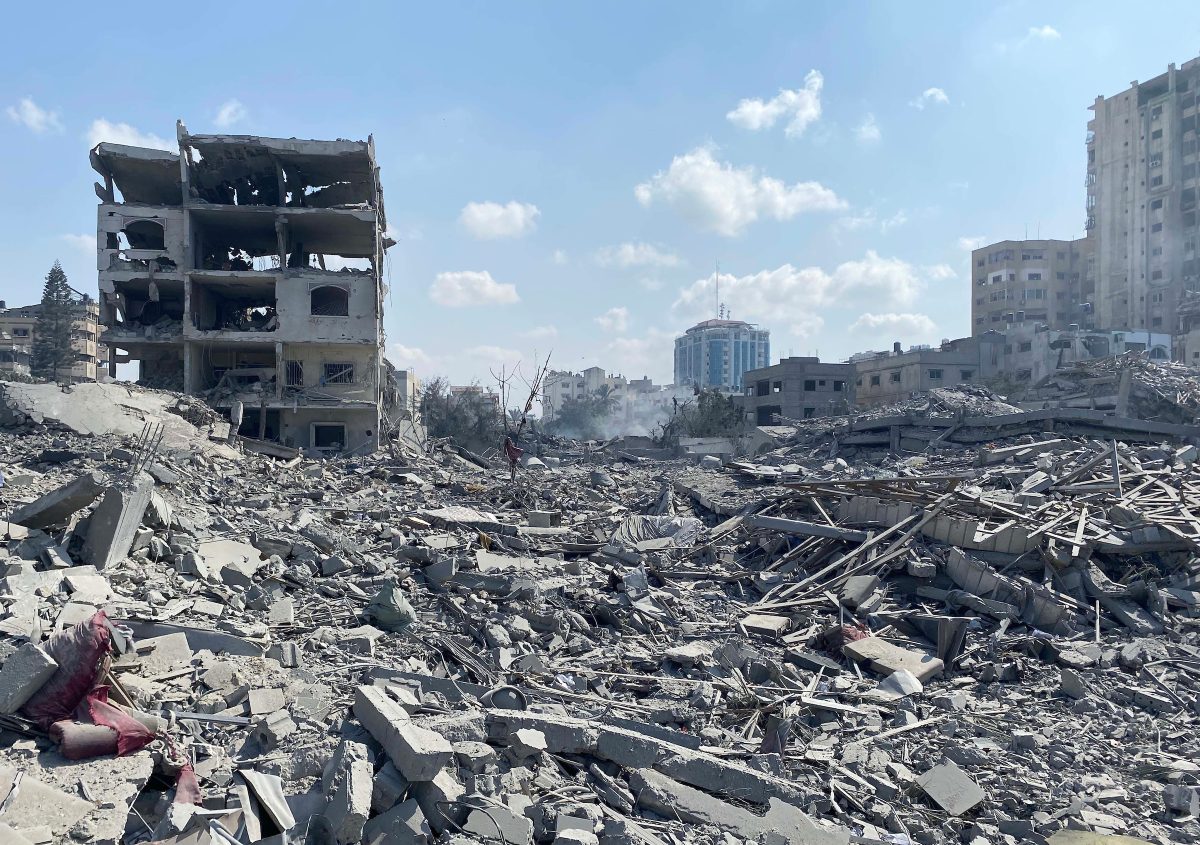
Gaza remains under sustained military operations, with displacement affecting the majority of its prewar population of roughly 2.3 million. Reconstruction funding from Gulf states and the European Union has been pledged in principle but is explicitly conditional on a political settlement, which in turn requires the disarmament agreement neither side will currently accept on the other’s terms. The Board of Peace — the U.S.-backed civilian governance framework intended to administer postwar Gaza — has no operational mandate to begin work until both disarmament and Israeli withdrawal are resolved.
President Lai’s public statement on the talks, watched closely across the region, reflects how far the 15-point plan remains from implementation. Kushner is expected to continue his regional tour in the coming days, but no follow-up meeting schedule has been confirmed. The next concrete test will be whether the two working groups can establish a framework both Netanyahu’s cabinet and Hamas’s leadership will accept — a prospect that, after Monday’s session, looks no closer than before.