
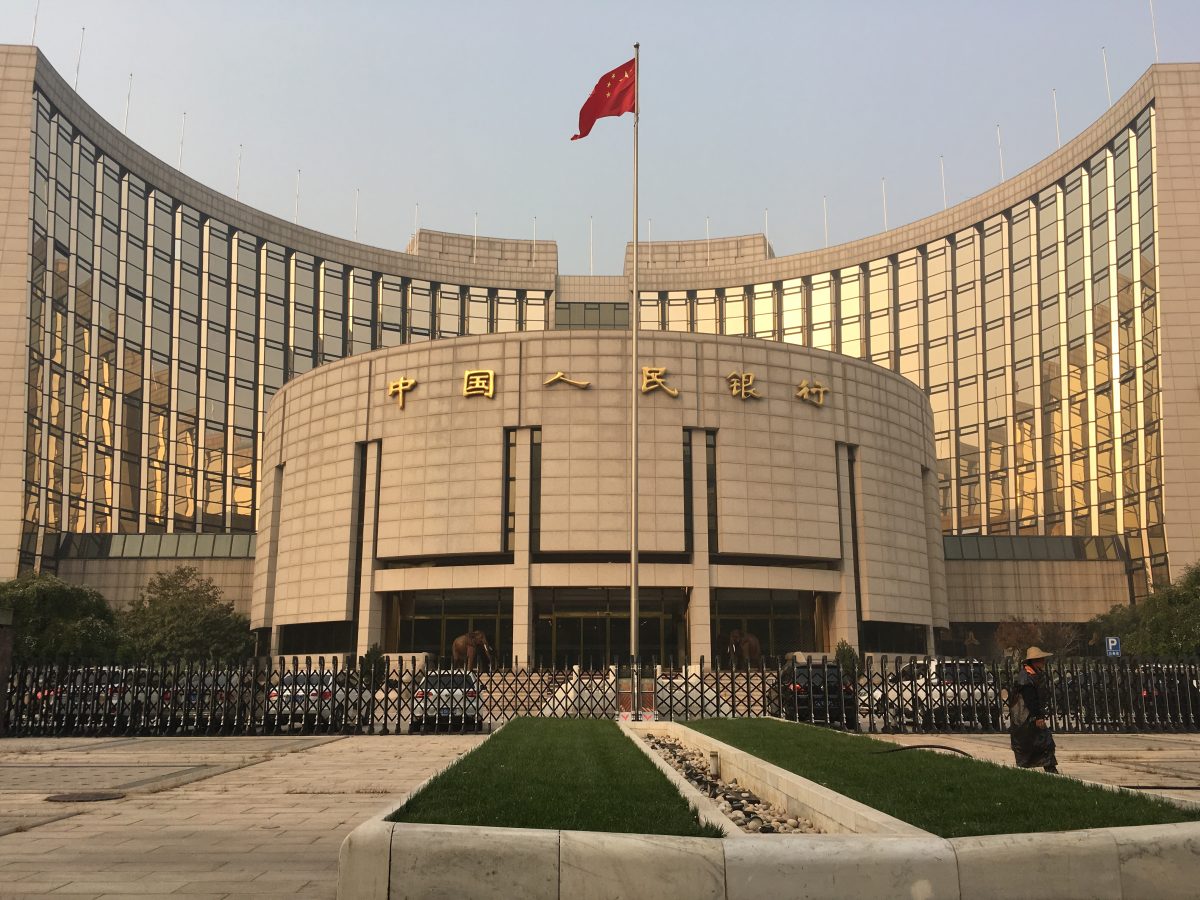
- Lead. The People’s Bank of China left its one-year loan prime rate at 3.0% and its five-year rate at 3.5% on July 20, the 14th consecutive month without a move, after Q2 2026 GDP came in at 4.3% — the weakest reading since late 2022.
- Fact. The Q2 figure missed Beijing’s official growth target of 4.5%–5% for the first time since the COVID era, with retail sales up just 1.3% in June and fixed asset investment down 5.7% in the first half of the year.
- Stake. The rate freeze, combined with a GDP miss driven by weak domestic demand, leaves Beijing walking a narrow line between maintaining monetary ammunition for a potential second-half cut and risking further slowdown if its “targeted structural tools” prove insufficient.
China’s benchmark lending rates have been frozen since May 2025, giving the current hold a different character from earlier pauses. The PBOC is not waiting for room to ease — it has already eased, and is now watching to see whether prior cuts, which have driven June corporate loan rates to approximately 3%, are feeding through the credit system. In a brief statement reported by Xinhua, officials described their policy stance as “appropriately accommodative” — a phrase that in Beijing’s policy vocabulary covers both holding steady and preparing to move.
A GDP Miss That Cannot Be Ignored
Five days before the rate decision, the National Bureau of Statistics released Q2 2026 GDP data showing growth of 4.3%, below every point of Beijing’s official 4.5%–5% annual target range and the slowest pace since late 2022. Retail sales climbed just 1.3% in June; fixed asset investment declined 5.7% year-on-year in the first half; property investment continued to contract. Mao Shengyong, the bureau’s deputy head, described the core problem as one of imbalance — “acute” tensions between strong supply capacity and persistently weak domestic demand, according to NPR.
Against that domestic weakness, China’s export sector — which jumped 27% in June on AI hardware demand — has become the economy’s primary growth engine. That dependence makes the overall picture fragile: any softening in external demand, or escalation of trade pressure from the US or EU, could pull the headline GDP number further below target in the second half.
What Comes Next
The PBOC has signalled openness to a modest policy rate cut later in 2026 if conditions deteriorate, particularly if Middle East conflict raises energy costs or disrupts global trade. For now, it appears to prefer what officials call “targeted structural tools” — sectoral credit support, loan-maturity adjustments, and housing finance measures — over broad rate reductions that it views as a diminishing marginal return. New personal housing loans averaged 3.1% in June, essentially flat year-on-year, reflecting the limits of rate transmission into a property sector still working through excess inventory. The Q3 data, due in October, will be the first real test of whether the 4.3% Q2 print is a trough or a trend.