
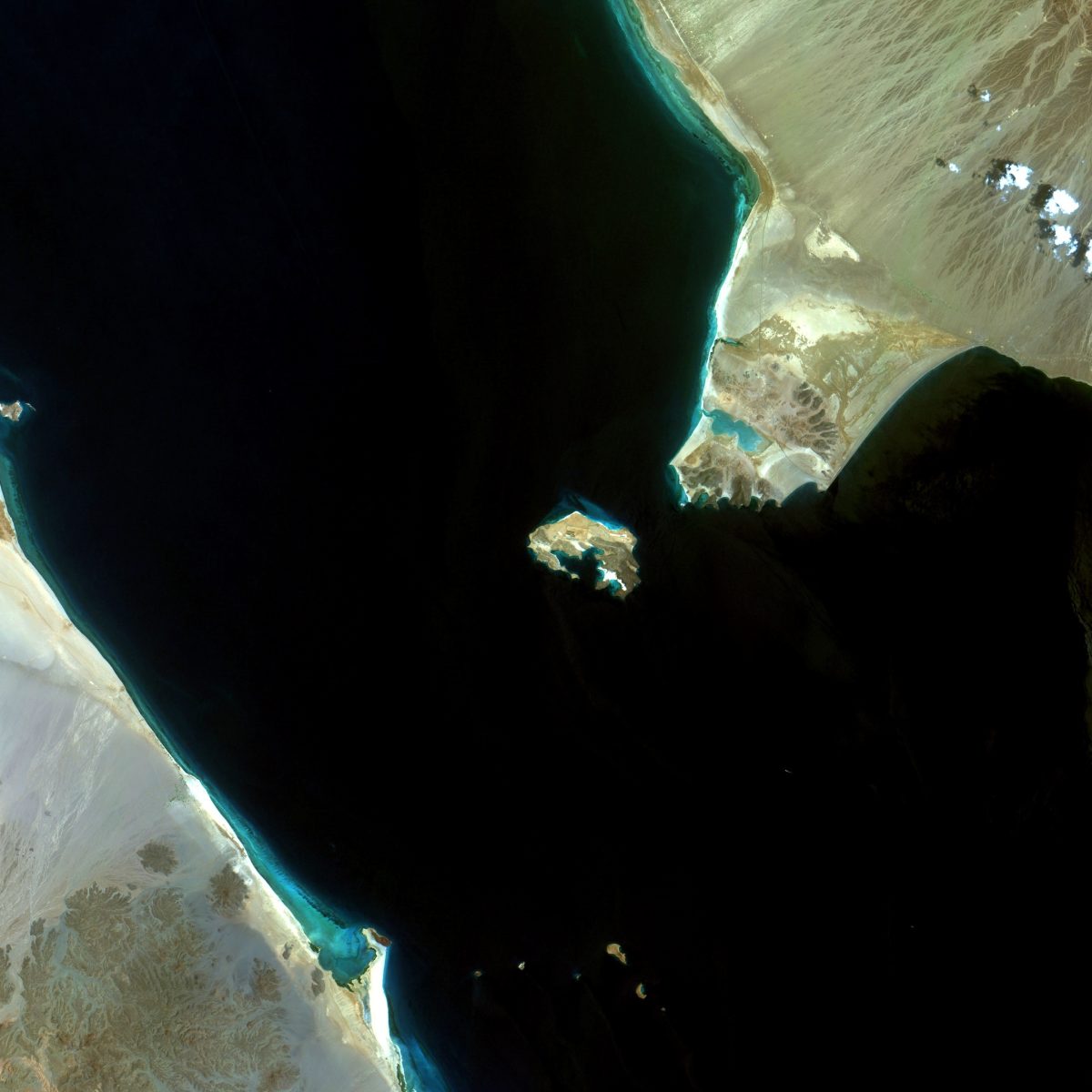
- Lead. Saudi Arabia launched 54 airstrikes in 24 hours on September 15 after Houthi forces seized two more islands in the southern Red Sea, extending their control over the Bab el-Mandeb Strait.
- Fact. Houthi forces have killed more than 500 people and displaced roughly 46,000 since the offensive began, completing control of Yemen’s Red Sea coastline, including strategic Perim Island, which divides the strait into two shipping lanes.
- Stake. Control of the strait threatens roughly one-third of the world’s container traffic, which passes through the Red Sea on its way to the Suez Canal; shippers may have to reroute around the Cape of Good Hope.
Saudi Arabia launched 54 airstrikes across Yemen within a 24-hour window on September 15, 2026, after Houthi forces seized two more islands in the southern Red Sea, escalating a conflict that has drawn in the United States, Iran, and the region’s oil infrastructure.
An Extraordinary Shock to Global Trade
The latest Houthi advances gave the Iranian-backed movement full control of the Bab el-Mandeb Strait, the narrow passage linking the Red Sea to the Gulf of Aden and the Suez Canal. Houthi fighters captured Perim Island — which divides the strait’s two shipping lanes — the port city of Mokha, Zuqar Island, and the coastal towns of Dhubab and Murad. Analysts described the outcome as an “extraordinary shock to the global trading system,” with nearly a quarter of the world’s seaborne crude oil and petroleum products moving through the combined Hormuz and Bab el-Mandeb corridors.
Houthi officials claimed maritime navigation remained safe “for all companies except for Saudi vessels,” a formulation that leaves international carriers in legal and operational uncertainty. A local government official confirmed simply: “The Houthis have completed their takeover of the Bab el-Mandeb area.”
Saudi and American Responses
Saudi Crown Prince Mohammed bin Salman urged President Trump to conduct military strikes against Houthi positions, but Trump declined direct intervention, agreeing instead to provide targeting intelligence and military assistance to Riyadh. The Saudi air campaign — 54 sorties in 24 hours on September 15 — is aimed at dislodging Houthi fighters from newly captured positions.
The humanitarian cost of the offensive is substantial. The International Organization for Migration counted roughly 46,000 displaced people since fighting escalated, while more than 500 people have been killed. More than 2,000 government troops remained besieged on the Hanish Islands as of mid-September.
The Houthi advance has already struck Saudi energy infrastructure. As reported here, Saudi Arabia shut its East-West pipeline after Houthi drone strikes, a 7-million-barrel-per-day route that served as a Red Sea alternative to the blockaded Persian Gulf corridor. Saudi crude output has dropped to its lowest level since 1990.
Shipping Calculations
For commercial shippers, Houthi control of the Bab el-Mandeb poses an uncomfortable calculation: reroute around Africa’s Cape of Good Hope — adding roughly two weeks and significant fuel costs to a Europe-Asia voyage — or attempt passage through waters the group has demonstrated it will mine and strike. Oil prices climbed above $108 per barrel on September 15 as the island seizures compounded existing supply disruptions in the Strait of Hormuz.