
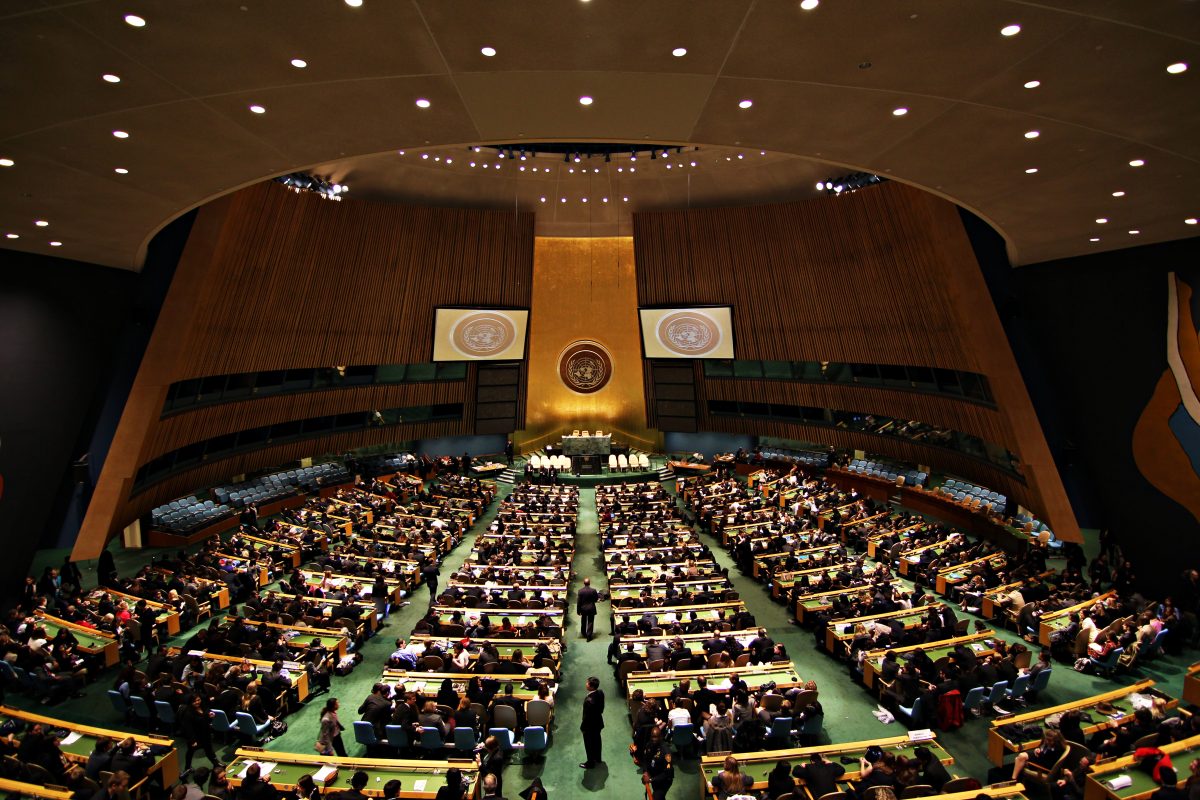
- First address. Delcy Rodríguez became the first Venezuelan head of state to address the UN General Assembly since 2018, signalling the country’s re-entry into formal multilateral diplomacy after the US military captured her predecessor, Nicolás Maduro, in January.
- No date. She promised elections would be held but left the timing entirely open, saying the Venezuelan people would determine the “right moment” — a formulation opposition groups quickly called inadequate.
- Stakes. Venezuela’s path back to international legitimacy runs through Washington; Rodríguez’s decision to thank Trump publicly, and to meet him in person, marks a sharp reversal from the Maduro government’s posture of confrontation.
Delcy Rodríguez, Venezuela’s acting president since the US special forces raid that removed Nicolás Maduro from Caracas in January 2026, stepped up to the General Assembly podium in New York on Wednesday to deliver the country’s first high-level UN address in eight years. Her speech covered elections, earthquake recovery, and what she described as a new chapter in Venezuela’s relationship with the United States.
The Election Commitment
Rodríguez’s central message was that elections would happen — but on Venezuela’s terms and timetable. “I wish to state this very clearly before this General Assembly: Elections will be held in Venezuela,” she said, adding that her government had begun “political dialogue with opposition sectors” to ensure “equal conditions for all.” She gave no electoral calendar. Opposition representatives, some present in New York, said the statement changed nothing as long as Maduro remained in a Brooklyn detention centre awaiting trial on drug trafficking charges and the state apparatus he built remained intact.
A Crisis in Two Acts
Beyond politics, Rodríguez described a country battered by two overlapping disasters in 2026. A political rupture tied to the US operation that removed Maduro was followed in June by two consecutive earthquakes — magnitudes 7.2 and 7.5 — that struck north-central Venezuela on the same day, killing more than 6,500 people and displacing hundreds of thousands across Aragua, Carabobo and Miranda states. She appealed for international reconstruction aid and said the earthquakes had deepened the government’s case for a renegotiation of US sanctions on Venezuelan oil exports.
Thanking Trump
The most diplomatically striking passage came when Rodríguez thanked President Trump “for his willingness to resume the path of diplomatic relations and cooperation.” The two met on Tuesday — their first in-person encounter since Trump authorised the January raid — and discussed energy, mining, and cooperation on transnational crime. Their exchange, however brief, represented the closest thing to normalised US-Venezuela diplomacy since before Maduro’s first term. It also placed Rodríguez in a delicate position: dependent on Washington’s goodwill for sanctions relief but unable to move on elections quickly enough to satisfy US and European conditions without risking a backlash from Maduro’s political base inside the country.
At the same UNGA week where Trump framed his Iran choice in stark terms, Venezuela’s story offered a different register: a US adversary using the General Assembly not as a stage for defiance but for a careful, hedged re-engagement — elections promised, deadline absent.