
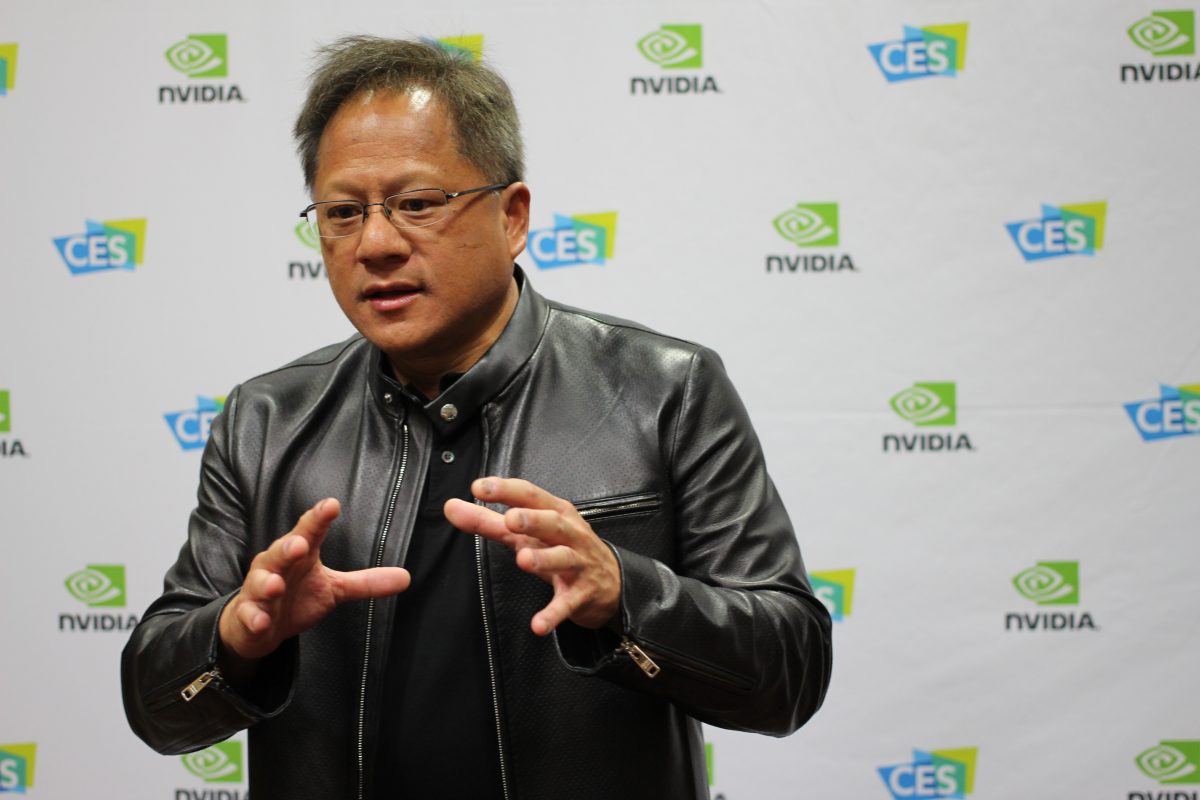
- Stakes. Jensen Huang, Nvidia’s chief executive, joined the US presidential delegation to Beijing on May 14 after a personal call from Trump — putting AI chip exports at the center of the highest-level US-China talks in years.
- Stalemate. The Trump administration authorized sales of Nvidia’s H200 AI chips to Chinese customers last year, but not a single unit has shipped, with both sides unable to agree on the terms and conditions governing those sales.
- Pressure. China is advancing domestic chip development through Huawei, Alibaba, and ByteDance — each designing AI silicon that narrows the gap with US products even without access to the H200.
Huang was not on the White House’s original list of executives traveling to Beijing. According to multiple reports, Trump placed a personal call after seeing press coverage of Huang’s absence, asking the Nvidia chief to join the delegation at the last minute. Huang confirmed the account at a media event in Beijing, saying simply: “President Trump asked me to come.”
The H200 problem
The H200 is Nvidia’s flagship inference accelerator — a step below the export-restricted H100 but still more capable than anything China’s domestic semiconductor industry can currently produce at scale. The Trump administration cleared it for Chinese sale in late 2025 as part of a broader recalibration of the January chip export order that restructured export-control tiers. Nvidia disclosed in February that, despite the authorization, no H200s had received final clearance to ship to Chinese customers, with negotiations over end-use assurances, resale restrictions, and monitoring mechanisms stalled on both sides.
Huang has been lobbying the administration for months to resolve those sticking points, arguing that blocking sales does not slow Chinese AI development — it only shifts procurement toward Huawei’s Ascend chips and deepens Beijing’s motivation to reach chip self-sufficiency. Trump told Xi that opening China to US businesses would be his “first request,” framing commercial access as the primary American ask alongside trade-balance discussions.
Summit dynamics
Huang joined a delegation that also included Elon Musk, Tim Cook, and Cristiano Amon of Qualcomm. The breadth of the corporate contingent reflects a White House strategy of pairing geopolitical demands with commercial incentives — using market access as both a carrot and a bargaining chip in negotiations over Taiwan, Iran, and trade balances.
Analysts say a full semiconductor breakthrough before the summit ends looks unlikely, given the complexity of the end-use monitoring dispute and China’s domestic political incentive to demonstrate independence from US hardware. But Huang’s presence ensures that whatever framework emerges from Beijing carries an explicit AI infrastructure dimension — a detail that will matter as the two largest AI markets negotiate what their technological relationship looks like in the years ahead.