
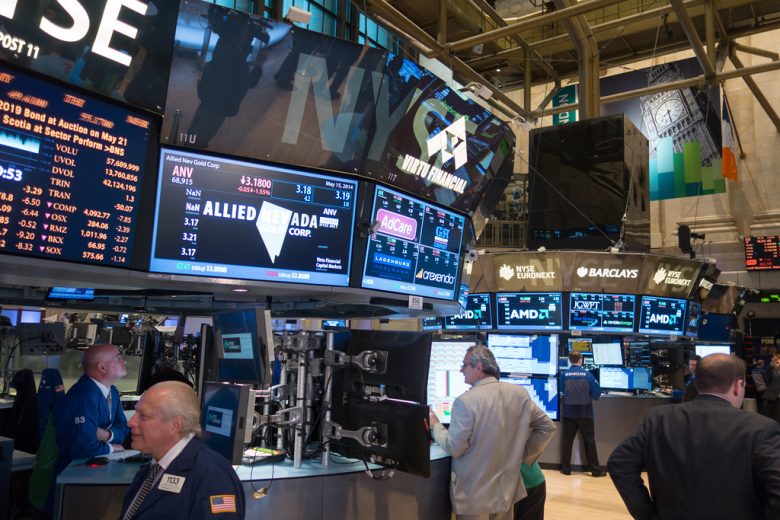
- Lead. The Nasdaq Composite closed at 27,477.31 on October 4, 2026, a record, while the 10-year Treasury yield simultaneously climbed to 5.31% — its highest since April 2002. The divergence upends the usual inverse relationship between long-dated yields and technology valuations.
- Fact. October Fed rate hike odds fell from 70% to 24% after September payrolls came in at just 29,000 jobs — giving growth stocks a short-term reprieve from the tightening cycle even as long-end yields remained elevated.
- Stake. The rally is narrow: only 31.5% of Nasdaq-listed stocks were trading above their 50-day moving averages, meaning a handful of megacap AI beneficiaries are masking broad market weakness and creating index concentration risk that could amplify a reversal.
Nvidia and Broadcom each gained 2.1% on October 4, while Microsoft and Meta also contributed to the advance. The S&P 500 rose 0.67%, a less emphatic move that reflects the tech-heavy weighting of the Nasdaq’s record-setting day. The 30-year Treasury yield climbed alongside the 10-year, reaching 5.70%, its highest since 2002, according to Coinpaper’s market analysis. Bond yields at these levels normally compress the present value of future earnings — the standard mechanism through which rate increases damage high-multiple technology stocks. That mechanism appears suspended, at least temporarily.
Why AI earnings are overriding the yield signal
The answer lies in the pace of actual revenue growth rather than discounted future growth. Micron’s Q4 revenue surged 379% to $54 billion on AI memory demand, a result that demonstrated AI-linked infrastructure spending is translating into reported earnings rather than remaining speculative. When analysts apply a higher discount rate to faster-growing actual profits, the net present value can still rise — breaking the conventional yield-tech inverse.
Nvidia’s position as the dominant GPU supplier for AI training and inference makes its stock price a proxy for the entire AI infrastructure cycle. Each earnings release that confirms sustained capital expenditure from Amazon, Microsoft, Google and Meta functions as a de facto forward guidance for Nvidia’s revenue trajectory, creating a self-reinforcing logic that has kept the stock near record levels even as broader market breadth has deteriorated.
What the narrow breadth signals
The 31.5% participation rate — meaning fewer than one in three Nasdaq constituents above their 50-day average — is the hallmark of a momentum-driven concentration trade. In past episodes of narrow Nasdaq leadership, index-level records have sometimes preceded sharp mean-reversion corrections when the leading stocks encountered a sentiment shift. In the current environment, the relevant trigger could be a Nvidia earnings miss, a material AI capex pullback by one of the hyperscalers, or a Fed statement that restores October hike probability toward its prior 70% level.
The September payrolls miss — 29,000 jobs added against expectations of roughly 100,000 — was the immediate catalyst for Friday’s move, pushing the October hike probability to 24%. But the 5.31% 10-year yield signals that bond markets are not convinced the Fed is done. The Federal Open Market Committee meets October 27-28; chair Warsh’s language on the neutral rate will be parsed closely for any sign that the pause in short-end hikes will prove temporary.