
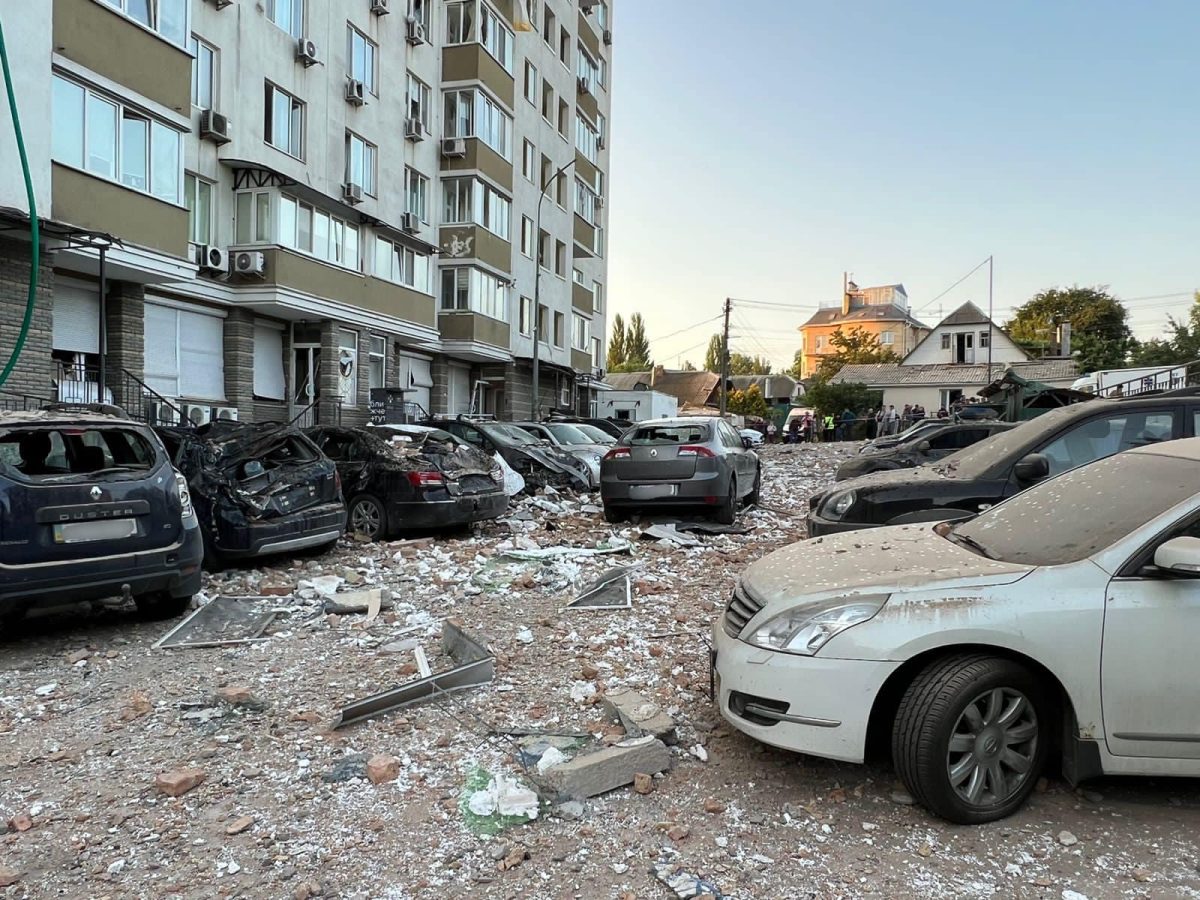
- Scale. Ukraine launched one of its largest single overnight drone campaigns of the war, sending approximately 500 aircraft toward Russian territory and forcing Moscow’s air defenses to intercept more than 80 drones over the capital region alone.
- Casualties. Four people were killed — a woman in Khimki northwest of Moscow, two men in the village of Pogorelki roughly 10 kilometres from the city centre, and a fourth in the Belgorod border region — with at least 12 wounded near a Moscow oil refinery.
- Reach. Debris struck the grounds of Sheremetyevo International Airport, Russia’s busiest hub, without halting operations, underscoring how far Ukraine’s drone programme has extended the conflict into civilian and commercial infrastructure.
Russia’s Defence Ministry said its air defence systems shot down 556 Ukrainian drones across all territories over roughly 24 hours on May 17, claiming to have destroyed or jammed more than 1,000 in the preceding period. That figure, if accurate, marks one of the densest drone interception efforts the ministry has announced since the war began in February 2022. Ukrainian officials have not confirmed the total number of systems deployed.
Zelensky’s framing
President Volodymyr Zelensky offered a brief statement defending the operation. “Our responses to Russia’s prolongation of the war and attacks on our cities are entirely justified,” he said, a formulation that positions each Ukrainian strike as reactive to ongoing Russian bombardments of civilian centres. Kyiv has faced repeated large-scale Russian drone and missile salvos in recent weeks, including a 1,600-drone assault that Russia launched earlier this year, one of the heaviest aerial attacks of the conflict.
The Indian Embassy in Moscow separately confirmed that one Indian national working in the Moscow region was killed and three others were hospitalised — a detail that drew attention to the significant population of foreign workers still present in Russia despite the war.
A darkening strategic picture
Nigel Gould-Davies, a former British ambassador and senior fellow at the International Institute for Strategic Studies, said the strike added to what he described as “the darkening cloud of anxiety over Russia” as the Kremlin faces concurrent battlefield setbacks and deteriorating economic conditions driven by sustained energy-sector targeting.
Ukraine’s long-range drone campaign has increasingly focused on Russian oil refineries and military logistics nodes far from the frontlines. Saturday’s attack maintained that pattern: the 12 wounded were clustered near a Moscow oil refinery entrance, and Russian emergency services reported fires at several industrial sites across multiple regions.
Diplomatic backdrop
The strike came days after a brief three-day ceasefire around Russia’s Victory Day celebrations, which both sides acknowledged had largely held before breaking down. President Trump expressed hope at the time that the pause might extend into broader negotiations. Saturday’s exchange of large-scale drone attacks illustrated how quickly the military tempo can reassert itself absent a formal framework — and how much pressure Ukraine is willing to apply on Russian territory even as diplomatic channels remain nominally open.
The attack was reported by multiple outlets based on Ukrainian military statements and Moscow regional governor Andrei Vorobyov’s official Telegram channel, which confirmed the Khimki and Pogorelki fatalities early Saturday morning local time.