
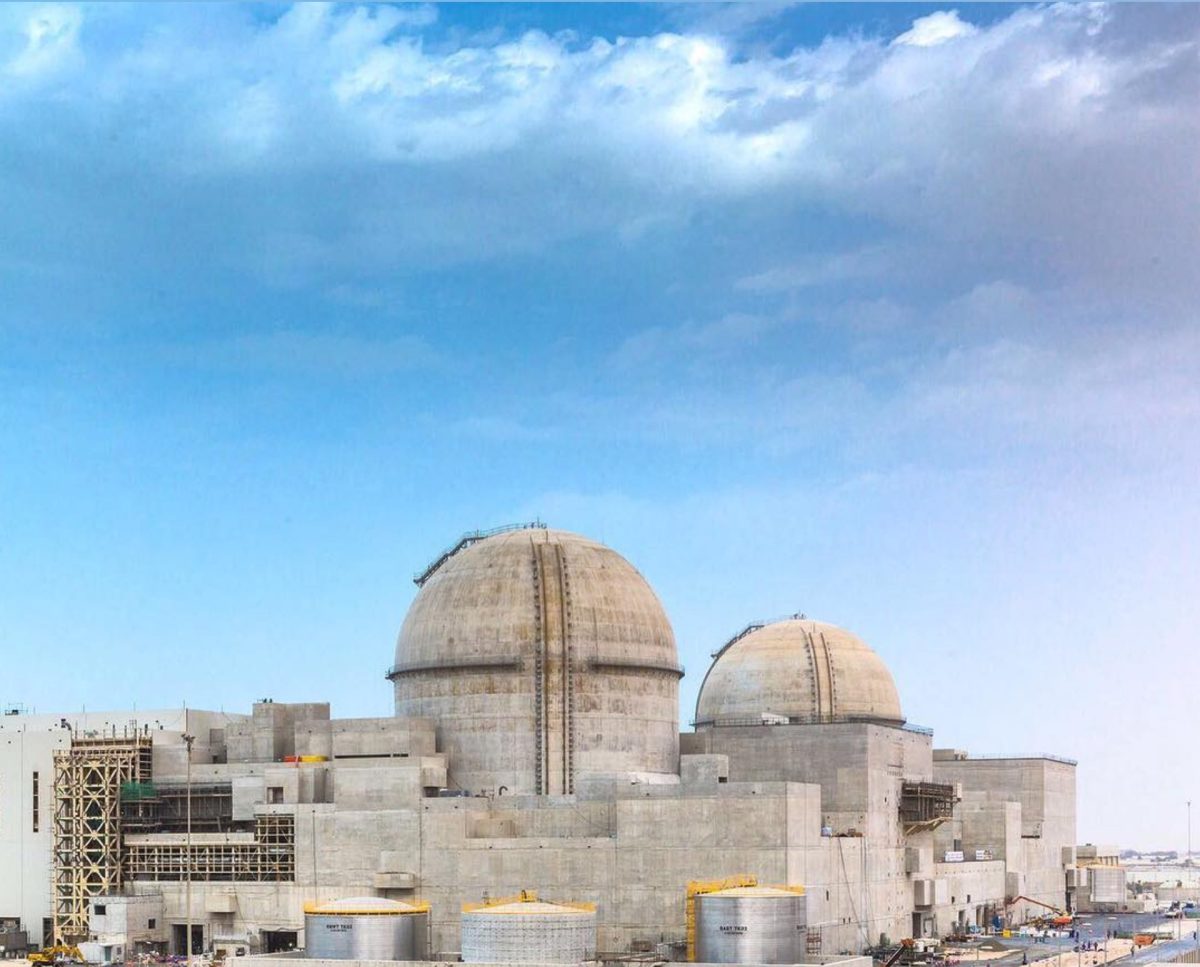
- The attack. A drone penetrated UAE air defenses on Sunday, May 17, and struck an electrical generator on the outer perimeter of the Barakah Nuclear Energy Plant in Abu Dhabi — the first strike on an operating nuclear facility in the Arabian Peninsula since the US-Israel conflict with Iran began in February.
- Limited damage. Two of three attacking drones were intercepted; the third caused a fire outside the plant’s inner perimeter. No injuries were reported, radiation levels remained normal, and all four reactors continued operating, though one briefly switched to emergency diesel generators.
- International alarm. IAEA Director General Rafael Grossi called any military activity threatening nuclear facilities “unacceptable” and expressed “grave concern,” while Qatar and Saudi Arabia condemned the attack as a threat to regional security.
The drone launched from what UAE authorities described as the “western border” — a formulation that covers territory adjoining Saudi Arabia and potentially points toward launch points in Iraq or Yemen — without naming Iran directly. No group claimed responsibility, and the UAE defence ministry said investigations were ongoing. An adviser to the UAE president cited Tehran’s “axis of resistance” proxy network as the likely source.
What Barakah is
The Barakah plant, located roughly 225 kilometres west of Abu Dhabi in the Al Dhafra region, is the first nuclear power station to operate on the Arabian Peninsula. Built using South Korea’s APR-1400 reactor design, it houses four pressurised water reactors each producing 1,400 megawatts. At full capacity the plant generates approximately 40 terawatt-hours annually — enough to supply around 25% of the UAE’s electricity needs — and displaces an estimated 22.4 million tonnes of carbon emissions each year. The first reactor came online in 2021; the fourth entered service in 2024.
On the same day, Saudi Arabia intercepted three drones launched from Iraqi airspace over the kingdom, suggesting a coordinated set of attacks across the Gulf in the hours after Trump announced he was delaying a planned US military strike on Iran at the request of regional leaders.
The symbolic stakes
Even an unsuccessful attack on a nuclear facility carries disproportionate psychological weight. The drone that reached Barakah’s outer perimeter did not breach the reactor’s protected zone, and IAEA monitors confirmed no radiological release. But the incident demonstrated that the plant — close to the Saudi border and accessible from multiple directions — is within reach of adversary drone systems capable of partially defeating layered air defences.
Grossi’s use of the word “unacceptable” was notable: the IAEA typically reserves its strongest language for direct threats to reactor safety. The Barakah attack joins a broader pattern of escalating drone campaigns against civilian infrastructure — including Ukraine’s recent 500-drone overnight campaign targeting Moscow’s oil refineries and energy grid — that is eroding norms against striking energy and nuclear sites.
UAE’s position in the Iran conflict
The UAE has occupied an increasingly fraught position. Abu Dhabi has strengthened security ties with Israel since the Abraham Accords and has permitted Israeli military assets on its territory — a fact that Tehran’s proxy allies have cited as making the Emirates a legitimate target. At the same time, the UAE was among three Gulf heads of state who personally asked Trump on May 18 to delay his planned Iran strike, underlining how deeply Abu Dhabi is invested in a diplomatic resolution. That dual position — aligned with Israel, yet seeking de-escalation — may explain the targeting logic: a strike that signals capability and intent without crossing the threshold of actual reactor damage.