
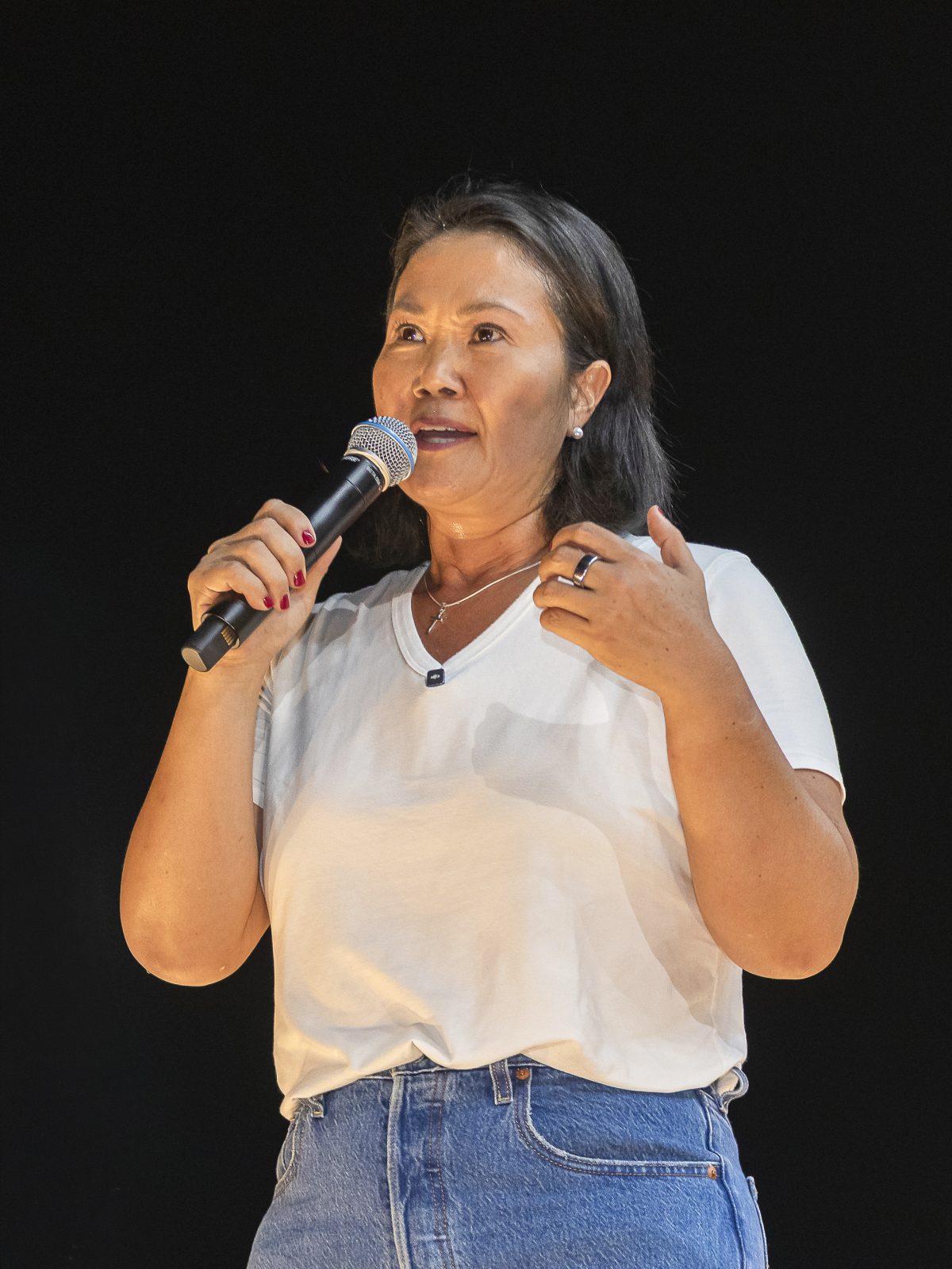
- Lead. Peru’s electoral authority on May 17 confirmed Keiko Fujimori and Roberto Sánchez as presidential finalists, scheduling a June 7 runoff after an April first round in which more than 70% of voters backed neither candidate.
- Fact. Fujimori drew 17.19% (2.8 million votes) and Sánchez 12.03% (2.015 million) — the two lowest combined first-round shares for a Peruvian runoff pair in modern history.
- Stake. Peru has cycled through eight presidents in roughly a decade; the winner inherits a state battered by congressional impeachment cycles, surging street crime, and a mining economy under political pressure.
Keiko Fujimori, 50, is mounting her fourth bid for Peru’s presidency. The Fuerza Popular congresswoman and daughter of jailed former President Alberto Fujimori won first place in the April 12 vote with 2.8 million ballots — but in a country of 33 million, that amounts to a narrow mandate at best. Roberto Sánchez, a former foreign trade minister under ex-President Pedro Castillo and a member of the Juntos por el Perú alliance, finished second with 2.015 million votes, or 12.03% of the valid total.
Al Jazeera confirmed the official results on May 17, after weeks of tallying, judicial review, and challenges from eliminated candidates. National Elections Jury president Roberto Burneo acknowledged that “there were many difficulties and flaws in the logistical deployment,” with voting extended to April 13 in several districts. International observers found no concrete evidence of manipulation.
A fractured field and a coalition arithmetic problem
The combined tally of the two finalists — roughly 29% of valid votes — leaves both candidates dependent on assembling coalitions from blocs whose loyalties are diffuse. Third-place finisher Rafael López Aliaga, the far-right populist who collected 11.9%, is the most obvious source of additional votes for Fujimori, though his base and Fuerza Popular’s overlap only partially. Sánchez’s problem is more acute: the left-of-centre vote was dispersed across multiple candidates, and no clear consolidation mechanism exists for the remaining 58% of the electorate.
Hours after electoral authorities confirmed his runoff qualification, Peru’s public prosecutor filed financial crime charges against Sánchez. His campaign called the timing politically motivated. The charges do not bar him from candidacy under current Peruvian law, but they hand Fujimori’s team a visible line of attack across the six weeks that remain before June 7.
The institutional inheritance
Whoever wins inherits a state in chronic instability. Peru has seen eight presidents over roughly a decade, each removed or forced to resign amid executive-legislative confrontation. The 2022–2023 crisis that followed the impeachment of Castillo — Sánchez’s former employer — left approximately 50 protesters dead in street violence. Both candidates campaigned heavily on crime reduction, which voters identified as their top priority. Homicide rates have climbed sharply since 2021, and extortion of businesses — particularly in mining regions — has become a systemic constraint on investment.
The economic backdrop is more stable than the political surface suggests. Copper and gold revenues from highland mines have cushioned growth, keeping Peru’s fiscal position relatively sound. But repeated government transitions have eroded the institutional capacity to channel those revenues into public services, widening the distance between citizens and the state.
Fujimori’s three previous defeats — in 2006, 2011, and 2021, the last by fewer than 45,000 votes — make her the most persistent runner-up in Peruvian political history. The electorate’s dispersal on April 12 mirrors patterns observed across very different political systems: the opposition coalition that ended Viktor Orbán’s grip on Hungary earlier this year also had to stitch together a majority from fragmented voter blocs, under duress, against a dominant incumbent. Peru’s fragmentation runs in the opposite direction — against both finalists — and the question for June 7 is whether either candidate can overcome it.